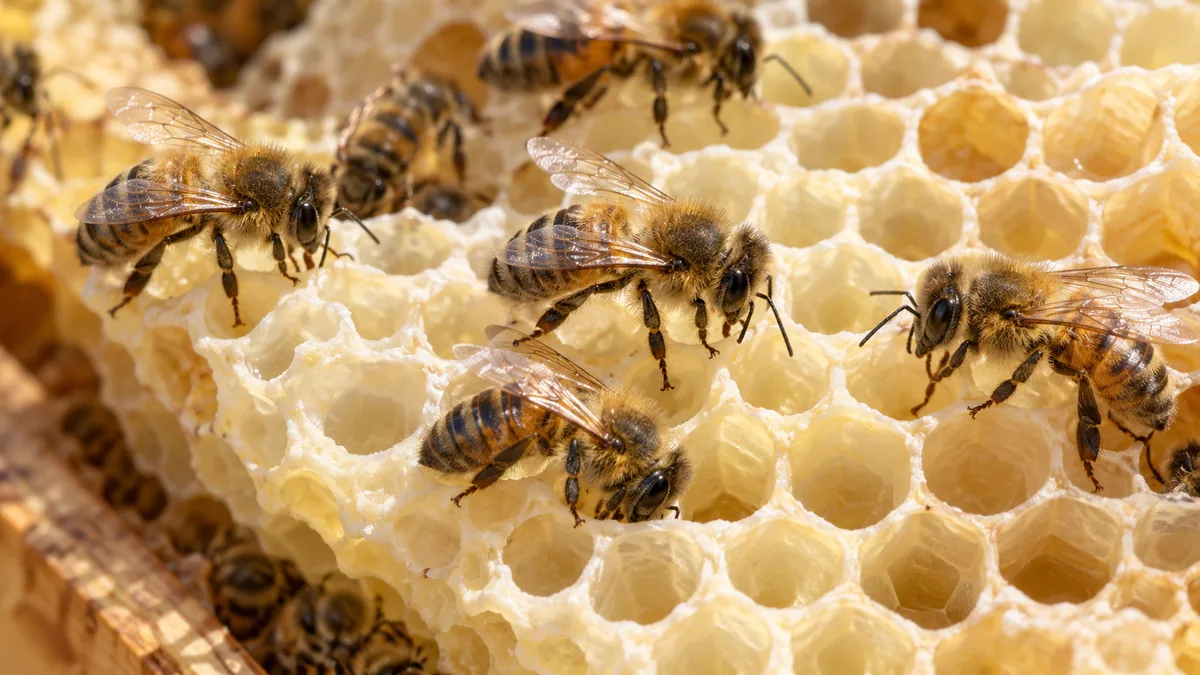
Beeswax is the material bees use to build honeycomb. Its cells hold honey and pollen, while other parts of the comb provide space for brood to develop. The pale cap over a cell full of honey is another use of the same material: bees seal the cell with wax.
Wax is not an ingredient extracted from honey. Bees produce it themselves, and beekeepers can collect it from removed cappings and comb. Understanding where wax comes from and how it is processed helps when choosing wax, candles, or products that contain it.
Contents
What is beeswax?
Beeswax is a building material inside the hive. Bees shape it into the walls and bases of comb cells. Depending on their location, those cells store food or support developing young bees. Fresh wax is light in colour; comb can darken with use as other materials accumulate in it. Colour alone therefore cannot establish the wax’s composition or suitability for a particular purpose. FAO – beeswax uses and quality
With comb honey, people eat the honey along with some of the wax structure that holds it. Here we look at beeswax as a product in its own right: how it is made, collected, and used.
How do bees make wax?
Worker bees secrete wax from glands on the underside of their bodies. It emerges in small scales that the bees work into comb cells. Wax production depends on the worker’s age and the colony’s needs. Building new comb also requires food and suitable conditions. FAO – comb structure and wax production
A beekeeper may place a wax foundation in a frame: a thin sheet with the pattern of cells impressed on it. This gives the bees a starting pattern, but they still build the finished comb walls themselves. FAO – foundation in beekeeping For the wider journey from flower to jar, see how honey is made.
How is beeswax collected from comb?
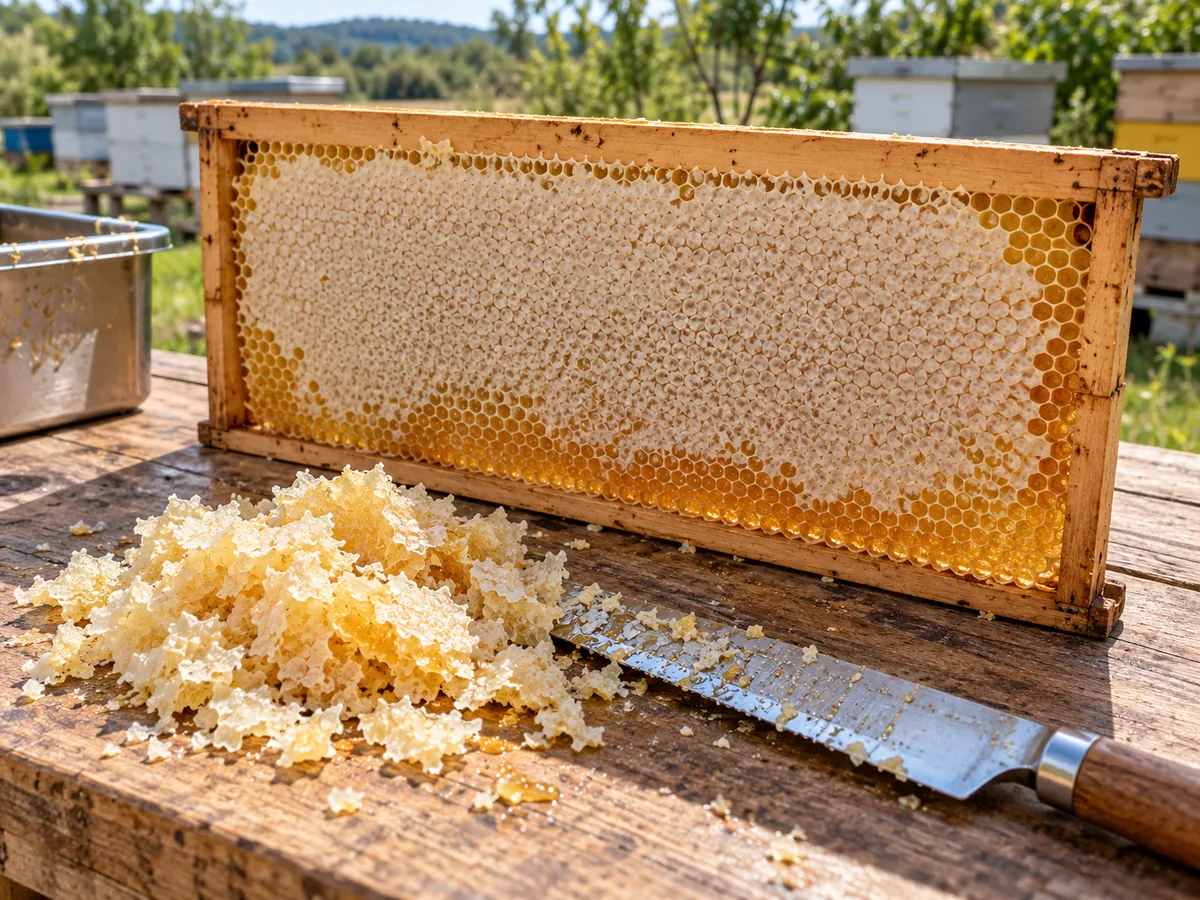
Before extracting honey, a beekeeper removes the thin wax cappings from the cells on a frame. These can be collected separately as a valuable source of wax. Discarded or broken comb can also yield wax, but its sources should be considered separately. Pale cappings and old, dark comb can differ in their impurities and in the quality of the resulting wax. FAO – sources and recovery of beeswax
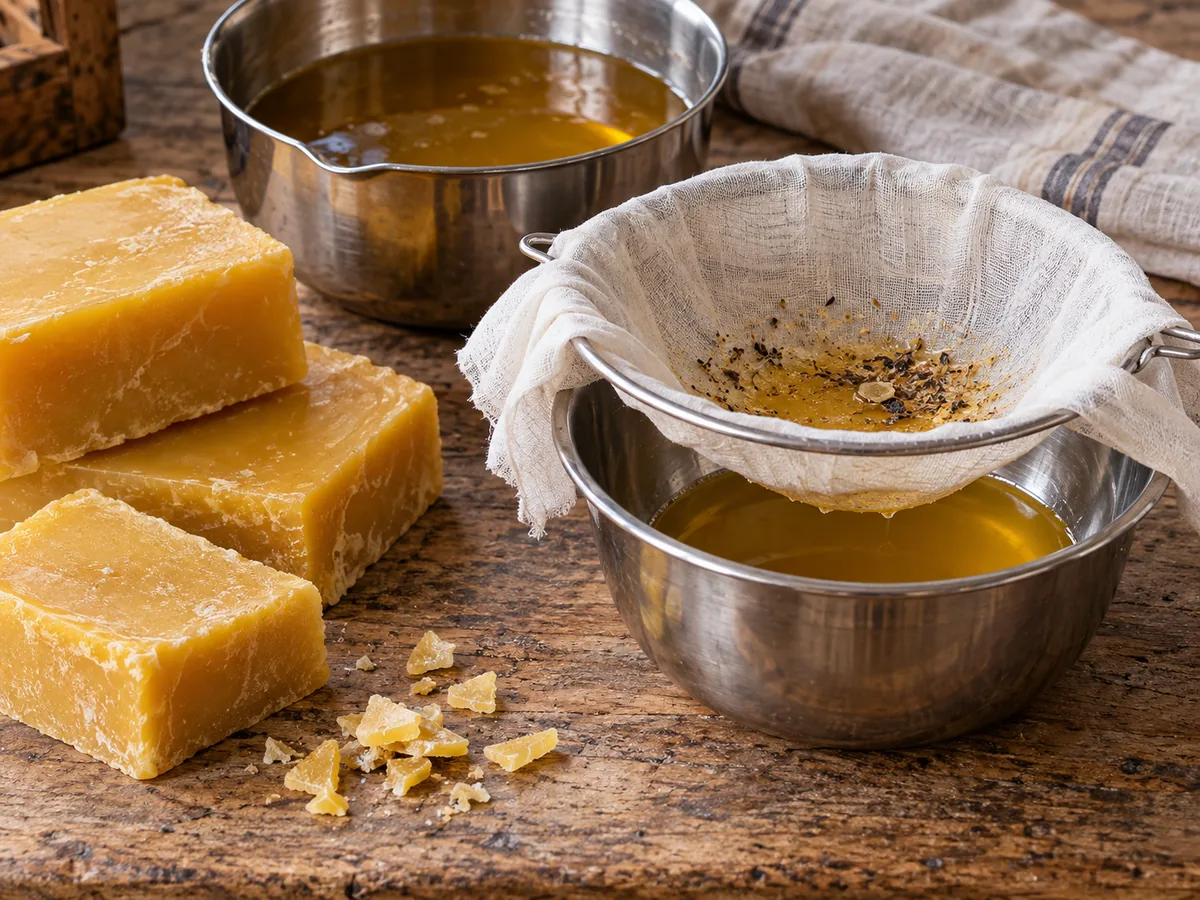
The collected material is then carefully melted and filtered to remove visible debris. It may be poured into blocks or used for further production. Filtering improves its appearance and removes larger particles, but does not by itself prove that residues from beekeeping treatments are absent or that the wax is suitable for food or cosmetics. Its intended use and the producer’s reliability still matter. FAO – processing and quality
What is beeswax used for?
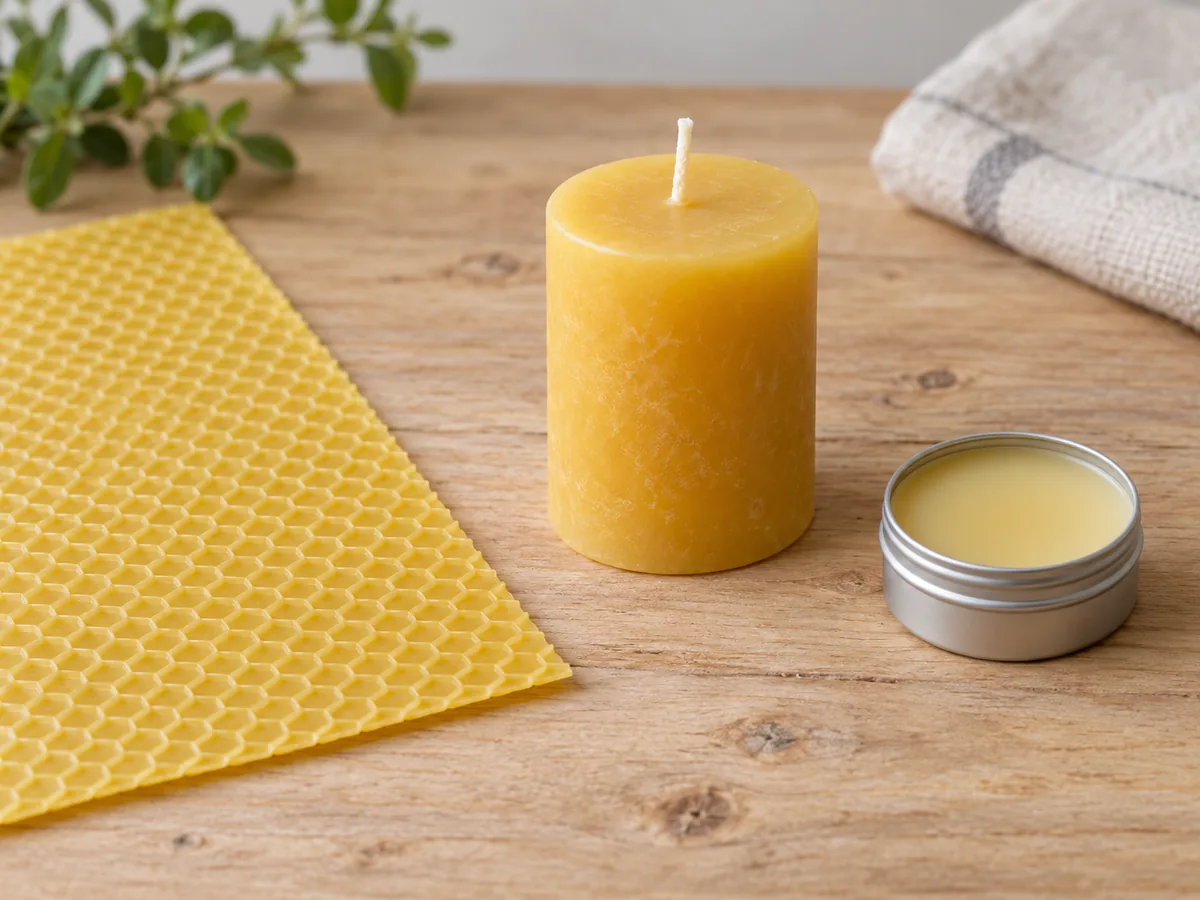
In beekeeping, wax is used to make comb foundation. Outside the hive, it appears in candles, lip balms, cosmetics, and other finished products. Each purpose calls for appropriate processing and quality controls. A wax candle is not automatically suitable for use on skin or in food. FAO – uses of beeswax
In some foods, beeswax may be listed as the additive E 901. This refers to a regulated use of wax that meets particular specifications. It does not mean that any wax taken from a hive, or a decorative candle, is fit to eat. If you need wax for food use, check the product’s label and stated purpose. EU – E 901 specifications
How can you choose quality beeswax?
Start with what you need the wax for. For a candle, look for a clear description of its composition and producer. For a cosmetic or food product, check its declared purpose and the relevant standards. A clean scent and even appearance can help you inspect the product, but neither colour nor smell alone proves its origin, purity, or safety. FAO – wax quality and origin
Do not assume from a photograph or the word “natural” that there are no added ingredients. Ask the seller whether it is pure beeswax or a blend, and what use the product is intended for. A similar caution applies to honey: appearance is not a reliable authenticity test.
Quick questions about beeswax
Is all yellow wax beeswax?
Colour alone cannot tell you. The comb’s origin, processing, and possible other ingredients can all affect appearance. A verifiable product description is more useful when buying.
Is wax from old, dark comb used in the same way as wax from cappings?
They should not automatically be treated as equivalent. Wax from pale cappings is often valued for having fewer impurities, while older comb needs separate assessment and processing for its intended use. FAO – differences between wax sources
Is beeswax the same as propolis?
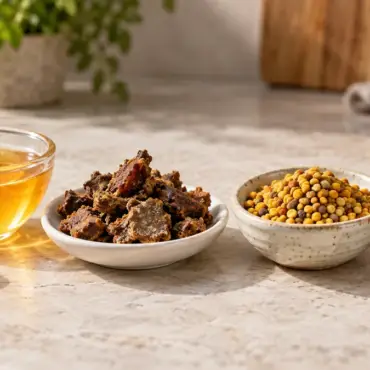
No. Bees secrete wax to build comb. Propolis is a mixture of resinous plant materials and other substances used by bees in the hive. Propolis may contain wax, but the two are different bee products. FAO – composition of propolis
Conclusion
Beeswax is made within a bee colony and gives comb its structure. Beekeepers can recover it from cappings and comb, clean it, and prepare it for different uses. When buying, the most useful details are its source, composition, and declared purpose: wax for candles, cosmetics, and food should not be chosen by the same criteria.