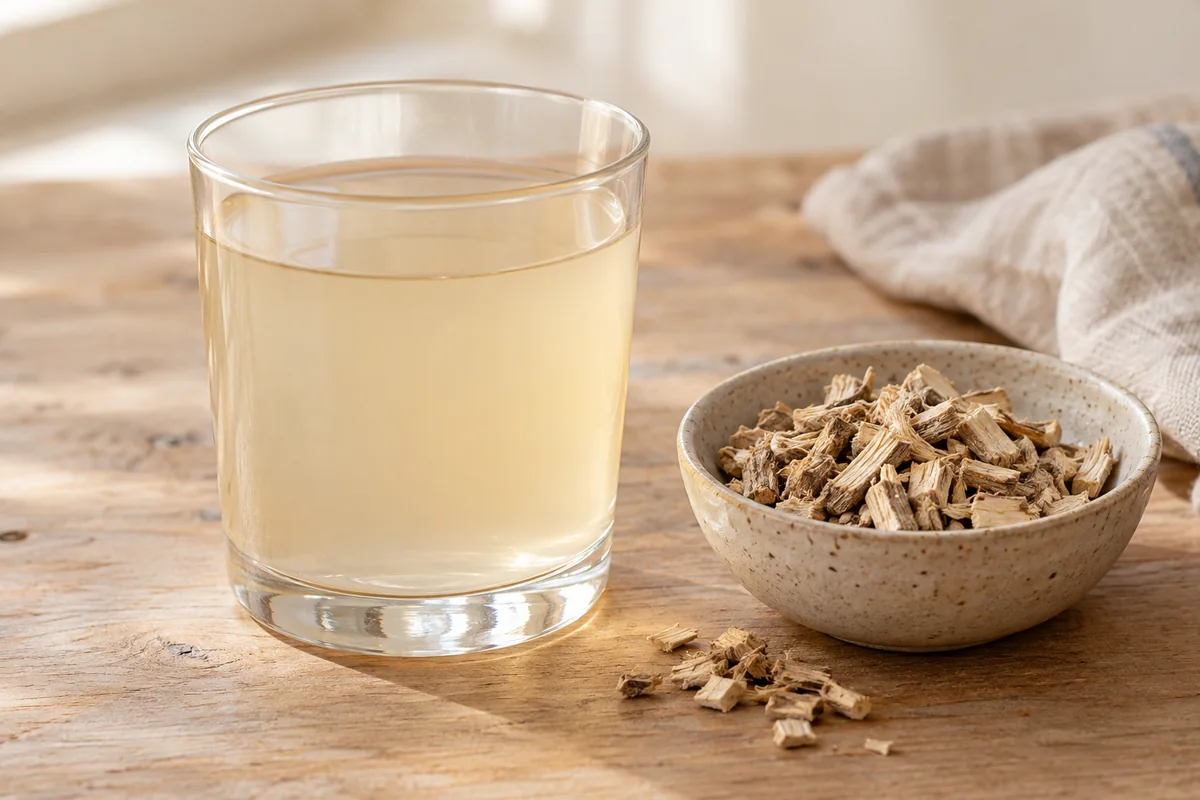
Marshmallow root tea is often prepared by soaking the dried root in cold water. Before pouring boiling water over it as you might with another herbal tea, check which part of the plant you have and read the instructions on your packet.
The root has a traditional use for soothing irritation of the mouth and throat and an associated dry cough. This does not mean that it treats the cause of a cough. The European Medicines Agency (EMA) describes this use as based on long-standing experience; clinical evidence is insufficient for firm conclusions about effectiveness.
Contents
What is marshmallow root?
Marshmallow is the plant Althaea officinalis L. Different plant parts and blends are sold under similar names, so the word “marshmallow” alone does not identify a preparation precisely.
This guide concerns dried marshmallow root, which may be labelled Althaeae radix. Leaves, flowers, syrups and extracts are different products: the same quantities and method do not automatically apply to them.
Root and leaf are different products
Look for “root” on the packet and check the botanical name and ingredients. If you have a blend, follow the instructions for that blend. Do not apply directions for marshmallow leaf tea to the root, or choose a different species because its common name sounds similar.
For another herbal drink, see our guide to chamomile tea. Its preparation method should not be transferred to marshmallow root.
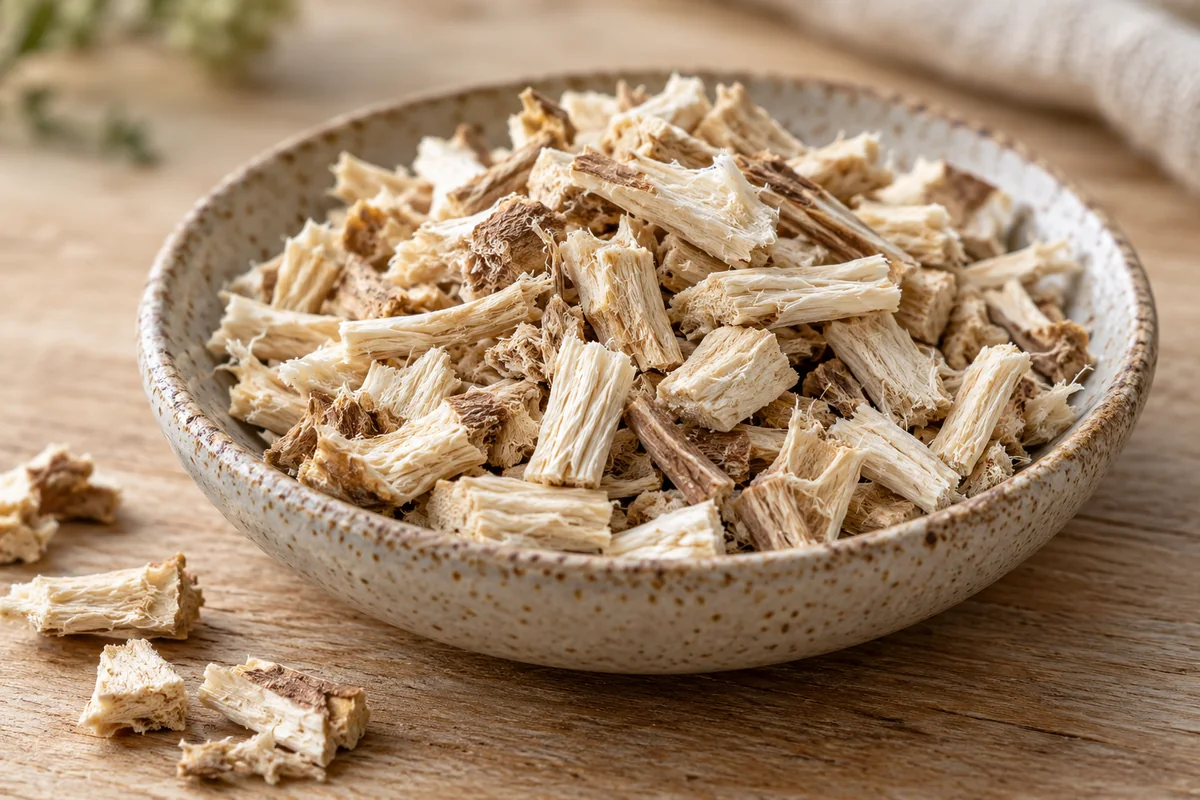
Why use cold water?
Marshmallow root contains mucilage. Soaking it in water is called maceration, and the resulting liquid is a macerate, although it is commonly called tea.
Health Canada describes a cold-water preparation of dried or powdered root, with stirring and straining. The manufacturer in the example below specifies water that has first been boiled and then cooled.
“Cold preparation” does not automatically mean ice-cold water or an overnight soak. Use the water temperature, quantity and soaking time specified for your product.
How to prepare marshmallow root tea: a product-specific example
The following is a product-specific example, not a universal dose. The Dr Josif Pančić Institute’s instructions (in Serbian) specify one tablespoon of root, 200 ml of previously boiled and cooled water, and a 30-minute soak. Other products may give different directions.
What you need
- Dried marshmallow root, measured according to its packet.
- Water in the quantity and at the temperature stated on the packet.
- A clean vessel with a cover, measuring utensils, a spoon and a strainer.
| Step | What to do | What to check |
|---|---|---|
| 1. Prepare the water | Boil the water and allow it to cool. | This example uses previously boiled and cooled water. |
| 2. Add the root | Pour 200 ml of cooled water over one tablespoon of root. | These quantities belong to the named product’s directions. |
| 3. Leave covered | Soak for 30 minutes, stirring frequently. | Use clean utensils and keep the vessel covered. |
| 4. Strain | Strain the liquid and use it freshly prepared. | Do not prepare a batch for several days. |
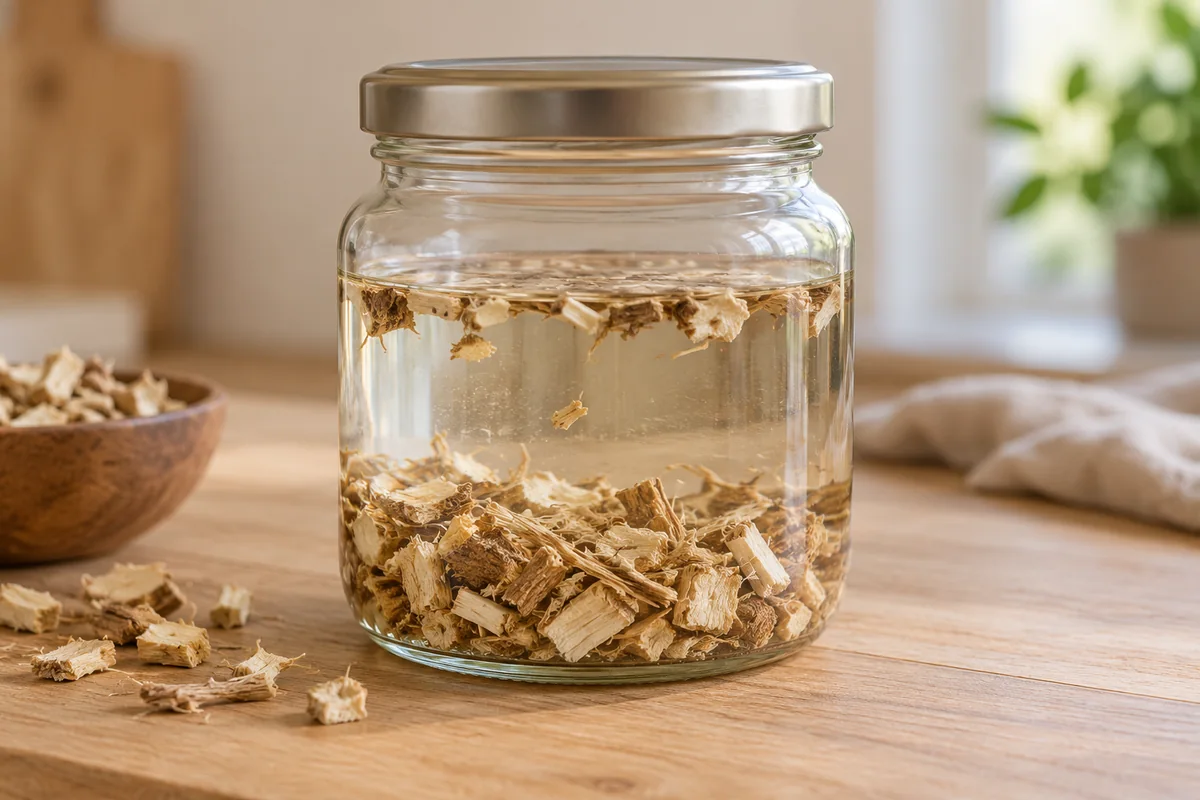
If your packet gives different directions, follow those rather than combining parts of several recipes. This example is not a dosing instruction for children.
How often should you drink it?
Frequency depends on the preparation, intended use, age and product instructions. There is no single schedule that can be applied to every root tea, syrup or extract. Ask a pharmacist if the directions are unclear.
Marshmallow root and dry cough: what can we expect?
Traditional use concerns soothing irritation of the mouth and throat and a related dry cough. A soothing drink does not establish the cause of a cough, replace an examination or substitute for prescribed treatment.
Evidence from a particular syrup cannot simply be applied to homemade tea. The EMA’s overview describes limitations in the available clinical studies, including studies of syrups. It also distinguishes throat and cough preparations from products used for mild digestive discomfort, with different age restrictions.
Our article on sage tea covers another plant with its own preparation instructions and precautions. Herbal drinks are not interchangeable.
Can you add honey?
Honey can be an optional addition for taste. Adding it does not turn the drink into a proven treatment for the underlying cause of a cough. If you prefer a mild flavour, read about acacia honey, and account for the extra sugar.
Never give honey to a child under 12 months, including in tea. The CDC advises avoiding honey before the first birthday because of infant botulism risk. See also our guide to honey for children.
Children, pregnancy and medicines: when to take care
The EMA herbal monograph does not recommend most throat and cough preparations for children under three. Ask a paediatrician or pharmacist about the actual product; the adult preparation example above is not a child’s dose.
Use during pregnancy and breastfeeding is not recommended because safety data are insufficient. Avoid a product if you are allergic to marshmallow root or another ingredient.
Leave an appropriate gap from medicines
Mucilage may delay absorption of medicines taken by mouth. As a precaution, the EMA advises avoiding marshmallow root preparations for half an hour to one hour before or after other medicines; Health Canada advises a gap of a few hours. Ask a pharmacist to arrange timing for your medicines. Do not skip or change prescribed doses.
Fresh preparation and symptoms that need medical advice
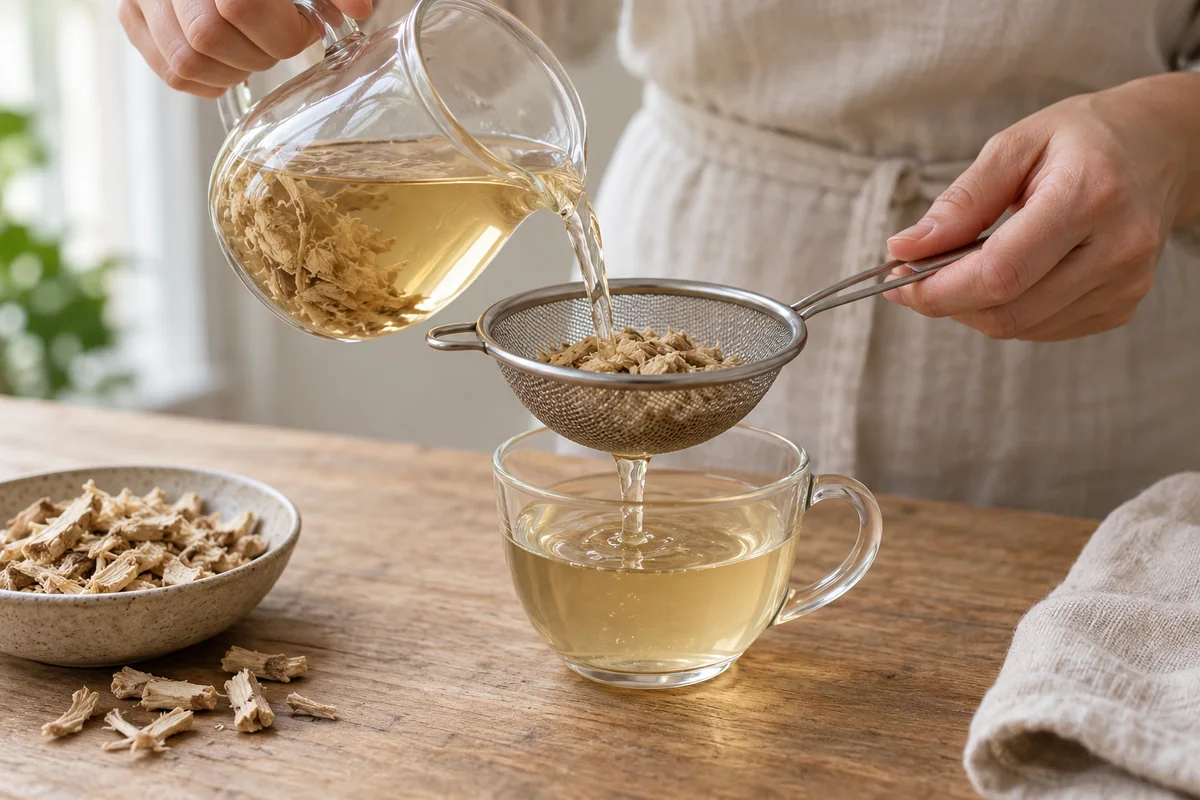
The EMA monograph specifies immediate use of the macerate. Make a fresh preparation rather than storing a large batch for several days.
Seek medical advice for shortness of breath, fever, purulent sputum or worsening symptoms. Consult a healthcare professional if throat irritation or a cough lasts longer than a week during use. Severe difficulty breathing requires urgent medical help.
This is a homemade drink for oral use. It is not sterile and should not be used as eye or nasal drops.
Before making marshmallow root tea, check three things: that you have the root, that you are following its packet instructions, and that a soothing drink is not delaying needed care. Honey is optional and must never be given to infants under one year.