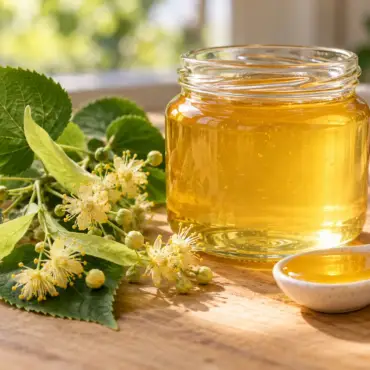
Acacia honey is one of the most recognizable honey varieties in Serbia and much of Central and Eastern Europe. It is usually associated with a very light color, a mild aroma, a delicate taste, and the fact that it often remains liquid longer than many other types of honey. None of those traits, however, proves origin or quality on its own.
If you are looking for acacia honey properties, the most useful way to understand them is through botanical origin, sugar composition, taste, crystallization, everyday use, and proper storage. This guide also separates those practical characteristics from marketing claims that cannot be reliably inferred from the name of a honey variety alone.
For a direct comparison with another common type, see our guide to acacia honey vs wildflower honey.
Contents
What Is Acacia Honey?
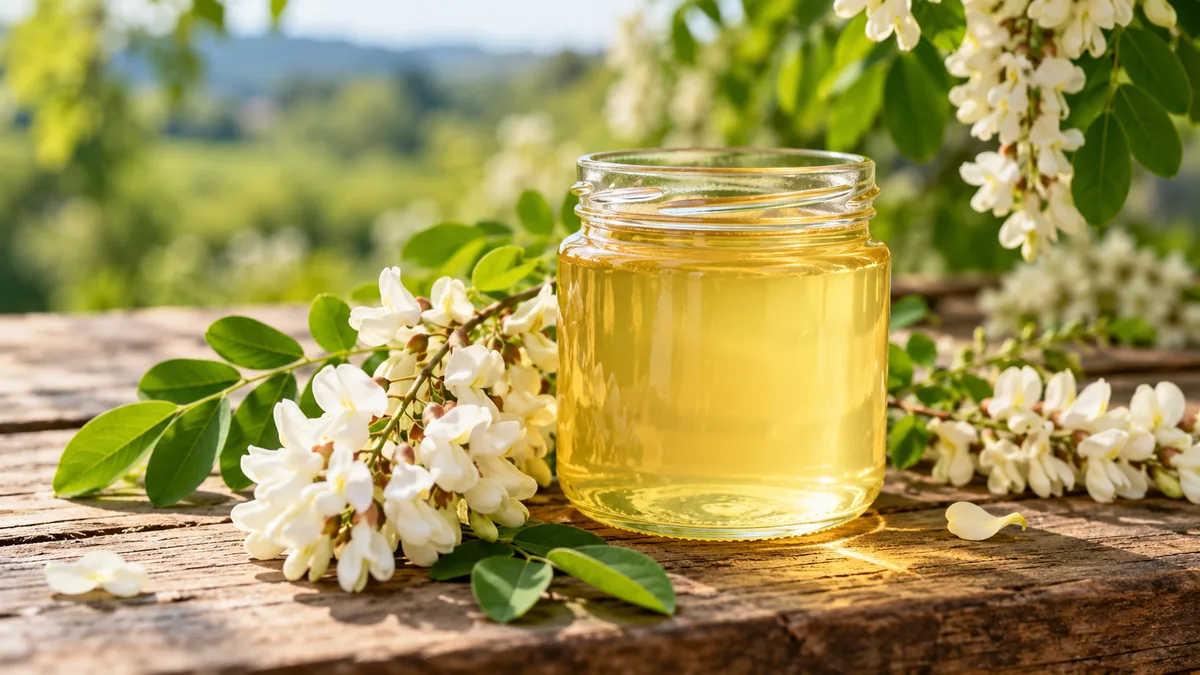
In Serbia and much of Europe, acacia honey usually refers to floral honey produced mainly from the nectar of Robinia pseudoacacia. Despite the common name, this tree is not a true Acacia; in English-language botanical sources it is often called black locust or false acacia.
According to the Codex Standard for Honey, honey may be designated by a floral or plant source when it comes wholly or mainly from that source and has the organoleptic, physicochemical, and microscopic properties corresponding to that origin.
What Does Acacia Honey Look and Taste Like?
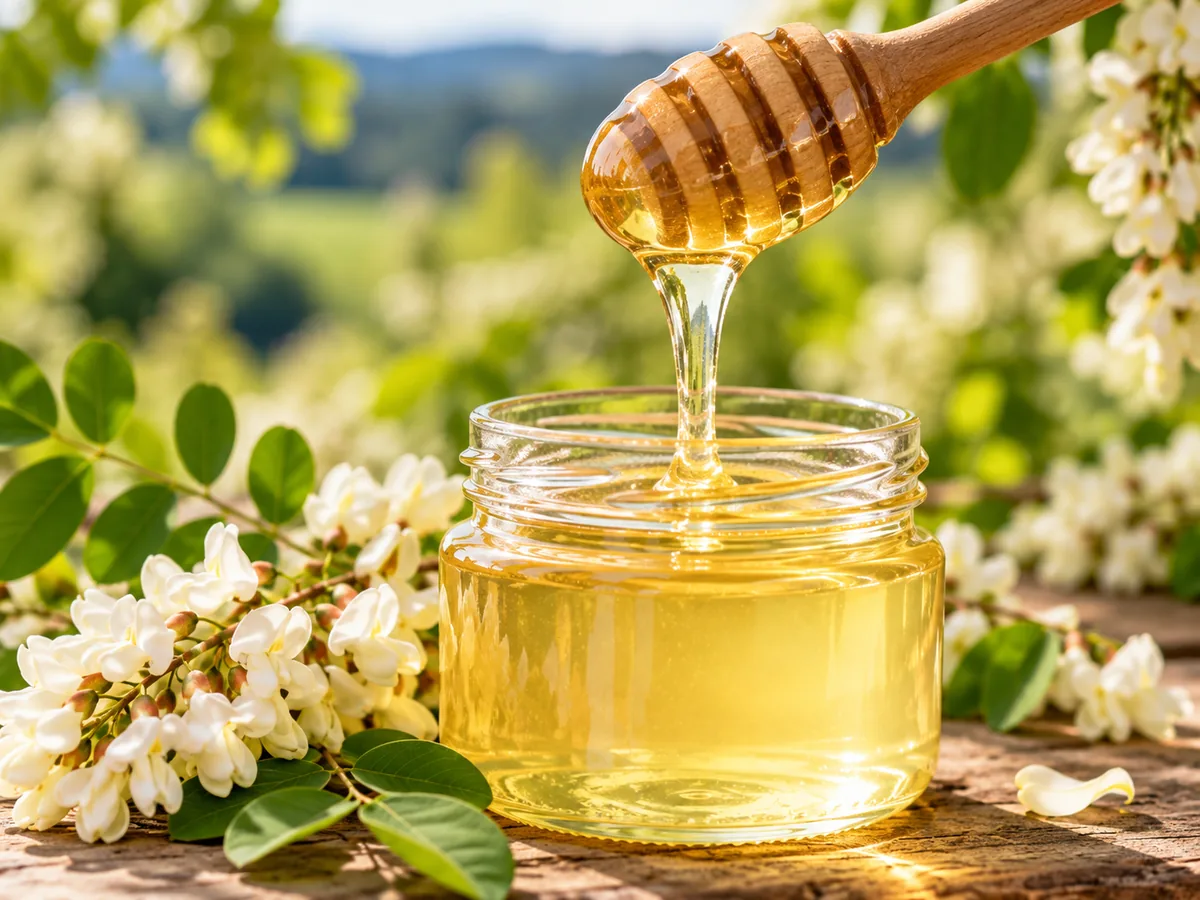
Acacia honey is commonly very light in color. When fully liquid, it may look almost colorless or pale yellow. Its aroma is generally mild and its taste is delicate and unobtrusive, which makes it popular with people who find stronger honey varieties too intense.
Color and flavor are not home tests for authenticity. Codex notes that honey in general can range from nearly colorless to dark brown, while flavor and aroma depend on botanical origin. So “very light” does not mean “definitely acacia,” and a slightly darker shade does not automatically mean poor quality.
Why Does Acacia Honey Crystallize Slowly?
One of the best-known characteristics of acacia honey is that it often stays liquid longer than many other honey varieties. This is not necessarily a sign of special processing; it is strongly related to the balance of sugars naturally present in the honey.
A large study of 609 honey samples from Serbia found that acacia honey had, on average, lower glucose and higher fructose levels than several other honey types examined. The authors note that the relatively lower glucose content can contribute to slower crystallization.
This does not mean acacia honey can never crystallize. Crystallization also depends on the individual batch, temperature, water content, and other factors. For a fuller explanation, see why honey crystallizes and whether crystallized honey is spoiled.
Typical Properties of Acacia Honey
When discussing acacia honey properties, it is most useful to focus on characteristics that can be described without exaggerated promises:
- a very light to pale-yellow color is common;
- the aroma and flavor are generally mild;
- it often remains liquid for a relatively long time;
- like other honeys, it consists mainly of sugars, especially fructose and glucose;
- specific physicochemical values can vary by year, region, and individual sample.
That natural variation matters. Research on Serbian honey has shown meaningful differences among botanical types as well as between years and regions. Two properly labeled jars therefore do not need to look identical in every detail.
Is Acacia Honey Healthier Than Other Types?
It is not well supported to describe acacia honey as universally “healthier” than wildflower, linden, or another honey type simply because of its botanical name. Honeys differ in composition and sensory properties, but quality and choice should not be reduced to a single marketing claim.
Codex describes honey as a food made up mainly of different sugars, especially fructose and glucose. In practical terms, it makes more sense to view honey as a sweetener with a distinctive flavor and botanical origin than as a substitute for medical treatment.
If you are choosing between acacia and wildflower honey, taste, aroma, preferred texture, intended use, and confidence in the producer are more useful criteria than a blanket claim that one type is “the healthiest.”
How to Use Acacia Honey
Because of its mild flavor and often-fluid consistency, acacia honey is easy to use in everyday foods and drinks. It is less likely to overpower other flavors, which makes it versatile.
In Tea and Other Drinks
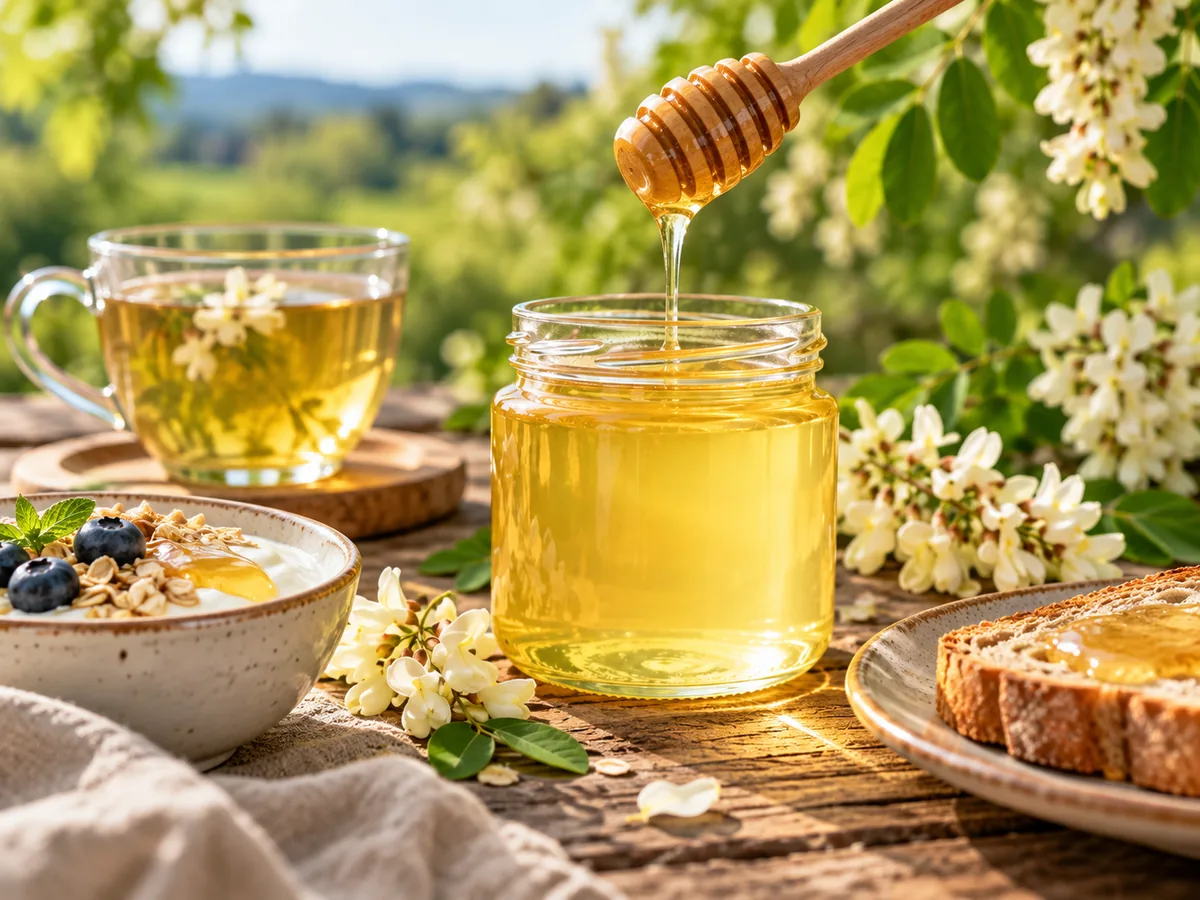
If you want honey to act as a gentle sweetener rather than a dominant flavor, acacia honey can work well. To preserve its aroma, there is no need to add it while a drink is vigorously boiling; you can let the drink cool slightly before stirring it in.
For Breakfast and Snacks
It can be used with toast, oatmeal, yogurt, fruit, or other foods where you would normally use honey. Because it often remains liquid, it is easy to pour and mix.
In Cooking
Its mild flavor can also be useful in dressings, marinades, and simple desserts when you do not want the honey aroma to dominate the dish. Adjust the amount to the recipe and your own taste.
How to Store Acacia Honey Properly
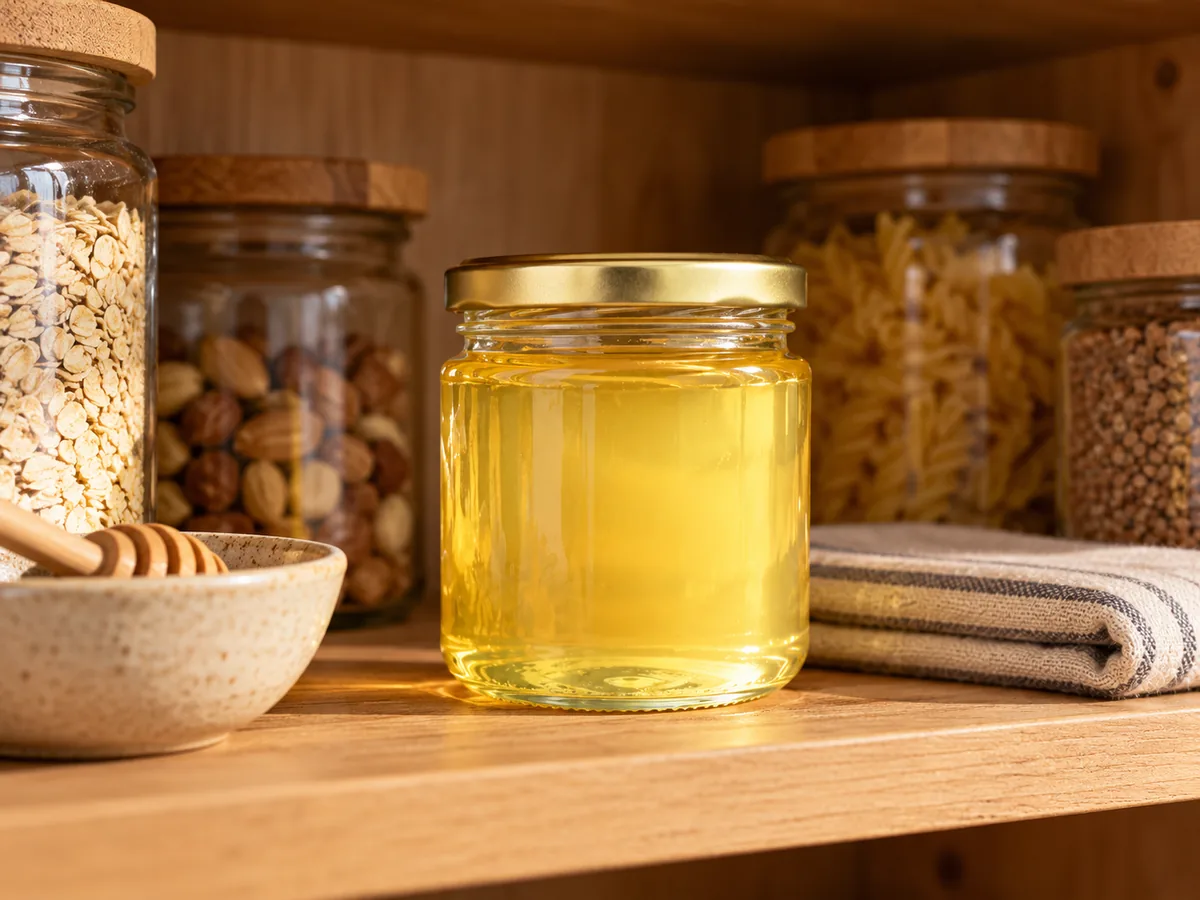
The same basic storage rules apply to acacia honey as to other honey varieties. Keep the jar tightly closed, in a dry place, away from direct sunlight and unnecessary heat. Use a clean, dry spoon so that you do not introduce moisture or contaminants into the jar.
For more detail on shelf life, moisture, temperature, and normal changes during storage, see our guide to whether honey expires and how to store it properly.
How to Choose Good Acacia Honey
Do not rely only on color, thickness, or how long the honey stays liquid. Those traits can be typical, but they are not enough to prove authenticity at home.
- read the label and product name;
- check the producer or packer information;
- look for quantity and date information;
- buy from a source you trust;
- do not treat popular “home tests” as proof that honey is genuine.
For a practical explanation of what consumers can and cannot reliably check at home, read how to tell if honey is real.
Do Color Changes or Crystallization Mean the Honey Has Spoiled?
Not necessarily. Acacia honey may change shade, become thicker, or begin to crystallize over time. Crystallization itself is a natural process and is not evidence that honey has spoiled.
It is different if the honey shows clear signs of fermentation, unusual foaming, or an unpleasant odor that was not present before. In those cases, the product should not be judged only by the idea that “honey lasts a long time.”
Important Note for Babies Under 12 Months
Acacia honey, like any other honey, should not be given to babies under 12 months old. The U.S. CDC advises against giving honey to children before their first birthday because honey can contain bacterial spores associated with infant botulism.
Frequently Asked Questions
Why Is Acacia Honey So Light?
A very light color is a common sensory characteristic of acacia honey, but the exact shade can vary. Color alone is not enough to prove botanical origin or quality.
Does Acacia Honey Crystallize?
Yes. It usually crystallizes more slowly than many other honey varieties, but that does not mean it must remain liquid forever.
Does Liquid Acacia Honey Mean It Is Definitely Genuine?
No. Slow crystallization is typical, but the physical state of honey alone is not a reliable home test of authenticity.
What Is the Best Way to Store Acacia Honey?
Keep it in a tightly closed jar in a dry place, away from direct sunlight and unnecessary heat, and use a clean, dry spoon.
Is Acacia Honey Good in Tea?
Yes, especially if you want a mild sweetener that does not greatly change the flavor of the drink.
Where Can You View Our Acacia Honey?
If you would like to view the product and basic packaging information, you can open our Bagremov med product page (Serbian). The product page is currently available in Serbian.
Conclusion
Acacia honey is known for its very light color, mild flavor, and relatively slow crystallization. Those characteristics are linked to its botanical origin and typical sugar profile, but they can naturally vary from one sample to another.
Choose it based on a trustworthy source, clear labeling, flavor, and how you plan to use it. Store it tightly closed in a dry place away from unnecessary heat, and do not treat a light color or long-lasting liquid texture as the only proof of quality or authenticity.