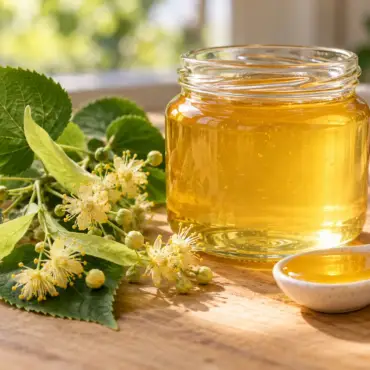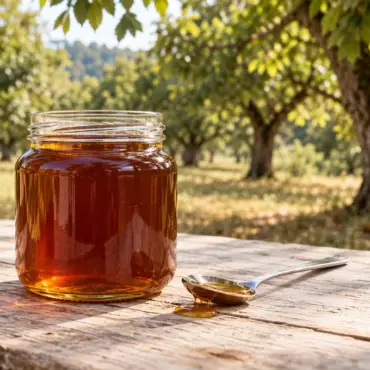
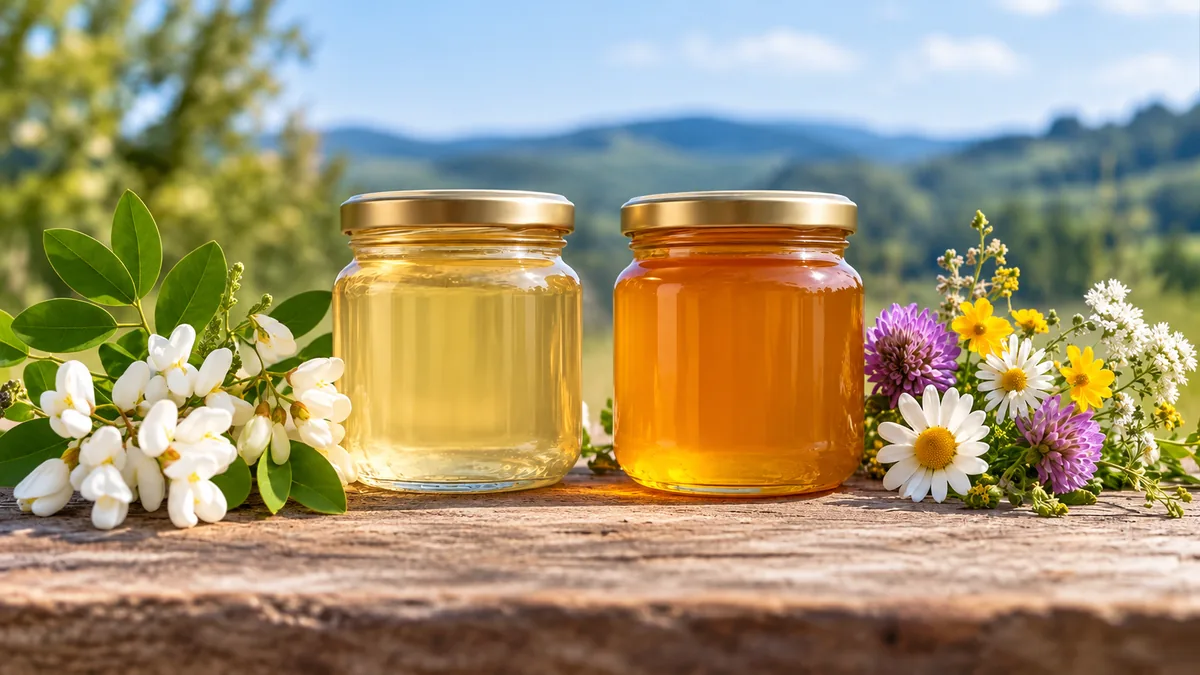
Acacia and wildflower honey are both popular choices, but they can differ noticeably in floral source, color, aroma, flavor, texture, and crystallization. If you are comparing acacia honey vs wildflower honey, the better choice usually depends on the flavor you prefer and how you plan to use the honey.
Acacia honey is known for its mild taste and for often remaining liquid for a long time. Wildflower honey is produced from nectar collected from many different flowering plants, so its character can be more complex and can vary from one season or location to another.
Below, we compare their typical characteristics, explain why they differ, and show which factors are actually useful when choosing between them.
Contents
Acacia Honey vs Wildflower Honey – What Is the Main Difference?
The most important difference is the botanical source of the nectar. Acacia honey is considered monofloral when its characteristics come predominantly from black locust, Robinia pseudoacacia, which is commonly called acacia in European honey labeling. Wildflower honey is usually polyfloral or multifloral, because bees collect nectar from several flowering plants in the same area.
Because of this, acacia honey usually has a more consistent and recognizable character, while wildflower honey can vary more between locations, seasons, and years. The Codex standard for honey allows a floral or plant-source designation when the honey comes wholly or mainly from that source and has the corresponding characteristics. You can read more in the Codex Standard for Honey.
| Characteristic | Acacia honey | Wildflower honey |
|---|---|---|
| Floral source | Predominantly black locust/acacia | Several different flowering plants |
| Color | Often very light | Can vary widely |
| Aroma | Usually mild | Often more complex and pronounced |
| Flavor | Delicate and mild | Depends on the floral mix |
| Crystallization | Often slower | May be faster, but not in every sample |
| Consistency between batches | Relatively recognizable | Greater natural variation |
This comparison describes typical characteristics. It should not be used as a rule for judging every individual jar of honey.
What Does Acacia Honey Look and Taste Like?
Acacia honey is known for its very light color. It can be almost colorless or have a pale yellow tint, and while liquid it often looks especially clear. Its delicate appearance and flavor are among the reasons it is popular with people who prefer honey without an intense aroma.
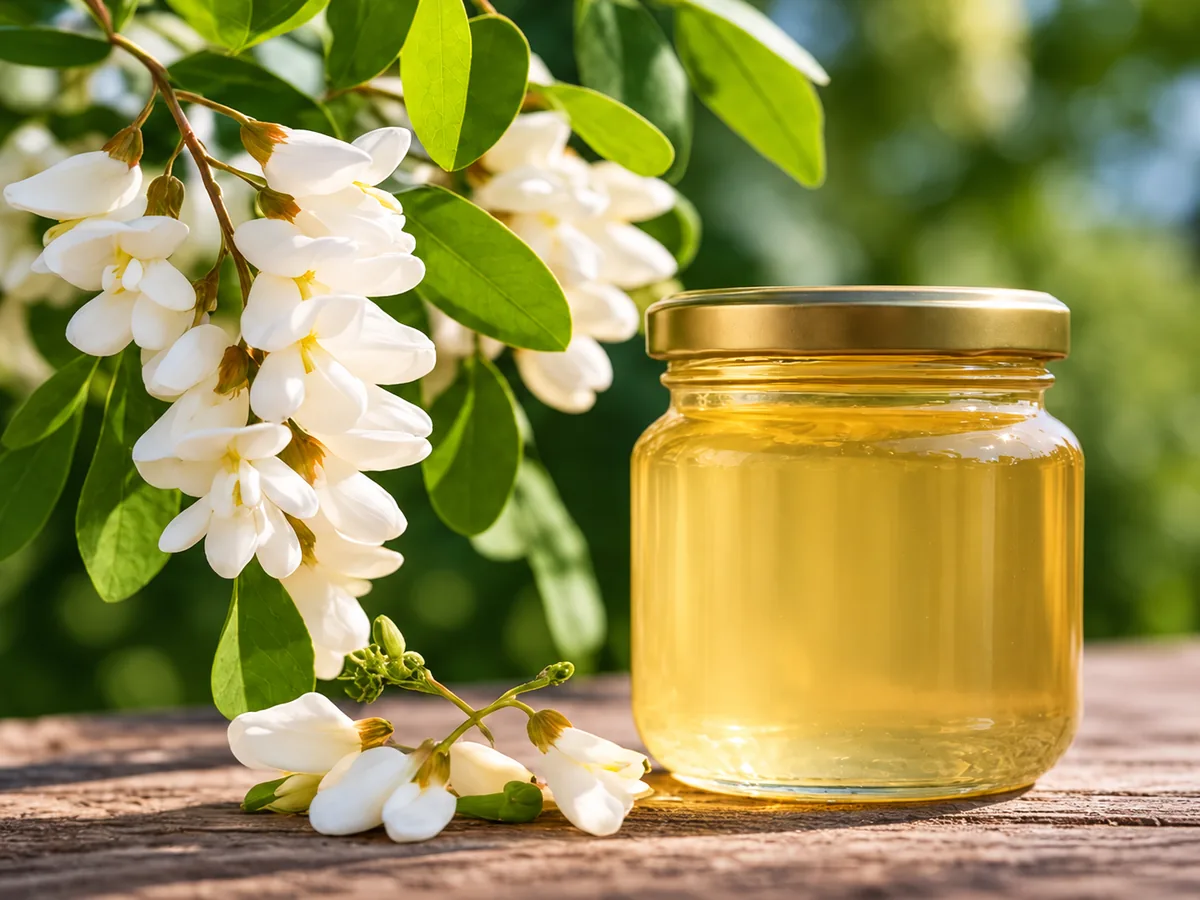
Color alone, however, does not prove botanical origin or authenticity. The appearance of honey can also be affected by its composition, storage conditions, temperature, and the time that has passed since extraction.
What Does Wildflower Honey Look and Taste Like?
Wildflower honey is much harder to describe with a single typical color. Because bees may collect nectar from many different plants, it can range from light gold to amber or darker shades.
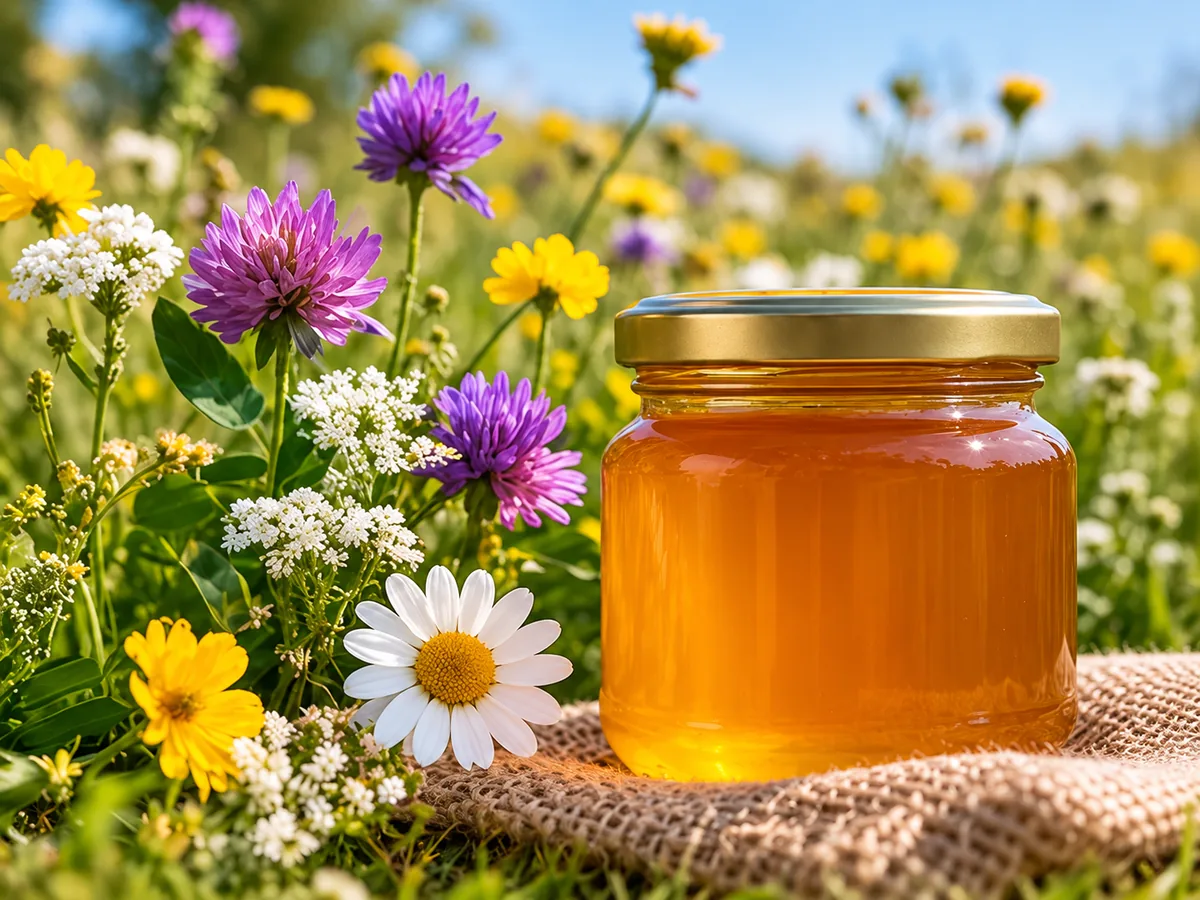
Scientific reviews of multifloral honeys show substantial natural variation because the nectar comes from different botanical sources. Two good-quality wildflower honeys therefore do not have to look or taste exactly alike.
Which Honey Has a Milder Flavor?
Acacia honey is most often described as mild, delicate, and sweet, with a subtle floral aroma. That makes it a popular choice for people who find some other honeys too intense.
Wildflower honey can have a fuller and more complex aroma, but because it is polyfloral, not every jar can be described in the same way. One batch may be quite mild, while another may be much more aromatic.
Flavor is a good reason to try different honeys, but it is not a reliable way to prove botanical origin or authenticity at home.
Which Honey Crystallizes More Slowly?
One of the best-known characteristics of acacia honey is its tendency to remain liquid for a relatively long time. Crystallization depends on sugar composition, water content, temperature, and other factors.
Glucose forms crystals more readily than fructose. A study of different honey types from Serbia notes that the relatively lower glucose content of acacia honey can contribute to slower crystallization. You can read the details in this study of Serbian honey characteristics.
Wildflower honey may crystallize more quickly, but there is no single rule for every batch because its composition depends on the flowers available during the nectar flow.
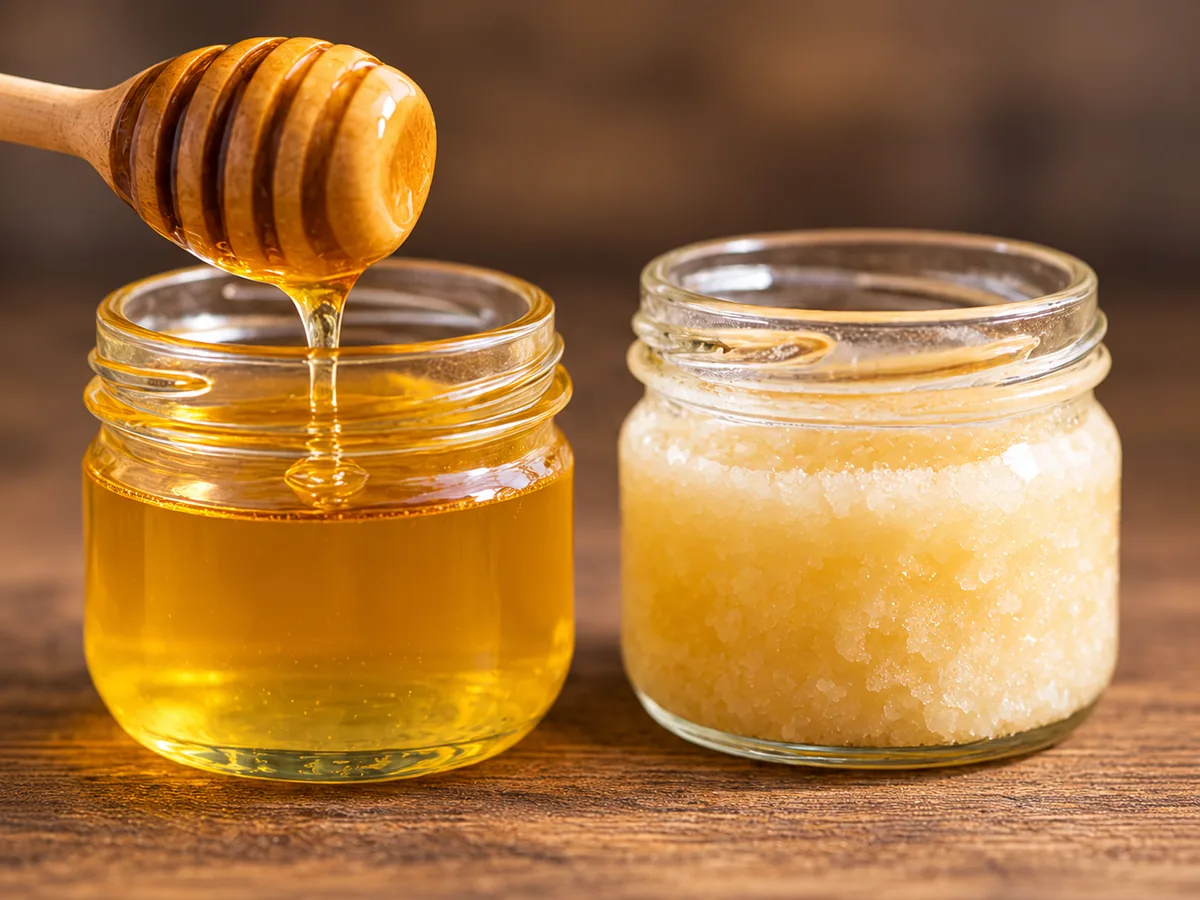
For a more detailed explanation of the process, read our guide on why honey crystallizes.
Does Crystallization Mean Wildflower Honey Is Lower Quality?
No. Crystallization is a natural physical change in honey and, by itself, is not a sign of poor quality. The fact that acacia honey often stays liquid longer does not automatically make it better than wildflower honey.
Likewise, remaining liquid for a long time is not proof that a honey is authentic.
Is Acacia Honey Better Than Wildflower Honey?
There is no universal rule that makes one of these two honey types “better.” If by better you mean flavor, the answer depends on personal preference.
If you prefer a mild aroma, a lighter appearance, and honey that often stays liquid for a long time, acacia honey may suit you better. If you enjoy a more variable character, a fuller aroma, and honey that reflects several flowering plants from a particular area, wildflower honey may be more appealing.
More important than the name alone is whether the product is correctly labeled, properly stored, and purchased from a reliable source.
Is One of Them Healthier?
Claims that one type of honey is universally “healthier” should be treated cautiously. Honey composition varies with botanical and geographical origin, season, processing, and storage conditions.
Scientific literature confirms that nectar source influences the chemical and sensory characteristics of honey, but that does not mean every wildflower honey is a better choice than every acacia honey, or vice versa. For everyday use, origin, product quality, flavor, and intended use are more practical factors to consider.
Which Honey Is Better for Tea, Breakfast, and Everyday Use?
For Tea
If you want honey to change the flavor of your drink as little as possible, the mild taste of acacia honey often works well in tea. Wildflower honey may add a stronger floral note, which some people prefer.
You do not need to add honey to a boiling-hot drink. If you want to avoid unnecessary heating, let the drink cool a little before stirring in the honey.
For Breakfast and Everyday Use
Both work well for everyday use. Acacia honey is convenient if you like honey that pours easily and has a mild flavor. Wildflower honey can be more interesting if you enjoy stronger aromas and the natural differences between harvests.
Either type can be used with bread, toast, oatmeal, yogurt, or other foods where you would normally use honey.
How to Choose Between Acacia and Wildflower Honey
If You Prefer a Mild Flavor
Acacia honey is often the natural choice because of its delicate aroma and mild taste.
If You Prefer a Stronger Aroma
Try wildflower honey, keeping in mind that its flavor can vary depending on location and season.
If You Want Honey to Stay Liquid Longer
Acacia honey generally has an advantage because it tends to crystallize more slowly.
If You Enjoy Natural Variation
Wildflower honey can be especially interesting because it reflects a mixture of different floral sources.
Do Not Choose Based Only on Color and Thickness
Light-colored honey is not automatically higher quality, and darker honey is not automatically better. The same applies to thickness. Temperature, water content, sugar composition, and crystallization can all change how honey looks and behaves in the jar.
If you want to know what you can realistically check at home, read our guide on how to tell if honey is real.
Read the Label and Know Who You Are Buying From
Whether you choose acacia or wildflower honey, read the label. Check the product name, producer or packer, net quantity, best-before information, and other details provided on the packaging.
A reliable producer and a clear label tell you much more than popular home tests involving water, matches, or spoons.
How Should You Store Both Types of Honey?
The basic storage rules are the same for both types of honey:
- keep the jar tightly closed;
- store honey in a dry place;
- protect it from direct sunlight;
- keep it away from unnecessarily high temperatures;
- use a clean, dry spoon.
For a more detailed explanation, read Does Honey Expire? How Long It Lasts and How to Store It Properly.
Common Myths About Acacia and Wildflower Honey
“Acacia honey is real only if it is completely clear.”
No. Color can be a useful characteristic, but it is not sufficient proof of authenticity.
“Wildflower honey must be dark.”
No. Its color depends on the flowers that supplied the nectar and can vary considerably.
“Wildflower honey is better because it comes from more plants.”
You cannot determine overall quality from the fact that a honey is polyfloral. Quality depends on many other factors.
“Acacia honey is bad if it crystallizes.”
No. Acacia honey can crystallize too; it usually just does so more slowly.
“If honey stays liquid, it must be acacia honey.”
Remaining liquid for a long time is not, by itself, reliable proof of botanical origin.
Frequently Asked Questions
What is the main difference between acacia and wildflower honey?
Acacia honey predominantly comes from one floral source and usually has a lighter, milder, and more consistent character. Wildflower honey comes from several flowering plants, so its characteristics can vary more.
Which honey tastes milder?
Acacia honey is usually milder and more delicate in flavor.
Which honey crystallizes more slowly?
Acacia honey often crystallizes more slowly because of its characteristic sugar composition, although the crystallization rate of any honey depends on its specific composition and storage conditions.
Is wildflower honey always darker?
No. It can be light or dark depending on the plants represented in the nectar source.
Which honey is higher quality?
The label “acacia” or “wildflower” is not, by itself, a measure of overall quality. Origin, proper production and storage, labeling, and the characteristics of the individual product all matter.
Can acacia honey crystallize?
Yes. Slower crystallization does not mean that crystallization will never occur.
Acacia Honey vs Wildflower Honey – Which Should You Choose?
If you like mild, light-colored honey that often stays liquid for a long time, acacia honey will probably suit you better. If you prefer more varied and often more pronounced aromas, wildflower honey may be the more interesting choice.
If you want to see the products currently available from P&P Honey, you can view our acacia honey and wildflower honey product pages. Both product pages are currently in Serbian.
Conclusion
Acacia and wildflower honey differ primarily in botanical origin, and that difference contributes to many of their typical differences in color, aroma, flavor, and crystallization behavior.
Acacia honey is often lighter, milder, and slower to crystallize. Wildflower honey is more variable because it comes from several floral sources, so its characteristics can depend more strongly on location and season.
Neither type is automatically “better.” The best choice is the one that matches your taste and intended use, provided that the honey is properly labeled and comes from a reliable source.