Honey is one of the most stable foods you can keep at home, which is why people often ask does honey expire or whether an old jar is still safe to use. The short answer is that properly stored honey can remain usable for a very long time, but that does not mean it is completely unaffected by storage conditions.
Honey contains a high concentration of sugars, relatively little water, and has a naturally acidic environment. Those properties make it difficult for many microorganisms to grow. Still, moisture, contamination, heat, poor packaging, and repeated opening can change its quality and, in some cases, encourage fermentation.
It is therefore useful to separate two questions: is the honey unsafe, and has the honey lost some of its original quality, aroma, or texture? These are not always the same thing.
Table of Contents
Does honey expire?
Properly stored honey is a very stable food. However, that does not mean it is completely immune to poor storage conditions. The most important practical issue is moisture. When honey absorbs too much water from the surrounding air, or when water is introduced with a wet spoon, conditions become more favorable for fermentation.
USDA guidance on extracted honey notes that fermentation can occur when the concentration of dissolved solids is too low and also discusses situations in which a more liquid layer can separate above crystallized honey. Honey can also absorb odors from its surroundings when the container is not sealed properly. You can read more in the USDA inspection instructions for extracted honey.
So honey does not spoil easily, but it can lose quality or ferment if it is stored incorrectly.
How long does honey last?
Most jars have a best-before date, but that date should not be understood as the exact moment when the honey suddenly becomes unsafe. It is mainly a quality guideline based on how the product is expected to perform when stored according to the producer’s instructions.
A clean, tightly closed jar that has not been contaminated with water or food particles can remain usable for a very long time. Over time, however, honey may become darker, thicker, more crystallized, or slightly different in aroma and flavor. Those changes do not automatically mean that the honey has spoiled.
If you also want to understand what can and cannot be checked when buying honey, see our guide How to Tell If Honey Is Real: What You Can Actually Check.
How to store honey properly
Good honey storage is simple, but a few habits make a real difference.
1. Keep the jar tightly closed
Honey is hygroscopic, which means it can attract and absorb moisture from the air. That is why the lid should stay firmly closed. An open or poorly sealed jar can take in moisture and odors from the kitchen or pantry.
2. Use a clean, dry spoon
One of the easiest storage mistakes is introducing water with a wet spoon. A tiny amount of moisture is unlikely to cause an immediate problem, but repeating the habit increases the chance that part of the honey will become diluted enough to ferment.
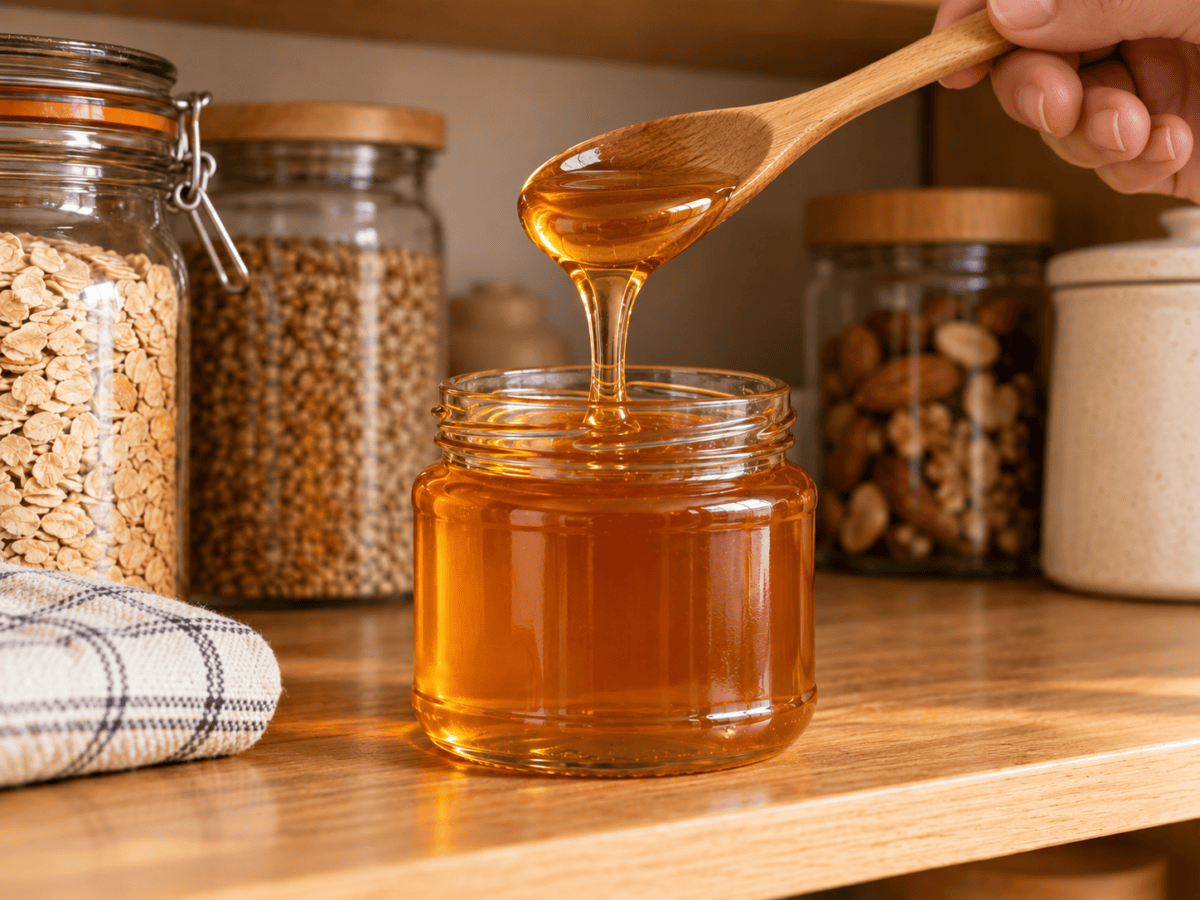
3. Keep honey away from direct sunlight
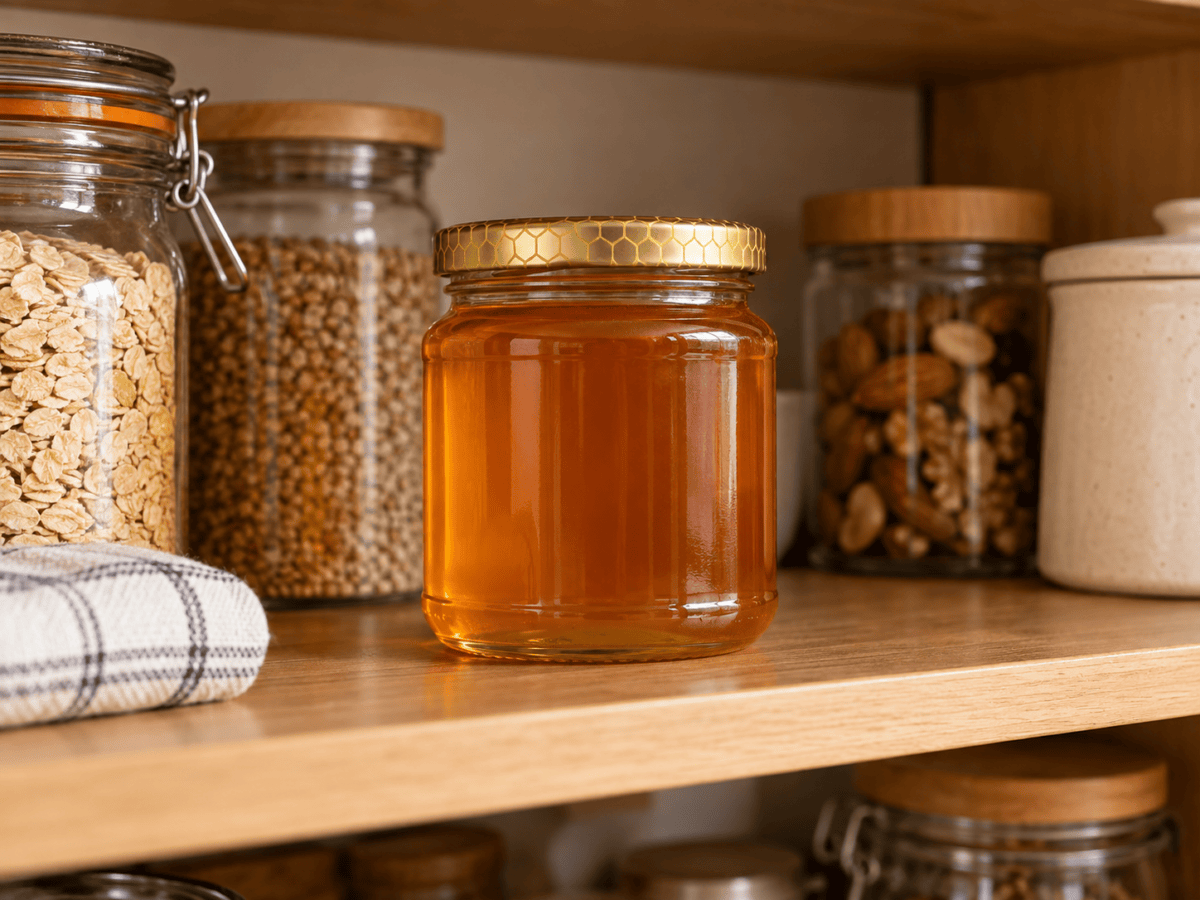
Direct sunlight and unnecessary heat are not ideal for long-term quality. A cupboard, pantry, or another shaded place is usually a better choice than a shelf beside a sunny window.
4. Avoid high temperatures
Long exposure to heat can affect flavor and some of honey’s natural characteristics. USDA guidance notes that overheating can lead to a caramelized flavor, while prolonged storage at high temperatures can reduce flavor quality.
The European Commission also describes honey quality requirements that include composition and processing criteria. You can learn more on the European Commission honey page.
5. Refrigeration is usually unnecessary
For everyday use, honey is generally best kept tightly closed at a stable room temperature, away from direct sunlight and strong heat sources. In the refrigerator, many types of honey will thicken or crystallize more quickly, so refrigeration is usually not needed.
Is crystallized honey spoiled?
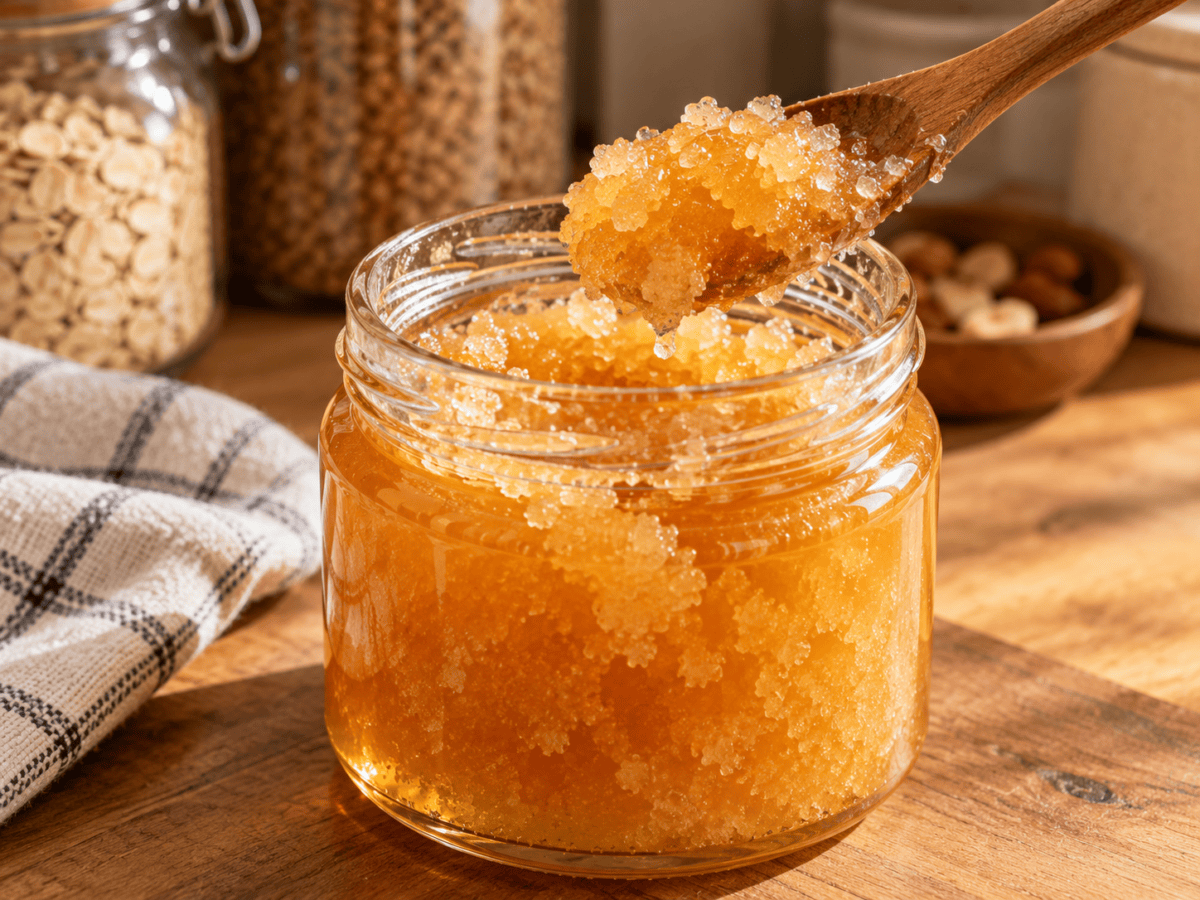
No. Crystallization is a normal physical change in many types of honey. Some varieties stay liquid for a long time, while others crystallize much sooner depending on their sugar composition, temperature, and storage conditions.
If crystals appear in the jar, that alone is not a reason to throw the honey away. We explain the process in detail in Why Does Honey Crystallize? Is Crystallized Honey Spoiled?.
When can honey become a problem?
The key is to distinguish normal changes from unusual signs. Crystallization, gradual darkening, or a change in thickness can happen during storage. Certain other changes deserve more caution.
An unusual sour or alcoholic smell
If honey begins to smell strongly sour, alcoholic, or fermented, that can be a sign of fermentation. This is different from normal crystallization.
Persistent foam, bubbles, or gas activity
A few bubbles created while pouring are not the same thing as continuing foaming or gas production. Unusual activity in the jar, especially together with a changed smell, is a reason to be cautious.
Visible contamination
If food particles, water, dirt, or other materials have entered the jar, the honey should no longer be treated as a clean, properly stored product. In that case, its natural stability is less reliable.
Does honey change color over time?
Yes. Honey can become darker as it ages, especially if it is stored at higher temperatures. A color change does not automatically mean the product is spoiled, but it can indicate that quality has changed during storage.
Keeping the jar in a cool, shaded cupboard is therefore better than storing it beside the stove, radiator, or a sunny window.
What happens if honey absorbs moisture?
Water content is one of the most important factors affecting honey stability. European quality standards limit moisture levels for most honey types because excessive water makes undesirable changes more likely.
An open jar can absorb moisture from humid air, and a wet spoon can locally increase water content inside the jar. That is why the simple rule of using a clean, dry spoon and closing the lid properly matters more than it may seem.
Is old honey still good to use?
Age alone is not enough to decide whether honey is still good. Storage conditions are usually more important. If the honey has remained sealed, clean, and free from signs of fermentation or contamination, an older jar may still be perfectly usable.
That said, flavor and aroma can gradually change, especially when honey has spent a long time in a warm place. A decline in quality is not always the same thing as a food-safety problem.
What about an unopened jar of honey?
An unopened jar is generally easier to keep in good condition because the contents have not been repeatedly exposed to humid air, utensils, food particles, or kitchen odors. If the seal is intact and the jar has been stored away from excessive heat and sunlight, there is usually less opportunity for outside moisture or contamination to enter.
That does not mean an unopened jar will look exactly the same forever. Honey can still darken gradually or crystallize over time, depending on the variety and storage temperature. Those changes can occur even when the package has never been opened.
Before using an older unopened jar, check that the lid and container are undamaged and that there are no unusual signs such as leakage, a bulging lid, or obvious contamination around the seal. Once opened, continue with the same basic rules: keep the lid tight, use only clean and dry utensils, and store the jar in a stable, shaded place.
Common honey storage mistakes
Leaving the lid open
This makes it easier for honey to absorb moisture and surrounding odors.
Keeping the jar beside a stove or radiator
Continuous heat accelerates quality changes.
Using a wet spoon
Repeatedly introducing water is one of the simplest ways to reduce honey’s natural stability.
Assuming crystallized honey is spoiled
Crystallization is normal in many honey varieties and is not the same as fermentation or spoilage.
Heating honey too aggressively
If you want to soften crystallized honey, gentle and gradual warming is better than boiling water or direct high heat.
Simple storage rules worth remembering
For good long-term quality, keep the lid closed, use a clean and dry spoon, and store the jar away from direct sunlight and unnecessary heat. You can browse more guides in our Honey and Bee Products category or return to the English homepage.
Does the container matter?
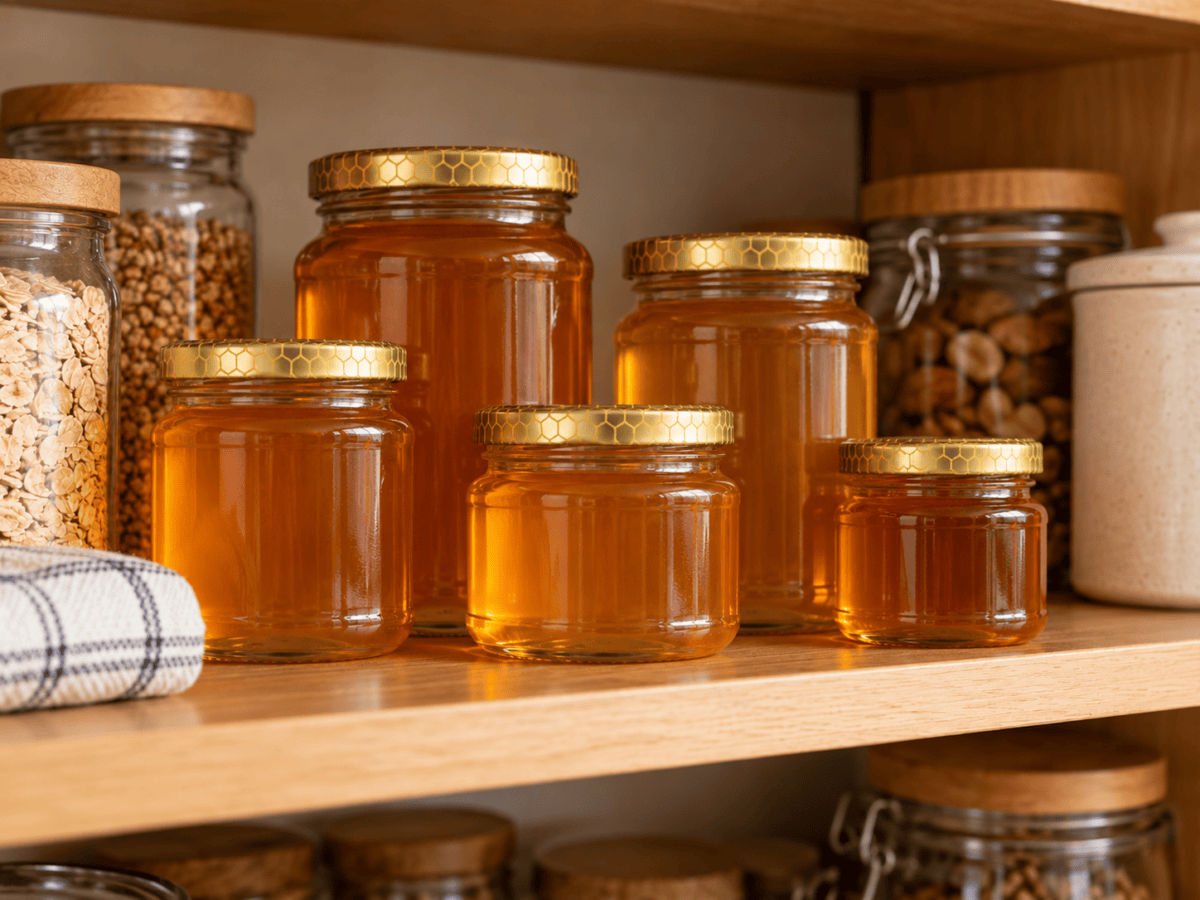
For home storage, the most important things are that the container is food-safe, clean, dry, and able to close tightly. A glass jar is a practical option because it does not absorb odors and lets you see changes in color and texture.
If you keep honey in its original packaging, follow the producer’s storage instructions. Whatever the container material, the lid should fit properly and the inside of the container should remain dry.
If you buy several jars at once, it can also be useful to leave unopened jars sealed until you need them. This reduces unnecessary exposure to moisture, odors, and accidental contamination.
Frequently asked questions
Does honey have an expiration date?
Honey normally carries a best-before date related to expected quality. Properly stored honey can remain usable for a very long time, but storage conditions and unusual changes should always be considered.
Should honey be refrigerated?
Usually not. Honey is typically stored tightly closed at a stable room temperature, away from direct sunlight and heat sources.
Is crystallized honey spoiled?
No. Crystallization is a natural texture change in many types of honey.
How can you tell if honey has fermented?
A pronounced sour or alcoholic smell, persistent foam, unusual bubbling, or a clearly changed taste may indicate fermentation. These signs are different from normal crystallization.
Can a wet spoon spoil honey?
A tiny amount of water will not necessarily cause an immediate problem, but repeatedly introducing moisture increases the risk of fermentation. A clean, dry spoon is the better habit.
Can crystallized honey be warmed?
Yes. If you want to soften crystallized honey, use gentle, gradual warming rather than very high heat.
Conclusion
So, does honey expire? Honey is extremely stable and can remain usable for a long time when it is stored properly, but it is not immune to poor handling. Moisture, contamination, a loose lid, and excessive heat are the main things to avoid.
Crystallization is not a sign of spoilage. It is more useful to pay attention to smell, taste, visible contamination, unusual foam, and the conditions in which the honey has been stored.
If you would like to see our acacia honey, you can visit the Bagremov med product page (Serbian). Keep any honey tightly closed, dry, and away from direct sunlight.