Sage tea is made from the leaf, but the amount and preparation method depend on whether you drink it or use it to rinse your mouth and throat. Check the intended use on the packet first: a stronger gargle is not automatically a drink for everyday use.
Common sage has a place in traditional herbal medicine. That does not mean a cup cures every sore throat or suits everyone; it is especially important to distinguish the leaf from concentrated essential oil.
Contents
Sage leaf: which plant and part are used?
This guide concerns Salvia officinalis L. and its dried leaf. Labels may also use Salviae officinalis folium or Salviae folium; the botanical name helps you check which plant the instructions refer to.
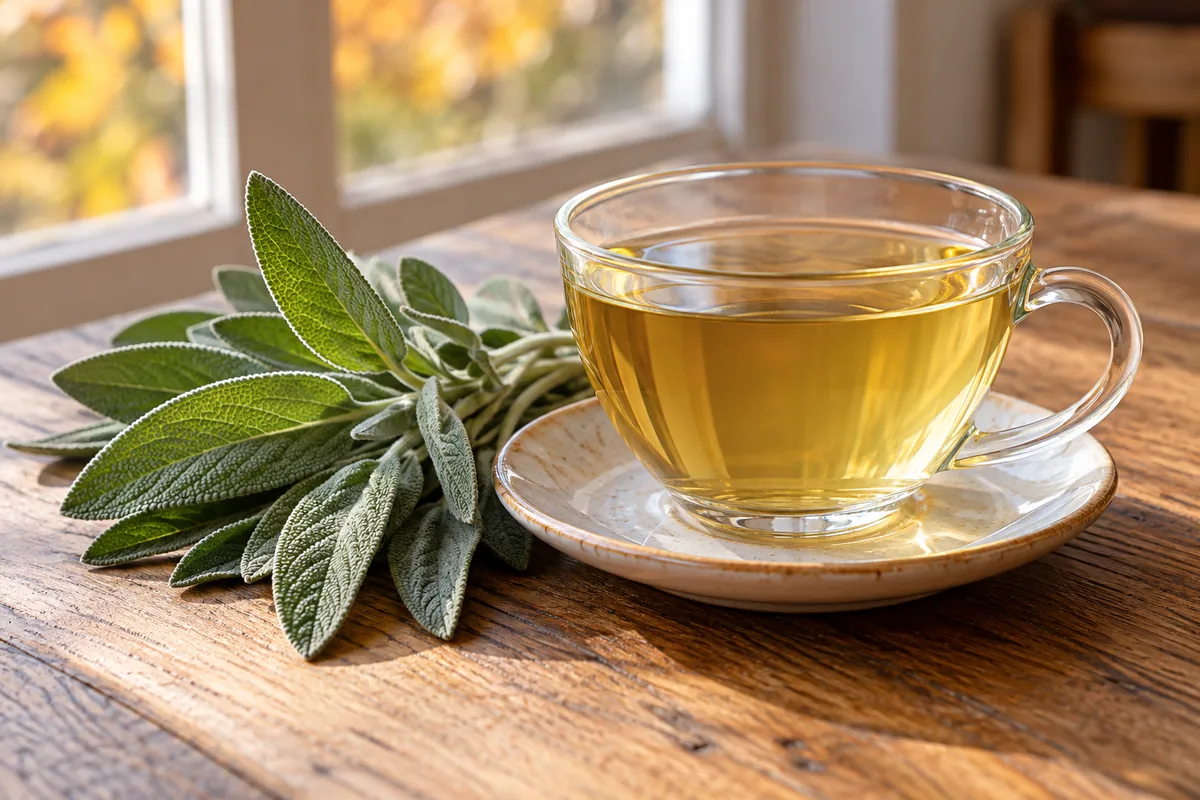
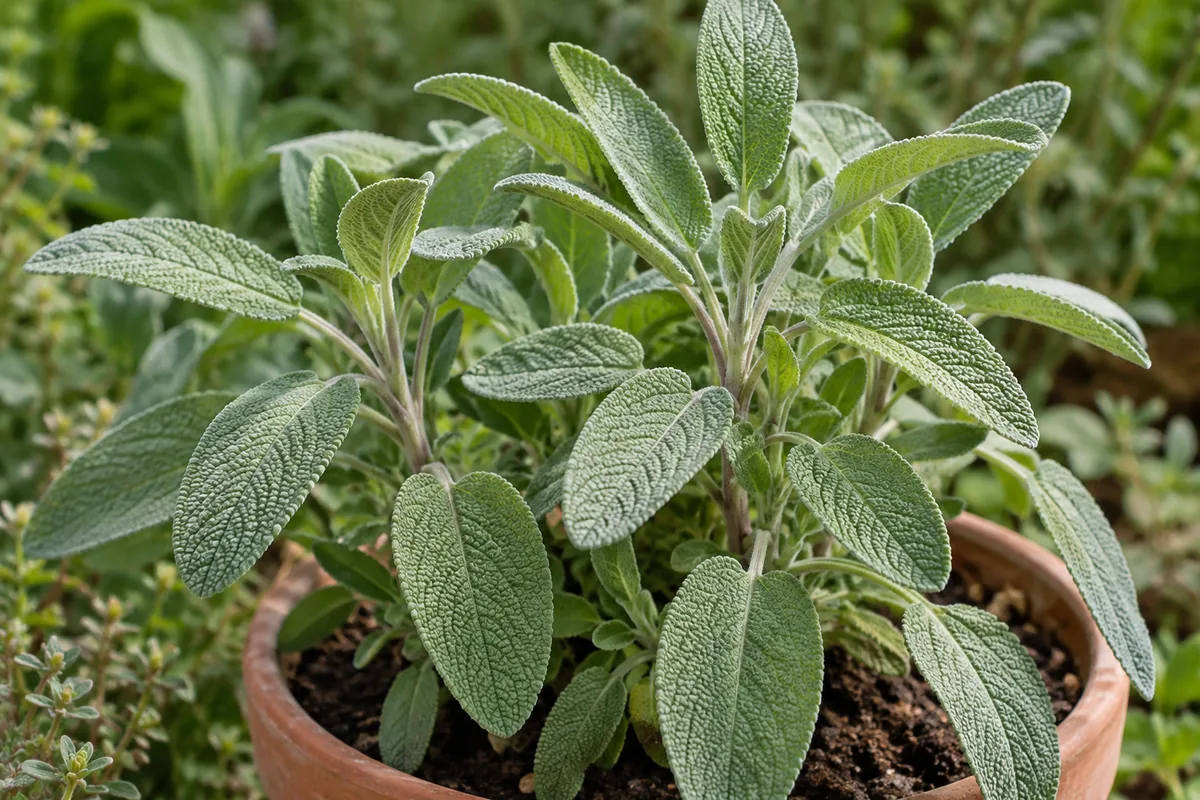
The Dr Josif Pančić Institute describes common sage as an aromatic shrub with grey-green, softly hairy leaves. The image below is an illustration, not enough to identify and harvest a wild plant safely.
Choose a labelled product of known origin, with ingredients, an expiry date and directions. If a bag has no label or you are unsure what it contains, clarify its identity rather than judging its strength by the smell.
What does traditional use actually mean?
The EMA monograph on sage leaf covers traditional uses for mild digestive complaints, excessive sweating, and inflammation of the mouth and throat. Mouth and throat use is local, separate from drinking.
Here, traditional use means a history of use for a particular purpose. It is not proof that an ordinary homemade infusion can cure a bacterial infection or replace prescribed treatment.
Evidence for one preparation does not apply to every tea
The EMA assessment report considers different preparations and studies. Extracts, sprays, tinctures and leaf infusions differ; sharing a plant name does not make their effects interchangeable.
Start with a practical question: do you want a drink or a rinse, why are you using it, and is that particular product suitable for you? Those questions are more useful than choosing the strongest recipe you can find.
How to prepare sage tea for drinking
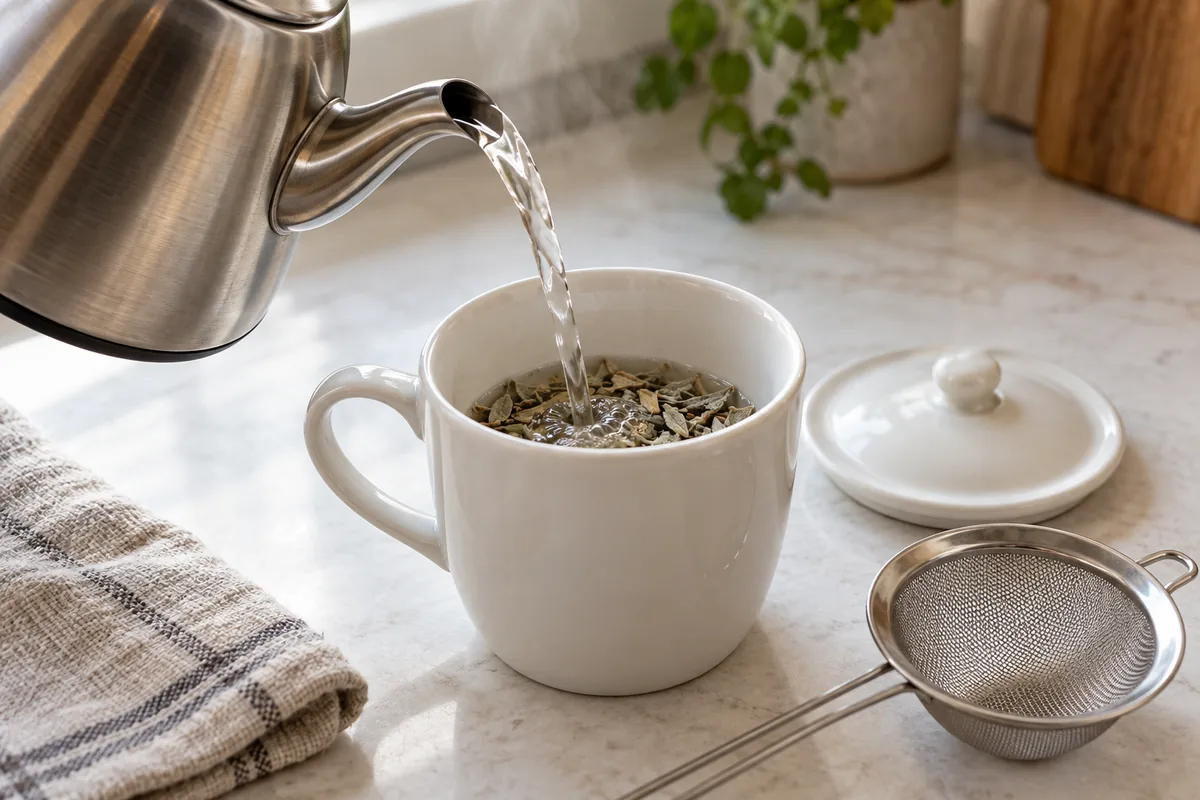
Follow the directions on your own product. As a product-specific example from Serbia, the Dr Josif Pančić Institute gives one small teaspoon of leaf per 200 ml of boiling water, covered for 10–15 minutes, then strained.
This is not a universal dose for other loose leaves, tea bags or extracts. Check the recommended frequency and restrictions on your packet too; the size of your favourite mug does not determine an appropriate amount.
What you need
- labelled dried sage leaf intended for your chosen use;
- the quantity of water specified on the packet;
- a clean cup or heatproof container with a cover;
- a strainer and measuring equipment suitable for the directions.
Measure the leaf and water, pour and cover as directed. Strain after the stated time and let the liquid cool to a comfortable temperature so it does not burn.
Do not add another spoonful because the flavour seems weak. Taste and colour do not measure effectiveness or show that a homemade cup has the same composition as a studied preparation.
A sage gargle is different from a drink
For adults, the EMA monograph includes an example of 2.5 g of cut leaf in 100 ml of boiling water, used warm as a gargle three times daily. This describes that route of use; it is not a recommendation to drink the same concentration.
Use a product intended for rinsing and follow its preparation instructions. Allow it to cool enough for safe use, then spit the liquid out after rinsing or gargling.
| What you use | What to check first | A common mistake |
|---|---|---|
| Leaf tea intended for drinking | Labelled amount, water, time and frequency | Using the gargle directions |
| A mouth or throat rinse | Intended use and application instructions | Swallowing it as an ordinary drink |
| A tincture or ready-made spray | Ingredients, dilution and product directions | Converting spoonfuls of leaf into drops |
| Essential oil | Specific intended use and professional advice | Adding drops to homemade tea |
There is no general rule that boiling any sage preparation for a few minutes makes it safe. Do not change the method on the assumption that you have removed all potentially harmful constituents.
Sage tea precautions: when to seek advice
NCCIH notes that some sage species, including common sage, contain thujone, which can be harmful in large amounts or with prolonged use. Concentrated essential oil is not a substitute for leaf tea; do not take it by mouth on your own initiative.
Pregnancy, breastfeeding and people under 18
EMA does not recommend these medicinal uses during pregnancy or breastfeeding, or for children and adolescents under 18, because adequate data are lacking. Simply reducing an adult amount does not establish a safe child dose.
These restrictions concern medicinal teas and preparations used for symptoms. They should not be treated as a judgement about every small quantity of sage used to season food.
Medicines, previous reactions and duration
If you take medicines, have a long-term condition or a history of seizures, ask a doctor or pharmacist before use. Take the product name with you: advice about leaves does not automatically apply to capsules or essential oil.
Avoid a product that has caused a reaction before. Stop using it and seek advice if unwanted symptoms develop.
EMA advises medical assessment if mouth or throat symptoms persist beyond one week; for mild digestive complaints, it gives two weeks. Worsening symptoms need earlier assessment, rather than waiting for that period to pass.
Storing the leaf and keeping preparation simple
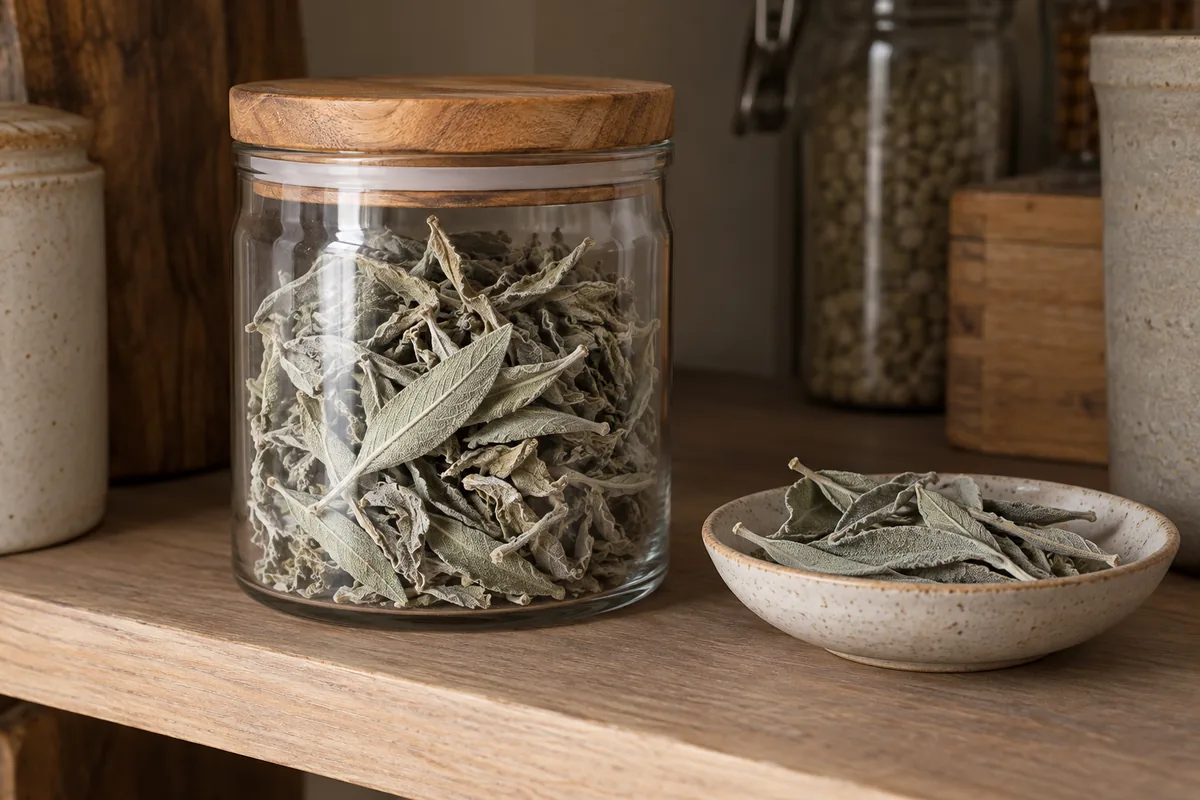
Follow the storage conditions and expiry date on the packet. Keep the label with the herb, especially if you transfer it to another container; an attractive jar should not erase information about its contents.
Remove only the amount you need using clean, dry utensils. Do not return damp leaves from the strainer to the dry supply.
Should you add honey?
Honey is not an essential ingredient in a mouth or throat rinse. If you add it to a preparation intended for drinking, treat it as food, not a way to make the herb safer or turn the drink into a stronger medicine.
For more on its role in drinks, read when to add honey to tea. Combining sage and honey in a cup does not make them the same product.
Frequently asked questions about sage tea
Do žalfija and kadulja mean the same herb?
In this guide, both regional names refer to Salvia officinalis L. Still, check the botanical name and plant part when buying a product, especially a blend.
Can sage tea replace antibiotics?
It should not replace prescribed treatment. Sore throats have different causes; a health professional determines whether treatment is needed, not the strength or bitterness of a tea.
The NHS advises emergency help for difficulty breathing, inability to swallow, or severe symptoms that worsen quickly. A very high temperature, dehydration or a weakened immune system also warrants prompt assessment; use the appropriate local health service.
Are other herbal teas automatically a better alternative?
Each herb has its own restrictions. Compare our guides to chamomile tea and thyme tea, without assuming every herb should be mixed or used for the same symptoms.
Choose the purpose before the preparation
With sage tea, first clarify what you are using and why. Choose a labelled product, distinguish drinking from rinsing, and follow its directions; a stronger cup or longer use is not a shortcut to a better result.