Thyme tea is made by infusing dried plant material according to the instructions on its package. Check the botanical name too: wild thyme and common thyme are related, but guidance for one species should not automatically be applied to another.
If you are choosing thyme tea because of a cough, keep the limits of the evidence in mind. Traditional use of particular thyme preparations does not mean that every homemade cup treats an infection or replaces an examination and prescribed treatment.
Contents
What is thyme tea and what should you check on the label?
Similar common names can refer to different herbal products. The name on the front of the box is not enough to choose preparation instructions: read the ingredients, botanical name and the part of the plant used.
The Serbian Institute “Dr Josif Pančić” labels the single-herb product used in this example as the dried aerial parts of Thymus serpyllum, also called Serpylli herba. The EMA monograph for Thymi herba covers Thymus vulgaris and Thymus zygis. These are separate source documents for separate plant materials. (source: Institute product instructions (Serbian)) (source: EMA thyme monograph)
Wild thyme and common thyme: why the botanical name matters
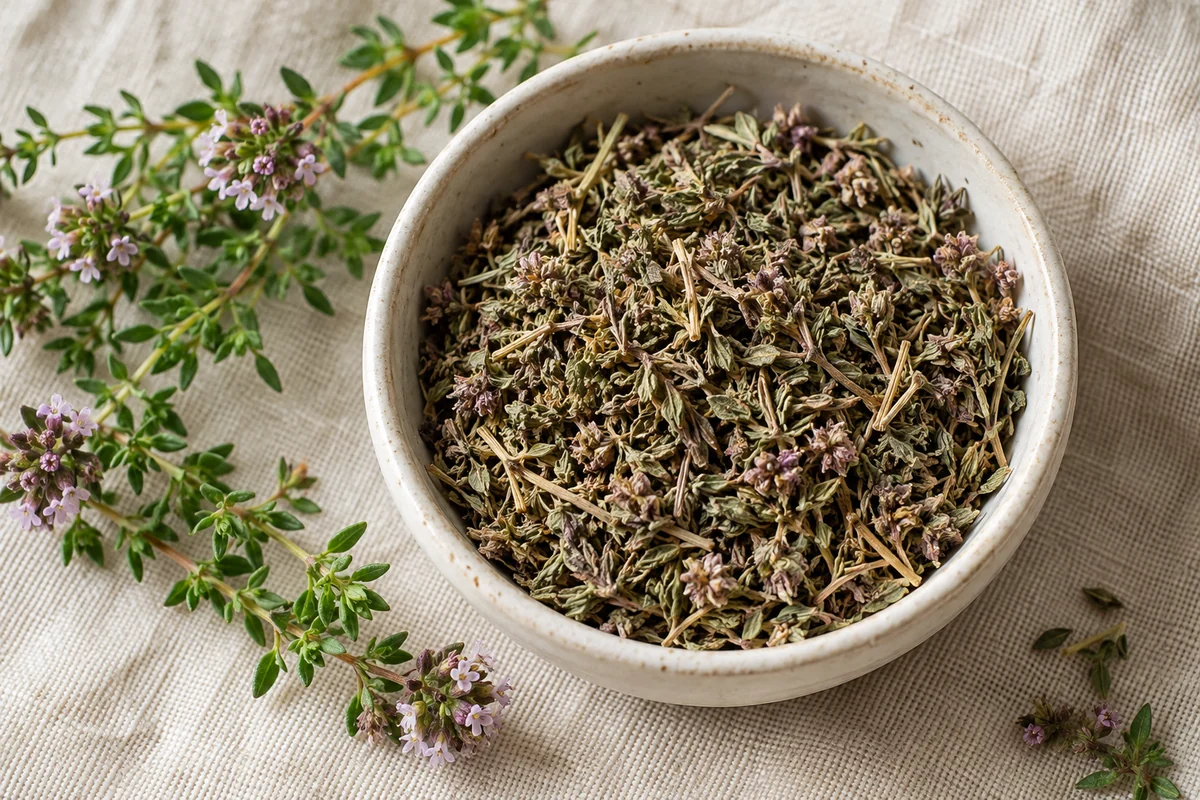
Two packages with similar names do not necessarily contain the same herb. A picture on the box may help you recognise a product, but its botanical identity and ingredients should guide your choice of instructions.
Pay particular attention to blends. A product containing thyme, mint and other herbs is different from a single-herb tea; read the blend’s own directions rather than borrowing instructions from another box.
| Label information | What it identifies | How to use it |
|---|---|---|
| Thymus serpyllum / Serpylli herba | The plant material in the Serbian product used as our example | Follow that specific package’s instructions |
| Thymus vulgaris / Thymus zygis / Thymi herba | The species covered by the EMA thyme monograph | Do not extend its guidance to every product called thyme |
| Several herbs in the ingredients | A herbal blend | Check all ingredients and the blend’s directions |
This table helps you read a label; it is not a guide to identifying plants outdoors. For home preparation, a clearly labelled product is a more practical choice than a plant whose identity you have not reliably established.
How do you prepare thyme tea?
Start with the package you have. Water volume, the amount of herb and steeping time may differ; if its instructions differ from the example below, follow the manufacturer’s directions for your product.
An example for a labelled Thymus serpyllum product
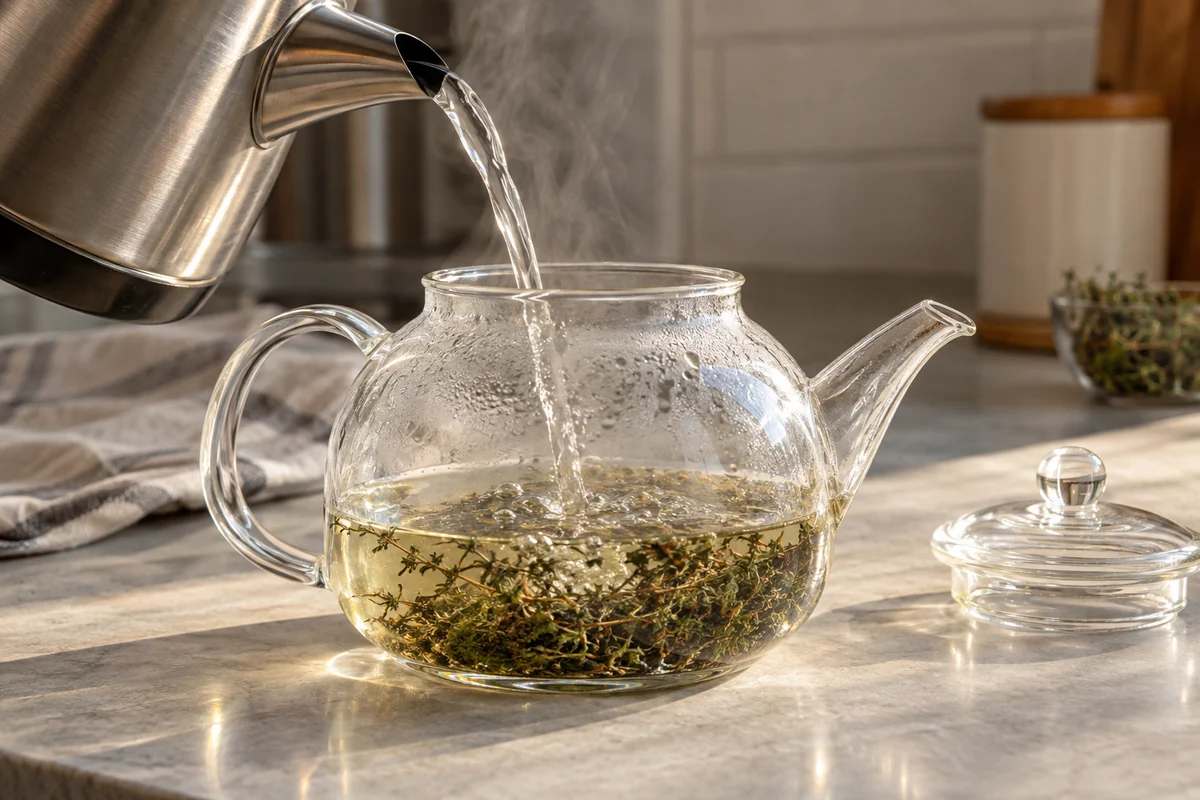
The Institute’s directions specify one coffee spoon of dried aerial parts, 150 ml of boiling water and 10–15 minutes in a covered container. This is an example for that particular product, not a universal dose for all thyme teas. (source: Institute product instructions (Serbian))
- a labelled thyme product, in the amount specified on its package;
- water, in the volume stated by the manufacturer;
- a heat-safe cup or container and a suitable cover;
- a strainer, unless you are using a tea bag.
Use clean equipment and measure the herb. Add water as directed, cover and leave it for the stated time, then strain; let the drink cool to a comfortably warm temperature before drinking it.
| Step | Action | Important point |
|---|---|---|
| 1 | Check the species and directions | Do not use instructions for a different herbal product |
| 2 | Measure the herb and water | Do not increase the amount to make the tea “more medicinal” |
| 3 | Add water and cover | Take the steeping time from your package |
| 4 | Strain and allow to cool | A warm drink should not be uncomfortably hot |
Why a spoon is not an exact substitute for grams
A level spoon and a heaped spoon hold different amounts, and the size of the dried particles also varies. If the package specifies grams, use an appropriate scale; do not invent a conversion from grams to spoonfuls.
The EMA monograph gives quantities in grams for its thyme tea preparation. We do not turn those quantities into a recipe for Thymus serpyllum: keeping to the instructions for the product you bought is clearer. (source: EMA thyme monograph)
Thyme tea and coughs: what does traditional use mean?
EMA recognises traditional use of certain Thymus vulgaris and Thymus zygis preparations for a productive cough associated with a cold. This conclusion rests on long-standing use, with insufficient clinical trial evidence for firm confirmation of effectiveness. (source: EMA public summary)
That is narrower than a promise that thyme tea treats bronchitis, pneumonia or every kind of cough. This guide does not present a homemade infusion as an antibiotic or use customer anecdotes as evidence of a cure.
Tea, extracts and essential oil are different preparations
Research may examine extracts, individual compounds or oils. EMA’s assessment discusses the limits of connecting laboratory findings to a therapeutic effect in people. The preparation tested matters when interpreting a study. (source: EMA assessment report)
“Antibacterial activity in the laboratory” is not enough to conclude that drinking tea treats a bacterial infection. Do not add essential oil to a cup as a substitute for dried herb; tea preparation instructions are not instructions for using an oil.
When should you seek medical advice?
EMA advises consulting a healthcare professional if symptoms worsen or persist for more than a week during use of its thyme medicines. An herbal drink should not delay finding the cause of a persistent cough. (source: EMA public summary)
Difficulty breathing, chest pain or coughing up blood needs urgent medical assessment; severe breathing difficulty needs emergency help. Do not wait to see whether another cup resolves such symptoms. (source: NHS cough guidance)
For a separate discussion, read our guide to honey for coughs. Honey and herbal preparations have different limitations, so they should not be combined into a promise of recovery.
Who should be especially careful with thyme tea?
Before choosing a herbal preparation, check who it is intended for and the warnings on its package. This is especially relevant when buying a product for a child, during pregnancy or alongside regular medication.
Pregnancy and breastfeeding
EMA does not recommend the preparations in its thyme monograph during pregnancy or breastfeeding because safety has not been sufficiently established. A lack of confirmed information is not evidence that a product is safe. (source: EMA thyme monograph)
Do not take that monograph as automatic approval for tea made from another species. Ask a doctor or pharmacist about the specific product, and show them its package and ingredients.
Thyme tea for children
Age restrictions depend on the preparation. The herbal tea covered by EMA’s monograph is not recommended for children under 12, while some other preparations have different age limits. This is not a general age rule for every species sold as thyme. (source: EMA thyme monograph)
Do not create a child’s dose by reducing an adult quantity yourself. Check the product and its use with a paediatrician or pharmacist rather than assuming that a homemade infusion is suitable above a particular age.
If you add honey, a separate rule applies: do not give honey to children under 12 months because of the risk of infant botulism. Our guide to honey for children explains that distinction. (source: CDC honey guidance)
Allergies and unwanted reactions
EMA warns against thyme medicines for people allergic to thyme or other plants in the mint family, Lamiaceae. Stomach problems may also occur. If you have a known allergy, check the ingredients before use. (source: EMA public summary)
Stop using a product if you notice a reaction. Swelling of the lips or tongue and breathing difficulty needs emergency help; ask a healthcare professional about other symptoms. (source: NHS anaphylaxis guidance)
Regular medication
Tell your pharmacist about herbal products as well as medicines. Bring the package: the exact species, ingredients and preparation method are more useful than saying that you drink “some tea for a cough”.
Can you add honey to thyme tea?
If you enjoy a sweeter taste and honey suits your needs, add it once the tea has cooled to a comfortable drinking temperature. Start with a small amount, stir and taste before adding more.
Honey is a flavour addition, and thyme tea does not have to be sweetened. Readers monitoring sugar intake may also find our guide to honey and diabetes useful.
For more about temperature and adding honey, see when to add honey to tea. The aim here is to keep preparation simple, without presenting the mixture as a special treatment.
How should you choose and store dried thyme?
Choose a package with clear ingredients, a date and directions. If you transfer loose herb into another container, keep the original label so that you can later identify what you are using.
Storage at home
Follow the manufacturer’s storage instructions. As a practical routine, close the package after use and keep it somewhere dry, away from steam rising from a kettle or cooking pot.
If you use a jar, it should be clean, dry and well sealed. Do not add new herb on top of old material without labelling it and retaining the information from both packages.
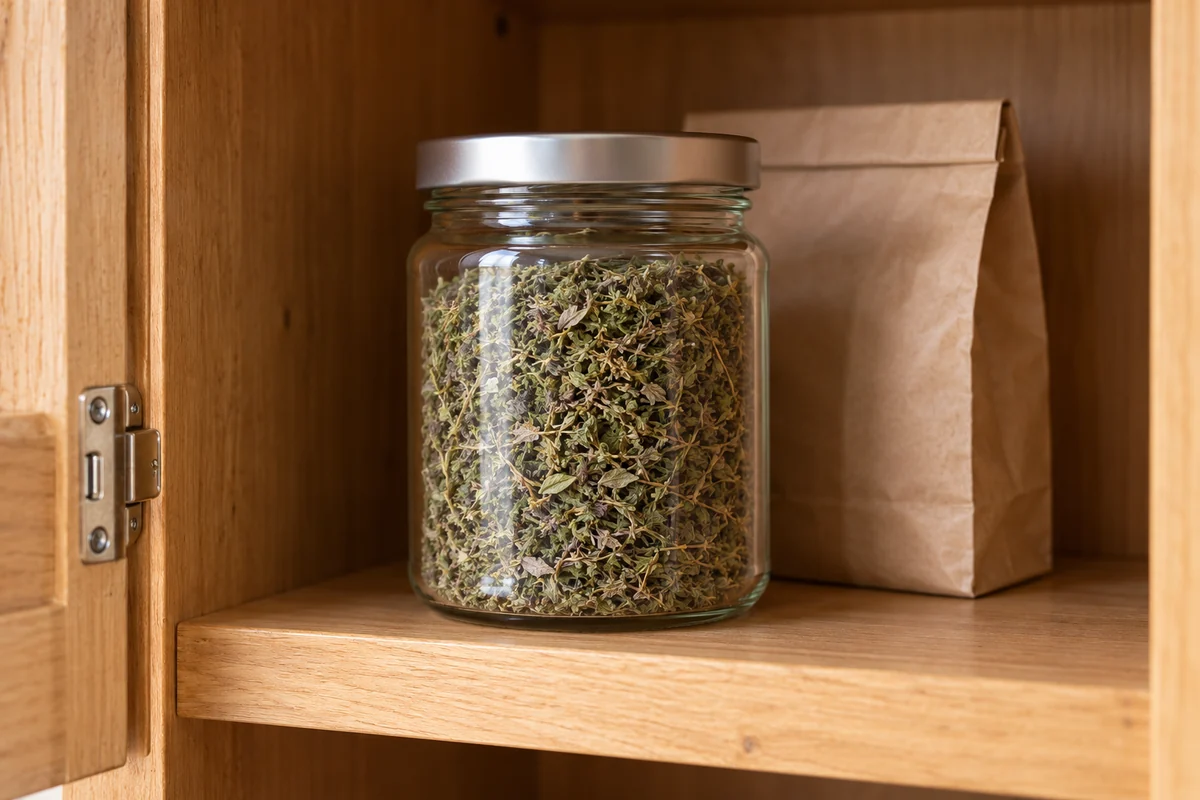
Take out only what you need, using clean, dry utensils. Do not use a package that has become damp or developed a suspicious change merely because its printed date has not yet passed.
Is a photograph enough for foraging?
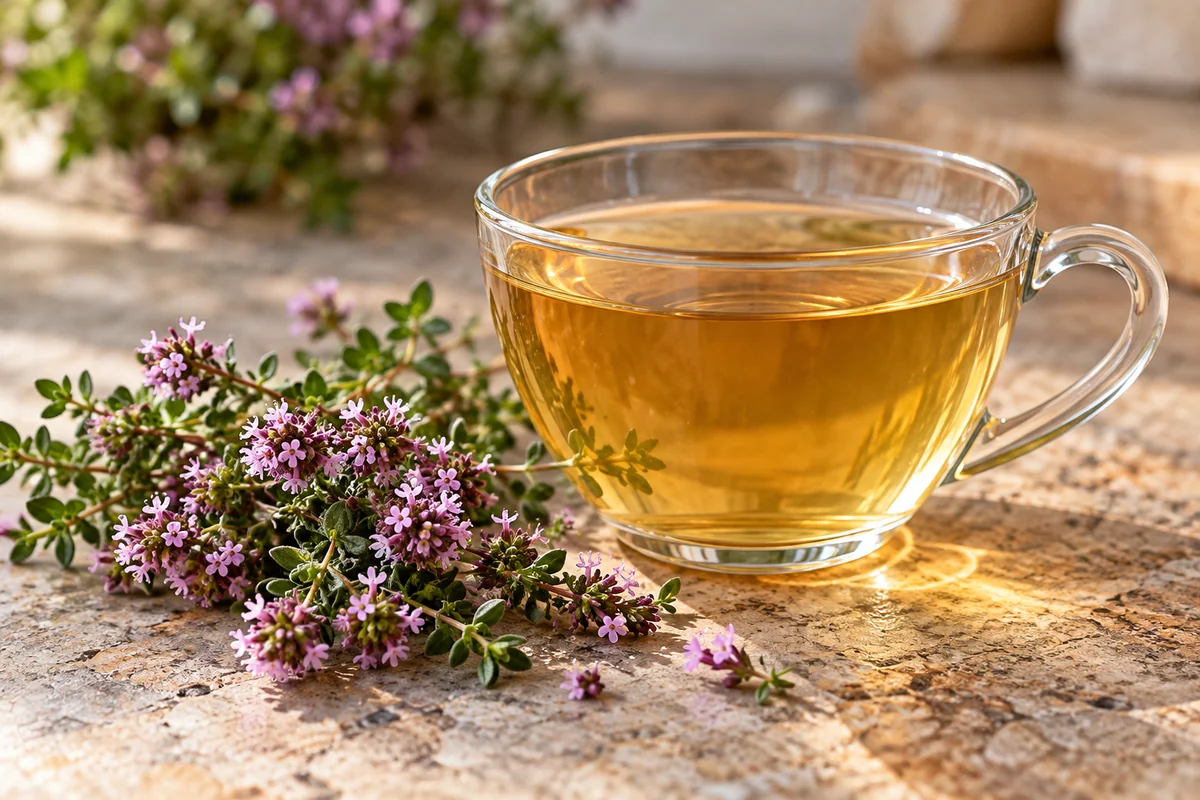
No. The pictures in this article illustrate the topic and preparation; they are not a reliable identification key for plants in the wild. If you do not have botanical identification experience, choose a labelled product.
Scent, flower colour and a common name do not replace a reliable identification. The type of plant material on a commercial label is more useful for following preparation guidance than guessing from a photograph.
Frequently asked questions about thyme tea
Should you boil the herb or pour water over it?
In the Institute’s example, boiling water is poured over the dried herb and the container is covered while it steeps. Follow your own tea’s directions, particularly when it is a blend. (source: Institute product instructions (Serbian))
How often can you drink it?
There is no single schedule for every package and every person. Check frequency and duration on the label or with a pharmacist; a preparation example is not advice for a several-week course.
Can it be used for sleep or stomach problems?
This guide does not give that treatment recommendation. If those symptoms are your reason for choosing tea, first check their cause and the information for the particular preparation instead of applying a cough-related conclusion to another concern.
Can you mix it with other herbal teas?
Adding another herb changes the ingredients. Use a clearly labelled blend with directions, or ask a pharmacist, especially if you are choosing it because of symptoms or taking medication.
For a comparison with other herbal drinks, read our guides to linden tea and lemon balm tea. Their instructions and limitations should be checked separately.
The essentials for preparing thyme tea
Start by checking the species and label, then follow the package’s amounts of herb and water and its steeping time. A pleasant drink should not be excessively strong, uncomfortably hot or made from a plant of uncertain identity.
When choosing a drink because of symptoms, keep traditional use, clinical evidence and personal professional advice separate. That distinction helps set reasonable expectations without making claims the evidence does not support.