Honey for a cough is a common home remedy when a cold leaves your throat irritated. If coughing keeps you awake, you may wonder whether a spoonful of honey really helps and how to use it safely.
Research suggests a possible short-term benefit in children older than one year with an acute cough, especially when honey is compared with no treatment or a placebo. That means easing a symptom, not treating the cause of an infection. Evidence in adults is more limited. A warm drink with honey may feel soothing, but it should not be presented as a proven cure.
The most important rule is simple: never give honey to a child younger than 12 months. Seek medical help rather than relying on a home remedy if a cough comes with trouble breathing, chest pain, coughing up blood, or a rapid deterioration.
Contents
Does honey for a cough really help?
A Cochrane review examined six relatively small trials involving 899 children aged 12 months to 18 years. It found that honey probably reduces the frequency of acute cough compared with a placebo or no treatment. It may also modestly improve nighttime symptoms and children’s sleep. Most studies followed children for only one or a few nights, and the certainty of the evidence ranged from low to moderate. These findings should not be extended to chronic cough or every cause of coughing.
A 2026 review compared honey with medicines for acute cough in children. Its main analysis did not show a clear advantage for honey on most outcomes; the authors treated more favorable signals from exploratory analyses as preliminary. The careful conclusion is that honey may make the symptom easier to tolerate for some people, but it is not a reliable treatment for every cough.
NICE guidance on acute cough includes honey among self-care options for people over one year old while noting that evidence of benefit is limited.
What kind of cough has been studied?
Most evidence concerns short-term cough associated with an upper respiratory infection, usually a cold, in children. Honey does not identify the cause of a cough and cannot replace an assessment for asthma, allergies, reflux, pneumonia, or a persistent cough. Coughing itself is a protective reflex that helps clear mucus and irritants.
How can adults use honey?
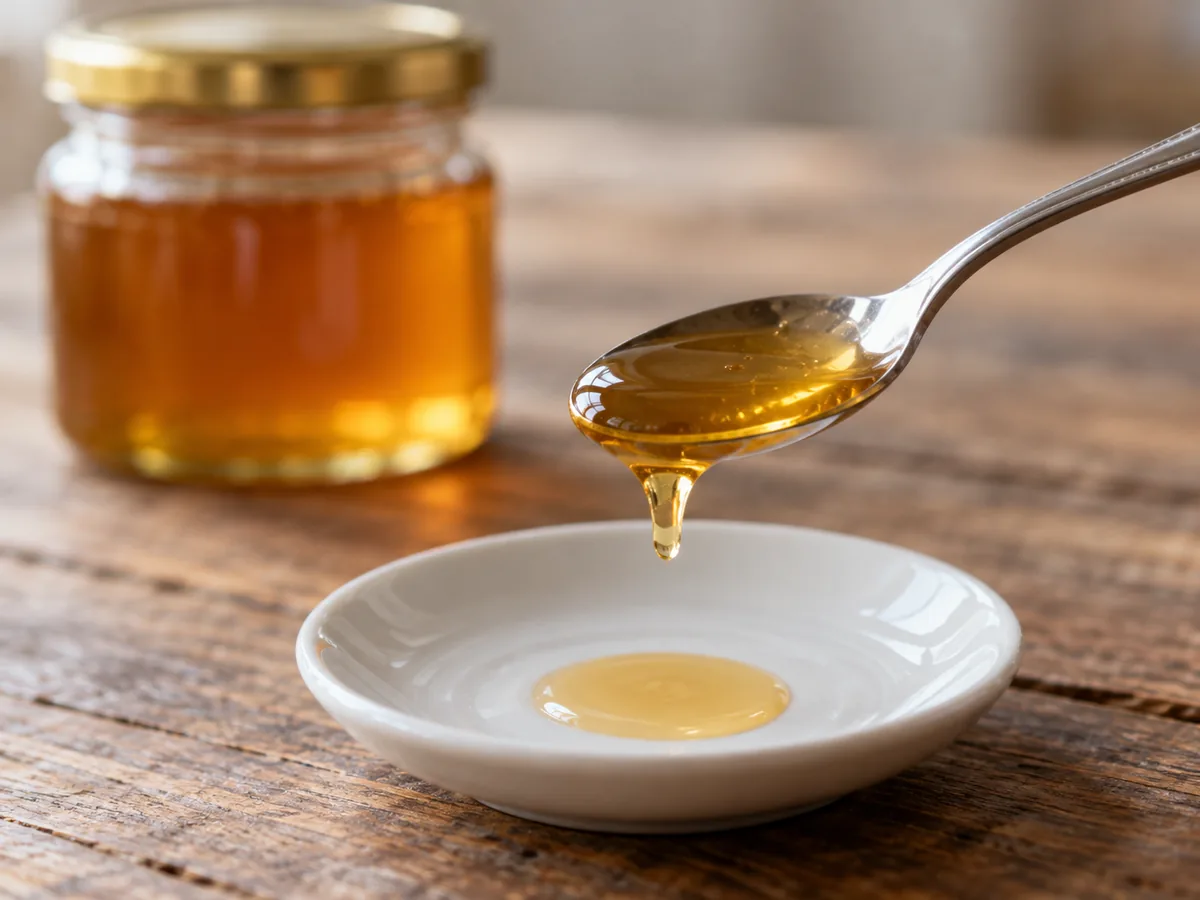
An adult who can safely eat honey may try a small amount on its own or in a warm drink. Large amounts are unnecessary: honey contains plenty of sugars, and more honey does not necessarily mean more relief.
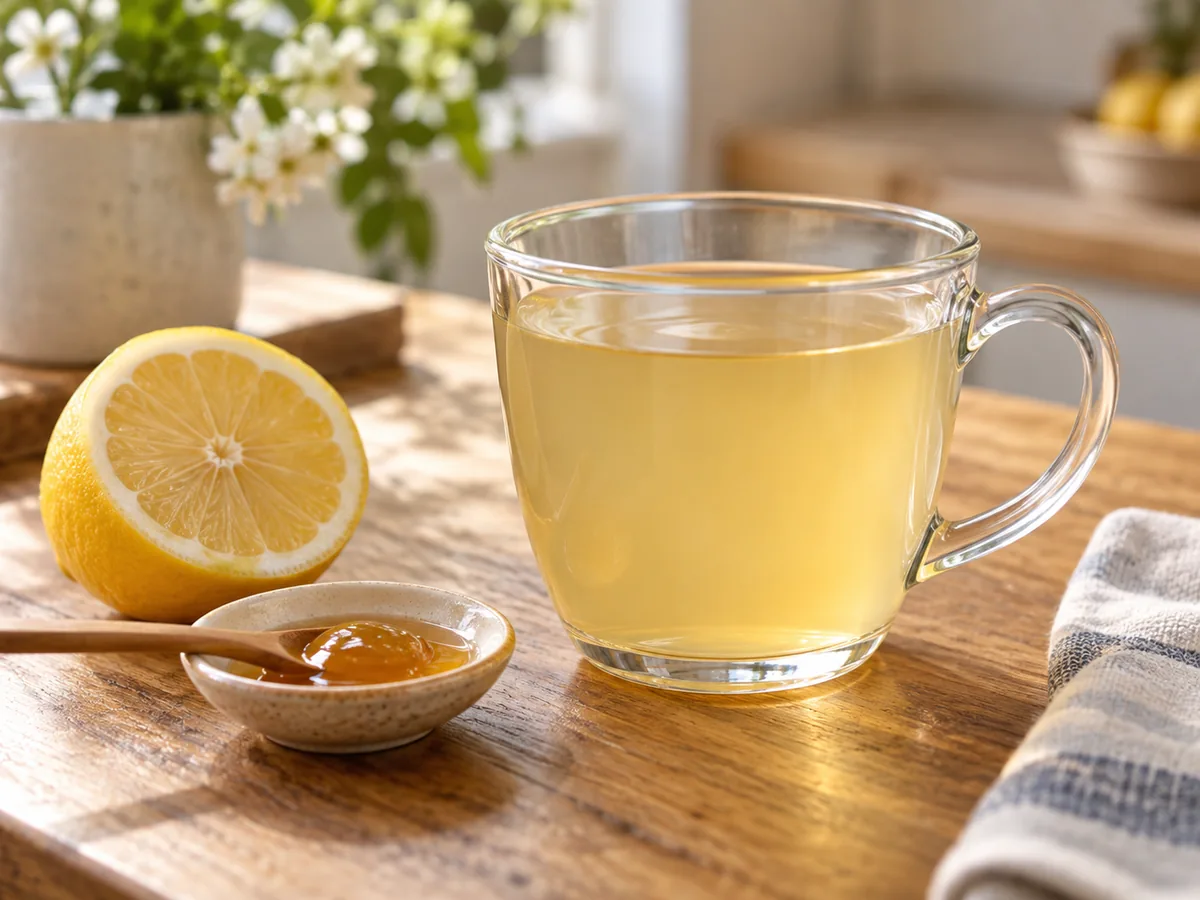
To make a simple drink, let hot water cool to a comfortable temperature, then add a little honey and, if you like, some lemon. The NHS lists a warm lemon and honey drink as a possible self-care option, while emphasizing that the evidence for its effect is limited. Lemon is optional and mainly a matter of taste.
If you have diabetes or need to monitor your sugar intake, count honey as part of your daily intake and ask a healthcare professional what is appropriate for you. For more context, read our guide to honey instead of sugar.
Honey and lemon for a cough: a simple drink
For adults, the NHS suggests one to two teaspoons of honey in a cup of warm, not scalding, water with some lemon. The drink should be comfortable to sip. Do not give young children hot drinks, because they can cause burns. Leave out the lemon if it irritates your throat or you dislike the taste.
There is no need to claim that honey is “activated” at a particular temperature or that every warm drink destroys all of its qualities. Choose a comfortable drinking temperature for practical reasons. Pick a honey you enjoy; current evidence does not show that one variety sold on our site treats coughs better than another.
Honey for a cough in children: age limit and amounts
Never give honey to a baby younger than 12 months, whether on its own or mixed into food, water, or another drink. Honey can cause infant botulism. The rule applies even when the honey appears high quality or comes from a trusted producer. CDC advice on foods to avoid in infancy
For children who have reached their first birthday, the American Academy of Pediatrics suggests roughly half a teaspoon for ages 1–5, one teaspoon for ages 6–11, and two teaspoons from age 12, as needed. These are practical amounts, not a reason to delay a pediatric assessment if a child has trouble breathing, appears unwell, or is getting worse. Brush their teeth after honey at bedtime.
What if a baby is under one year old?
Do not try “just a drop” of honey or a syrup containing honey. Ask a pediatrician about suitable care for a coughing baby, especially if the child has a fever, has difficulty breathing, drinks poorly, or seems unusually drowsy. Honey is not a safe cough remedy at that age.
What are the limits of home care?
Honey may be one small part of caring for someone with a cold. Rest and enough fluids also matter. If the nose is blocked, mucus dripping down the back of the throat may contribute to nighttime irritation, and honey alone will not address every problem. NHS guidance on cough and self-care
Do not replace prescribed treatment with honey or put off a medical assessment when a cough persists, rapidly worsens, or comes with concerning symptoms. Antibiotics are not automatically needed for a cough either: a clinician decides whether they are appropriate based on its cause and the person’s condition. NHS advice on cough and antibiotics
When should you seek medical help for a cough?
Contact a doctor if a cough lasts more than three weeks, if you are losing weight without an explanation, or if you have a weakened immune system. Seek urgent medical assessment for a very severe or rapidly worsening cough, chest pain, trouble breathing, or coughing up blood. NHS: when to get help

For a child, do not wait for a home remedy to work if breathing becomes difficult, the child cannot drink, or they are markedly lethargic. If you are unsure how serious the situation is, contact a pediatrician. Honey should never mask symptoms that need an assessment.
Which honey should you choose?
For food use, choose honey from a source you trust and with a flavor you like. Cough studies do not provide a sound basis to say that acacia, wildflower, or honeydew honey are differently effective for this purpose. No variety should be presented as a treatment.
If you would like to compare flavors, see acacia honey versus wildflower honey. Our acacia honey is also listed in the Serbian shop. Choose based on flavor and provenance, not a promise to cure a cough.
Frequently asked questions about honey and cough
Can honey stop a cough overnight?
It may temporarily ease coughing or make it less uncomfortable for some people, but it cannot be expected to stop every cough completely. The underlying cause and course of the illness matter more than any single home remedy.
Is honey with lemon better than honey alone?
A warm drink can be comforting, but there is not enough evidence to call lemon an essential or more effective addition. Use it for flavor if you like it; honey can also be taken without lemon.
Can a one-year-old have honey for a cough?
Once a child has reached 12 months, honey can be considered as a short-term way to ease a cough. It must not be given to younger babies because of the risk of botulism. Ask a pediatrician if a child is unwell or getting worse.
Does honey cure bronchitis or pneumonia?
No. At most it may help with some symptoms; it cannot identify the cause or cure a serious infection. Suspected bronchitis, pneumonia, or breathing difficulty needs medical assessment.
Conclusion
Honey for a cough can be a simple way to try to ease short-term symptoms, particularly in children over one year old with an acute cough during a cold. The evidence is not a promise that it will help everyone, and it is never a reason to ignore the cause or duration of symptoms.
Use a moderate amount on its own or in a comfortably warm drink. Never give it to a baby younger than 12 months. Seek medical help for trouble breathing, chest pain, blood in the sputum, or a rapid worsening.