Using honey instead of sugar can sound like a simple swap: the same sweetness, but from a more “natural” source. In practice, the answer is more nuanced. Honey and white sugar differ in composition, flavor, water content, and how they behave in food, but both contribute sugar and calories to the diet.
If you are thinking about using honey instead of sugar, it is more useful to focus on portion size and your overall diet than on the idea that one sweetener is “good” and the other is “bad.” Honey can bring a stronger flavor, which may help some people use less, but it is still something to consume in moderation.
For choosing a type of honey, you can also read our guides to acacia honey properties, wildflower honey properties, and our comparison of acacia honey vs wildflower honey.
Contents
Is honey really a better choice than sugar?
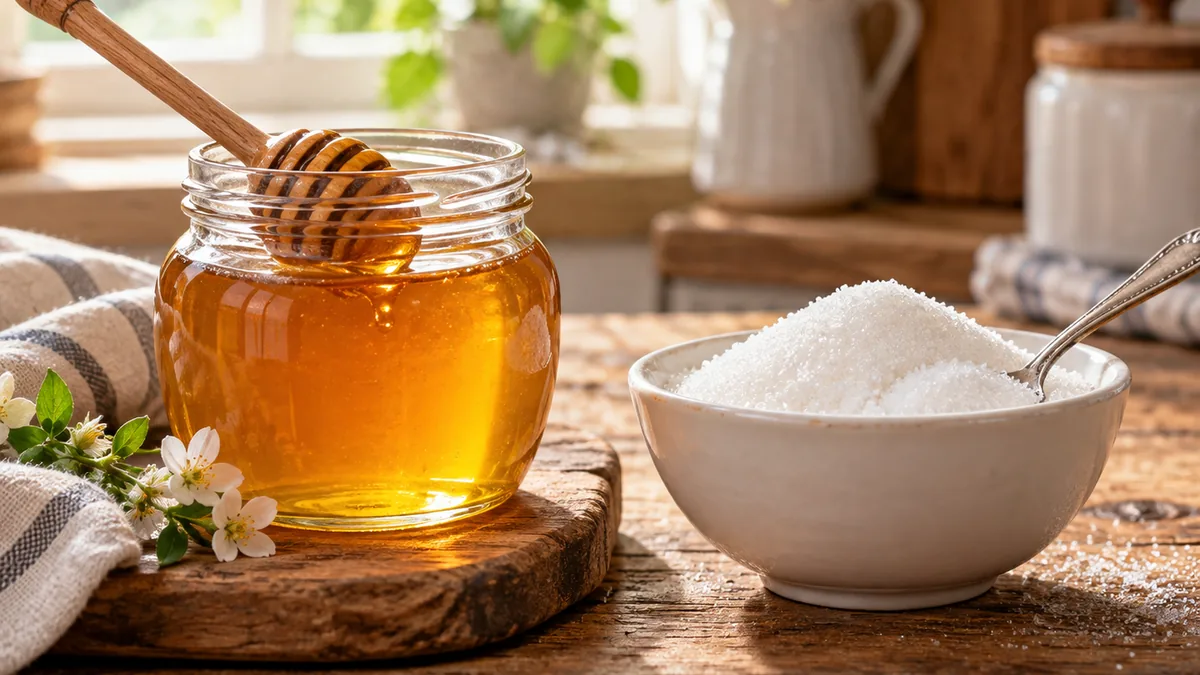
There is no single answer that applies to every person and every situation. White sugar is mostly sucrose, while honey contains mainly fructose and glucose, along with water and small amounts of other naturally occurring compounds. That is why they differ in texture, aroma, and the way they are used in food.
However, the basic point remains the same: both honey and sugar are concentrated sources of simple sugars. The World Health Organization includes sugars naturally present in honey in its definition of free sugars. Replacing white sugar with honey therefore does not mean that free sugars stop counting.
Honey can be useful when its flavor helps you reach the sweetness you want with a smaller amount, or when its taste works better in a particular dish. That is a practical and culinary advantage, not a reason to use it without limits.
What is the difference between honey and sugar?
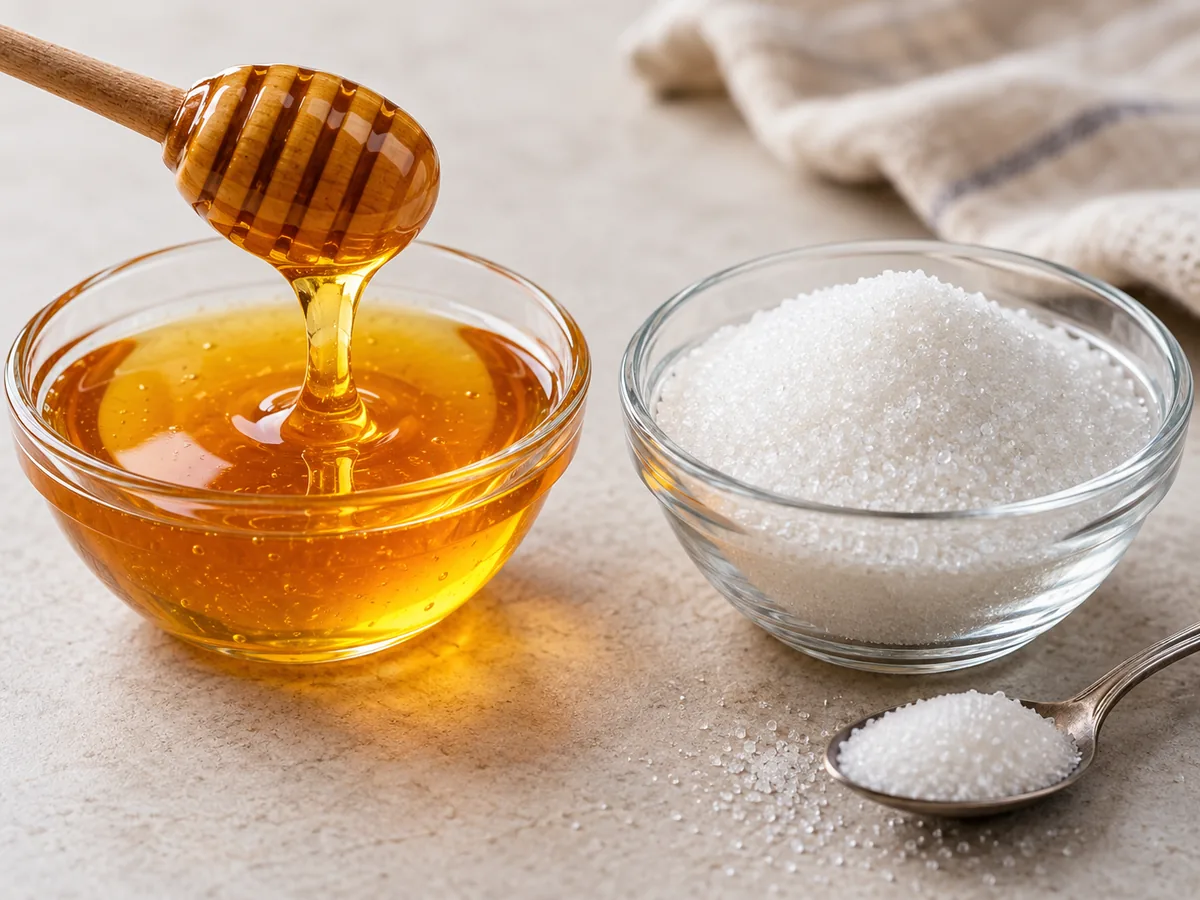
Granulated white sugar is almost entirely sucrose. Honey is a more complex mixture: it contains mostly glucose and fructose, then water, while other components are present in much smaller amounts. The exact composition of honey can vary depending on floral source, region, and season.
Why does honey taste and feel different?
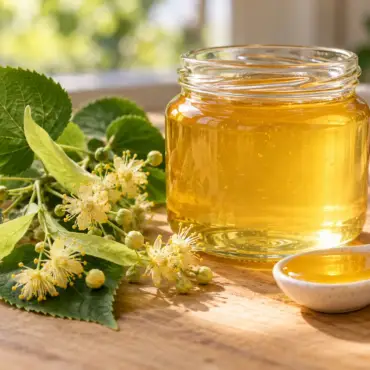
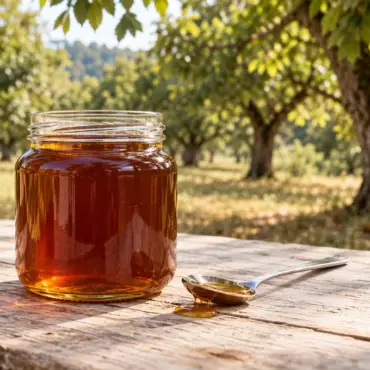
Unlike the neutral taste of white sugar, honey has a distinctive aroma that depends on the variety. Acacia honey is usually mild and light, while wildflower honey can have a fuller and more variable floral flavor. Honey is also liquid or viscous, so in a recipe it changes not only sweetness but moisture as well.
For that reason, replacing sugar in cooking and baking is not always a simple “spoon for spoon” substitution. In batters and baked goods, honey can change moisture, color, and how quickly the food browns.
How many calories do honey and sugar have?
Both honey and sugar are energy-dense foods. By the same weight, granulated sugar contains more calories than honey because honey also contains water. However, a tablespoon of honey weighs more than a tablespoon of granulated sugar, so comparing them only by volume can be misleading.
A useful rule is simple: if you replace sugar with honey, do not automatically assume that you have reduced calories. It depends mainly on how much sweetener you actually use. If honey’s stronger flavor lets you use less, total intake may be lower; if you use the same or a larger amount, that advantage disappears.
Does honey raise blood sugar?
Yes. Honey contains carbohydrates that are digested and absorbed, so it can raise blood glucose. The response can vary between people and between different types of honey, but honey should not be treated as a “free” sweetener that does not affect blood sugar.
The American Diabetes Association lists honey among names used for added sugars and notes that sugars are a source of carbohydrate. People with diabetes or prediabetes should therefore count honey toward their total carbohydrate intake and follow the eating plan agreed with their healthcare team.
If the goal is better glucose control, the total amount of carbohydrate, portion size, and the rest of the meal matter more than simply switching from one type of sugar to another.
How much honey should you use?
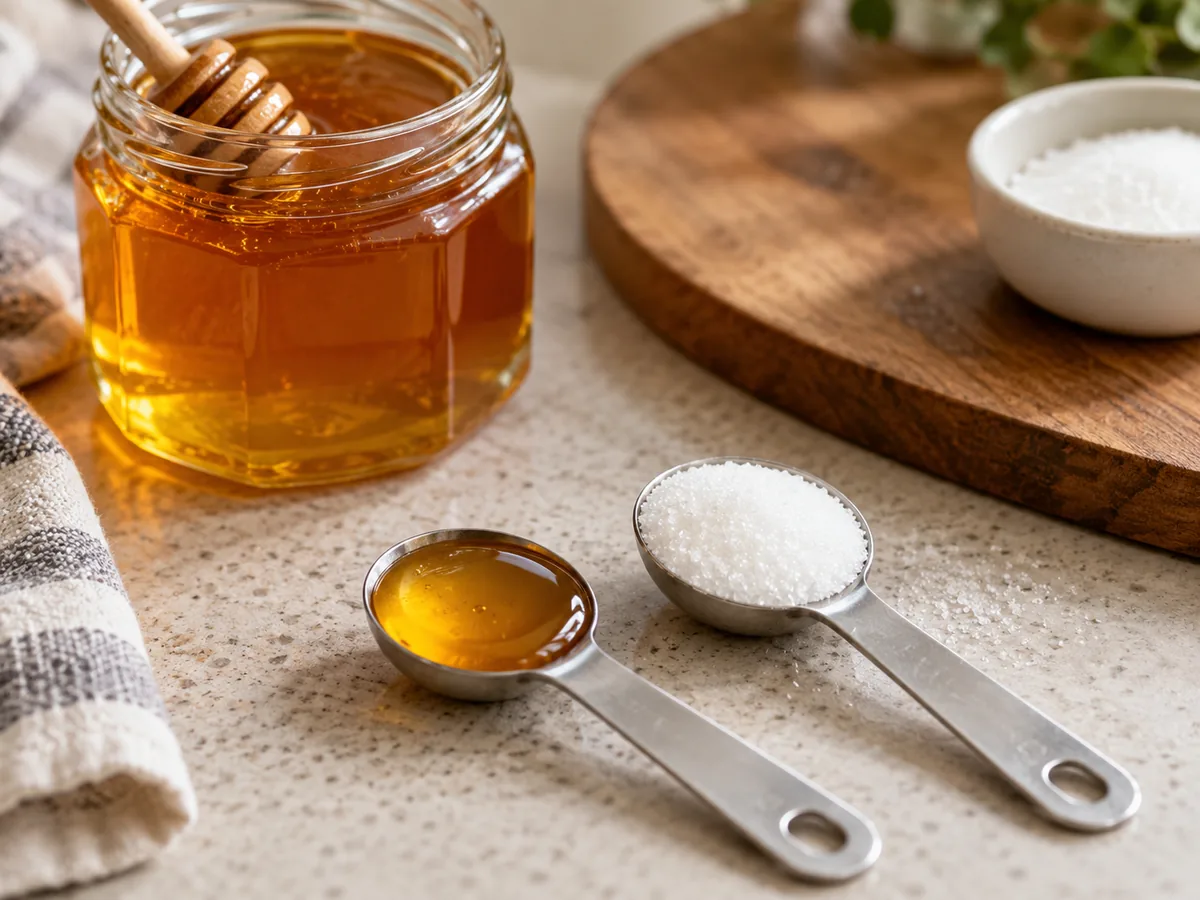
There is no single amount of honey that is “ideal” for everyone. Needs depend on the overall diet, energy requirements, health status, and how much sugar comes from other foods during the day.
WHO recommends keeping free sugars below 10% of total daily energy intake, with a further reduction to below 5% offering additional benefits. For a diet of about 2,000 kcal, that roughly corresponds to 50 g of free sugars per day, or about 25 g for the stricter target. Importantly, this is not an “allowance of honey”; it is the combined total of free sugars from honey, table sugar, syrups, juices, and other sources.
That is why measuring honey with a teaspoon is more useful than pouring it by eye. A small amount in tea, yogurt, or breakfast can easily become a much larger daily intake once it is added to other sweet foods and drinks.
How can you replace sugar with honey?
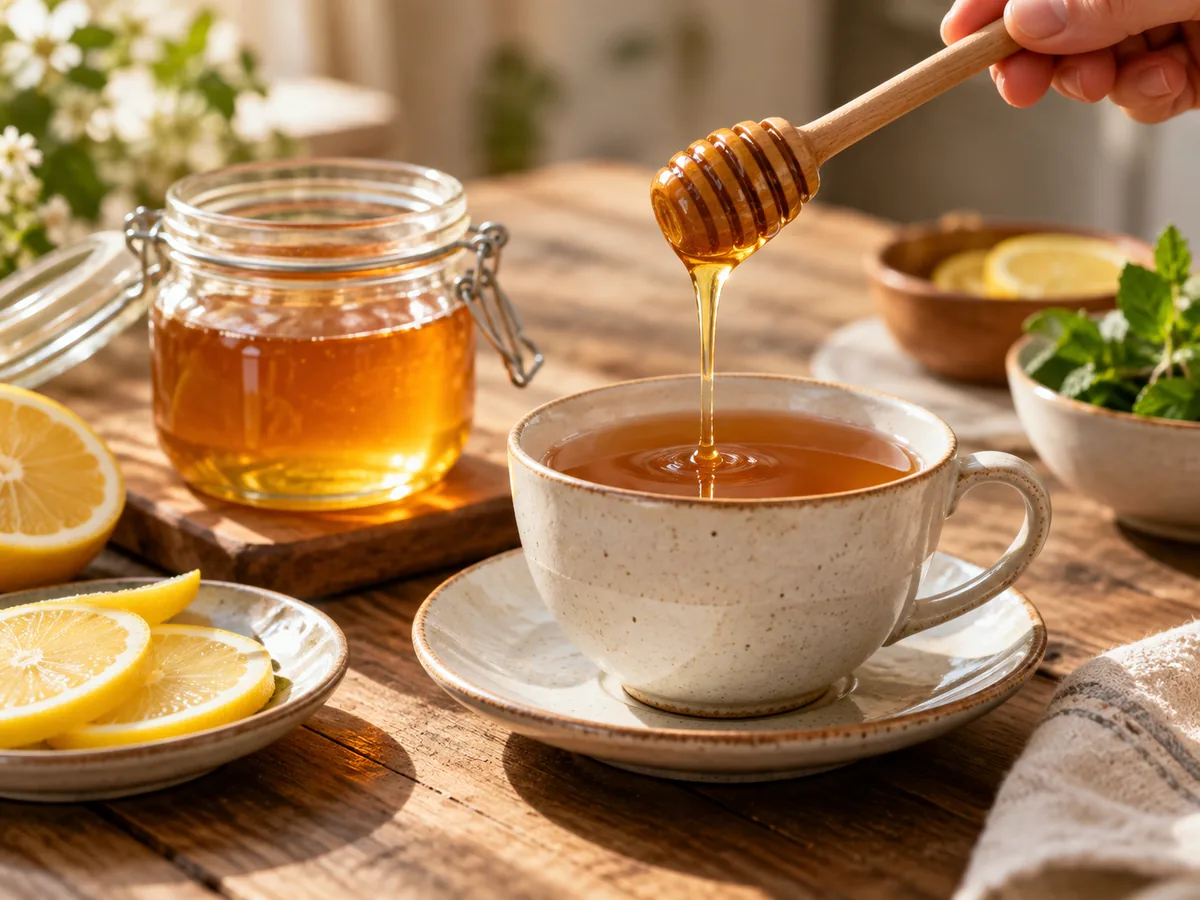
In drinks, the swap is straightforward: start with a smaller amount of honey, taste, and add more only if needed. Because honey has its own aroma, you may not need the same amount to reach a pleasant level of sweetness.
Honey also works well in oatmeal, yogurt, dressings, and marinades because it adds flavor as well as sweetness. Baking needs more care: honey adds liquid and can speed up browning, so a recipe may require adjusting other liquids and sometimes the baking temperature.
Should honey be added to a very hot drink?
If your goal is to preserve more of honey’s aroma, it is practical to add it after the drink has cooled a little. From the standpoint of total sugar intake, however, the amount of honey you add matters more than the temperature of the drink.
Which honey is best for sweetening?
The choice can mainly come down to flavor. Acacia honey is usually mild, so it works well in tea, yogurt, and other foods when you do not want a dominant honey flavor. Wildflower honey can have a fuller and more variable floral taste, so it has a stronger effect on the final flavor of a dish.
If you are buying honey for everyday use, pay attention to origin, labeling, and a reliable producer. Color, thickness, and crystallization alone do not prove authenticity; we explain this in more detail in our guide on how to tell if honey is real and what you can actually check.
Who should be cautious with honey?
Honey should not be given to children younger than 12 months. The CDC warns that honey can contain bacterial spores associated with infant botulism.
People with diabetes or prediabetes should count honey as a source of carbohydrate, while people trying to reduce body weight should remember that honey still contributes to total energy intake. If you have individual medical or nutritional recommendations, those take priority over general advice in this article.
For dental health, it is also important to limit how often teeth are exposed to sugars. The fact that a sweetener comes from honey does not remove the risk associated with frequent sugar intake.
Frequently asked questions about honey instead of sugar
Is honey sugar-free?
No. Honey naturally contains large amounts of simple sugars, mainly glucose and fructose.
Is honey healthier than white sugar?
Honey and white sugar are not the same product, but it is not useful to treat honey as an unlimited “healthy” substitute. Honey contains small amounts of other naturally occurring compounds and has a different flavor, but it still contributes to free-sugar intake.
Can honey completely replace sugar in recipes?
In drinks and simple foods, often yes. In baking, however, it is not always a direct replacement because honey adds water, has different sweetness, and affects browning.
How many teaspoons of honey per day are okay?
There is no universal number that suits everyone. Honey should be counted as part of total free-sugar intake for the day, together with other sweeteners, sweets, and sweetened drinks.
Can people with diabetes use honey?
Honey contains carbohydrates and can raise blood glucose. People with diabetes should count it in their carbohydrate plan and rely on individualized advice from their doctor or dietitian.
Where can you find honey for everyday use?
On the P&P Honey website you can view our Acacia honey product page (Serbian) and Wildflower honey product page (Serbian). The choice between them depends more on the flavor you want and how you plan to use the honey than on the idea that one variety is universally “healthier.”
Conclusion
Honey can be a pleasant substitute for white sugar when you want a different flavor, texture, or a smaller amount of sweetener. The main nutritional message, however, stays the same: honey is a source of free sugars and should be used in moderation.
If you replace sugar with honey, it makes the most sense to look at the whole portion and your total daily intake. A smaller amount of good-quality honey can be a useful culinary choice, but the substitution itself does not turn a sweet food or drink into a nutritionally neutral product.