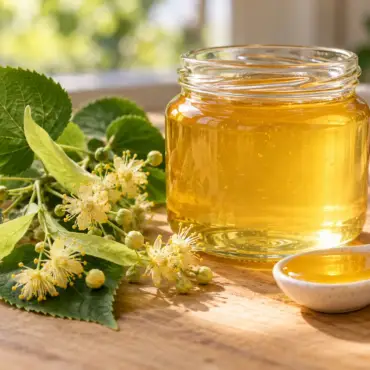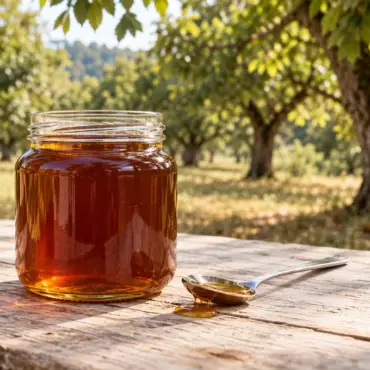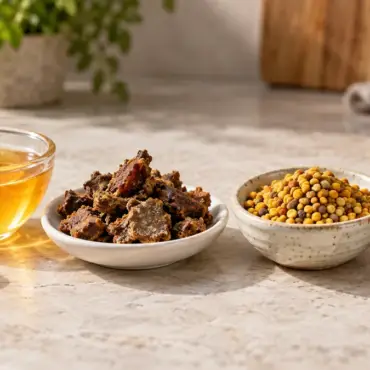
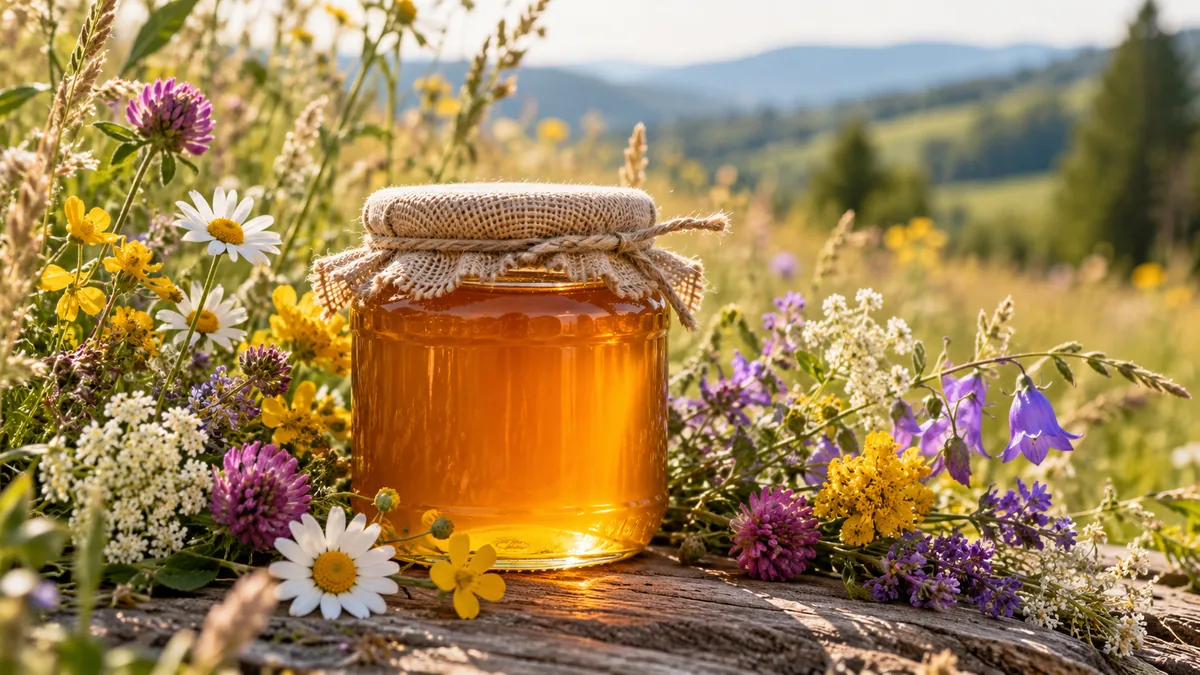
Wildflower honey is one of the most varied types of honey. Unlike honey produced mainly from a single plant species, it comes from the nectar of different plants flowering in meadows and pastures. Its color, aroma, flavor, and rate of crystallization can therefore change from year to year.
If you are interested in the properties of wildflower honey, its diverse botanical origin is the key to understanding them. A jar from one region may be lighter and milder, while honey from another area or season may be darker and more aromatic.
For a direct comparison with acacia honey, read our guide to acacia honey vs wildflower honey and how to choose.
Contents
What is wildflower honey?
Wildflower honey is generally described as polyfloral or multifloral honey. Bees collect nectar from several kinds of plants flowering in the same area, rather than from a crop dominated by one plant species.
There is no single, uniform profile for wildflower honey. Its characteristics depend on the plants available to bees, the local environment, weather, and the flowering season. Honey consists primarily of sugars, especially fructose and glucose, along with water and smaller amounts of other components.
What does wildflower honey taste and look like?
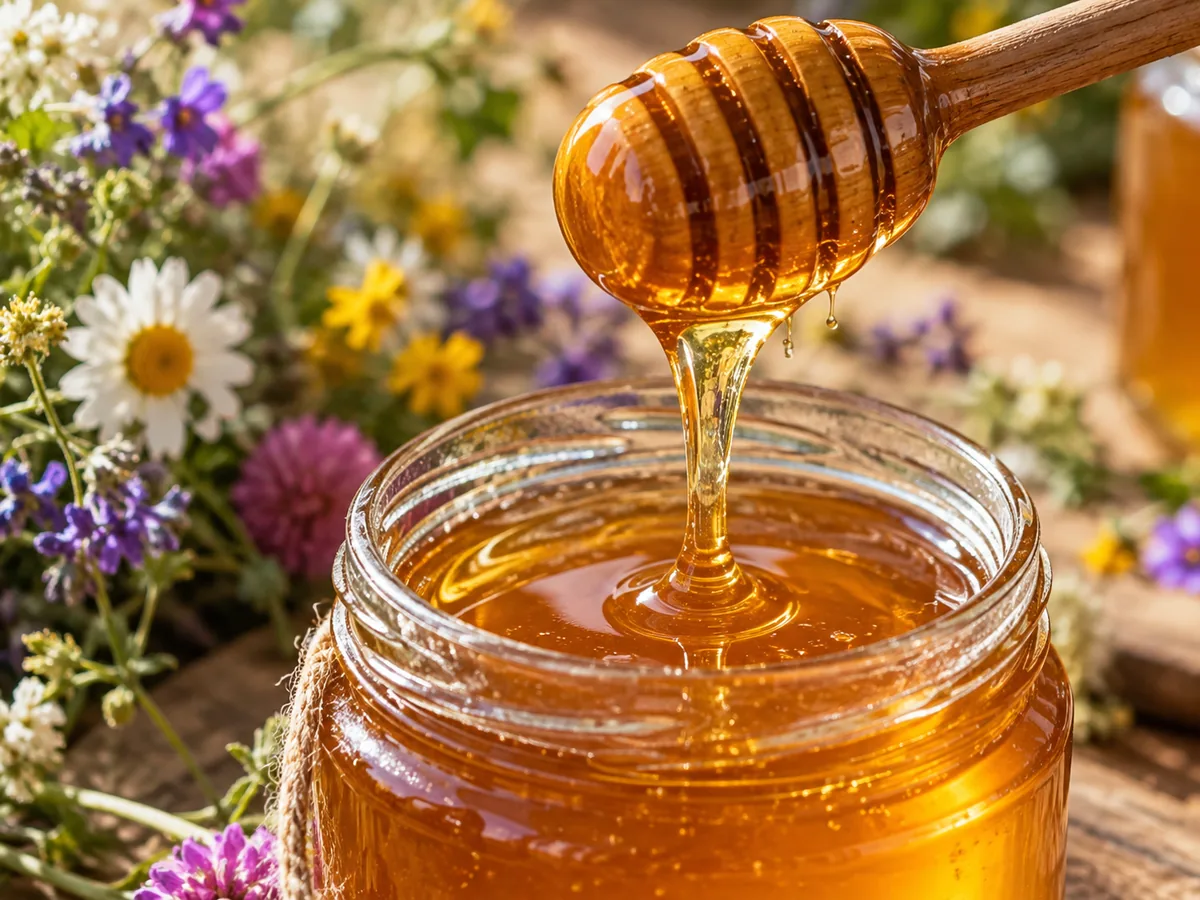
Wildflower honey is naturally variable. Its color may range from pale gold to deeper amber and darker shades. Its flavor can be mild or fuller and more complex, depending on the plants that predominated in the nectar source.
Why can two jars of wildflower honey differ?
Honey from different places or seasons does not necessarily come from the same mix of plants. Differences in color, aroma, flavor intensity, texture, and the speed of crystallization are therefore expected. They do not, by themselves, mean that one jar is better than another.
What are the properties of wildflower honey?
Wildflower honey’s defining characteristic is its varied botanical origin. This affects its flavor and aroma as well as its composition. Honey may contain phenolic compounds and other plant-derived components, but the amounts can vary substantially between samples.
It would be misleading to claim that every wildflower honey has the same levels of particular compounds or the same health effects. It is best understood as a food and a sweetener with a distinctive flavor, rather than a substitute for medicine or medical treatment.
Does wildflower honey crystallize?
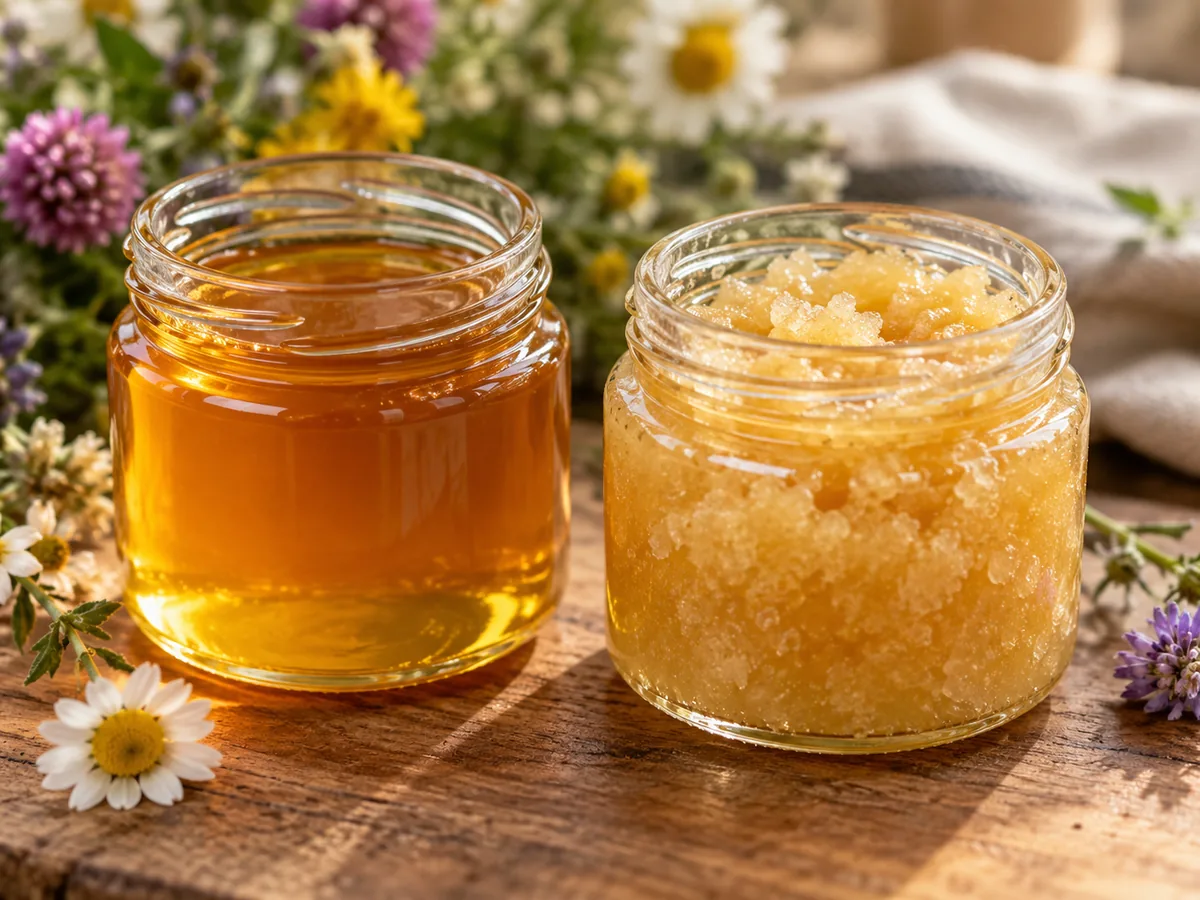
Yes. Wildflower honey may crystallize in storage. Honey is a concentrated sugar solution; glucose is less soluble than fructose and can form crystals over time. The rate depends on the composition and water content of the particular honey, storage temperature, and other factors.
Because its floral origin varies, not every wildflower honey will crystallize at the same rate. Crystallization alone is also not proof that honey is authentic. It is a normal change in natural honey, but cannot reliably establish whether a product is genuine or adulterated.
For a fuller explanation, read why honey crystallizes and whether crystallized honey has spoiled.
What if the honey crystallizes?
If you prefer a liquid texture, you can warm the jar gradually in a lukewarm water bath. Avoid intense heat, which may alter some characteristics of honey. Gentle warming is the better approach.
How can you use wildflower honey?
With its varied floral flavor, wildflower honey works in many everyday foods. Enjoy it on its own, with bread or toast, yogurt, cereal, or fruit, or use it to sweeten drinks and make dressings, marinades, and other dishes.
To preserve more of its aroma, add it to tea or another drink after the drink has cooled somewhat. Adjust the amount to your taste and overall sugar intake.
Wildflower vs acacia honey: what is the difference?
Acacia and wildflower honey differ mainly in their floral origins and sensory qualities. Acacia honey is typically paler and milder and often stays liquid for a long time. Wildflower honey comes from a wider range of plants, so its color and aroma can vary more and its flavor may be stronger.
Neither is universally better. The choice depends on your taste and how you plan to use the honey. See our detailed guide to acacia honey vs wildflower honey.
How do you choose good wildflower honey?
When buying honey, checking its origin and label is more useful than trying various tests at home. Look for the producer or beekeeper, the stated origin, complete labeling, the condition of the packaging, and storage guidance.
Color, thickness, and crystallization cannot, on their own, reliably establish authenticity. Read more in our guide to telling whether honey is real and what you can actually check.
How should you store wildflower honey?
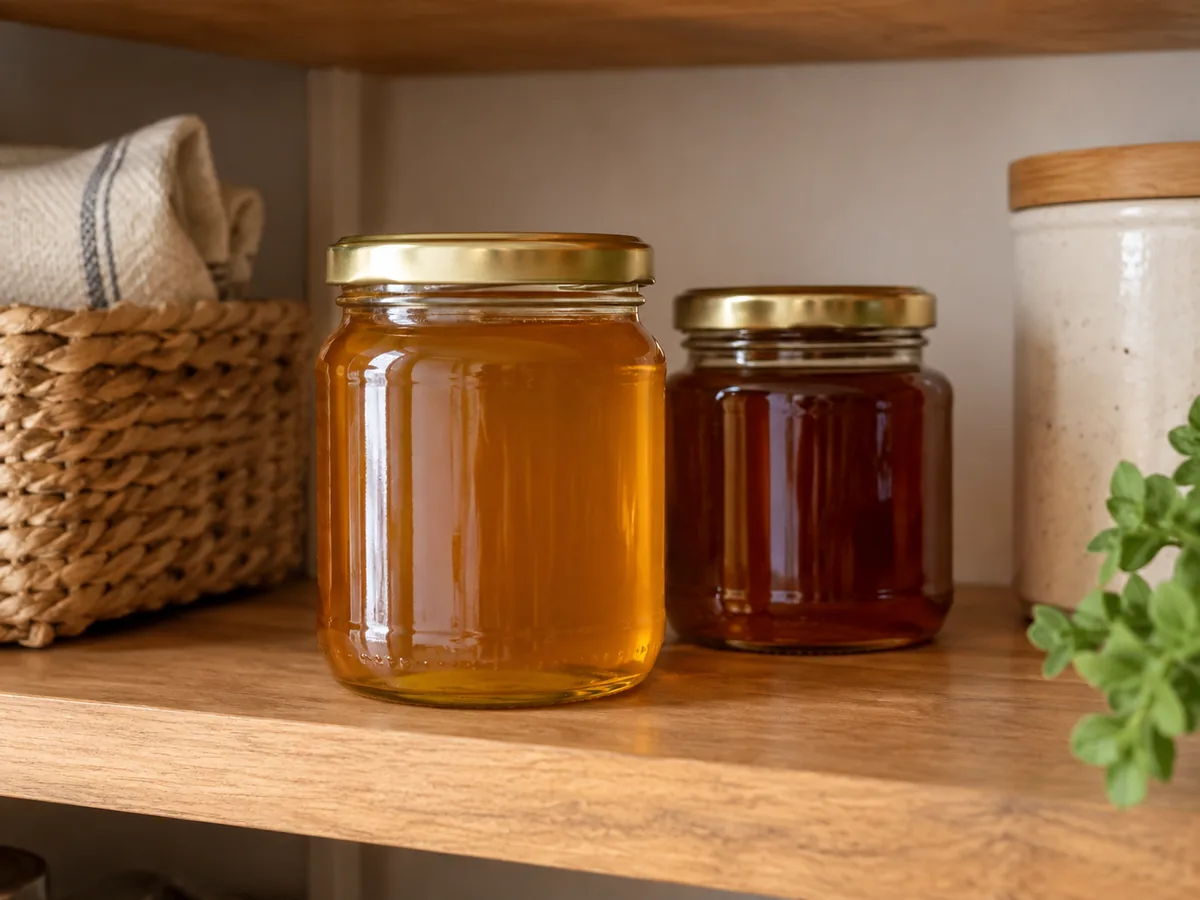
Keep wildflower honey in a tightly closed container in a dry place, away from direct sunlight and strong heat. Honey can absorb moisture and odors from its surroundings. Close the jar properly and use a clean, dry spoon.
Refrigeration is generally unnecessary, and crystallization does not mean the honey has spoiled. For more on shelf life, temperature, and changes during storage, read does honey expire and how to store it properly.
Who should be cautious with honey?
Honey is rich in sugars, so the amount you eat should fit your overall diet. Most importantly, never give honey to a child under 12 months because of the risk of infant botulism.
People who need to monitor their sugar intake should count honey toward their daily carbohydrates. Anyone with a known sensitivity to bee products should also take care.
Frequently asked questions about wildflower honey
Is wildflower honey the same as flower honey?
Not necessarily. “Flower” or blossom honey refers to honey produced mainly from plant nectar, while “wildflower honey” in practice usually describes a polyfloral honey made from a diverse mix of flowering plants. So the term “flower honey” does not automatically mean the same thing as “wildflower honey.”
Is it normal for wildflower honey to vary in color?
Yes. Its color can naturally vary by region and season as the mix of plants visited by bees changes.
Is crystallized wildflower honey spoiled?
No. Crystallization is a common physical change in honey and does not, on its own, mean spoilage.
Is wildflower honey healthier than acacia honey?
There is no simple basis for saying that one is healthier in every case. Honey’s composition depends on botanical and geographic origin, and individual samples can differ substantially.
Where can I find wildflower honey?
To see the product and its packaging information, visit our Livadski med product page (Serbian). This product link does not replace advice to check the label, origin, and storage conditions.
Conclusion
Wildflower honey stands out for its varied floral origins. Its flavor, aroma, color, and texture can differ across regions and seasons. This is a natural result of different nectar sources.
It can crystallize during storage, has many everyday uses, and can retain its characteristics for a long time when stored properly. When choosing a jar, pay more attention to origin, labeling, and a reliable producer than to popular home tests.