Linden tea is a mild, fragrant drink made from the flowers of the linden tree. Many people associate it with colder days or a quiet evening break, but a cup of tea does not replace treatment for a cold or help for persistent symptoms. The most useful starting points are knowing what you are buying, how your particular product should be prepared, and when a herbal drink needs extra caution.
This guide covers choosing the flowers, preparation, traditional uses, and adding honey, without claims that the tea boosts immunity, treats an infection, or cures insomnia. Linden flower is also called lime flower in British English; it is unrelated to citrus lime.
Contents
Which linden flowers are used for tea?
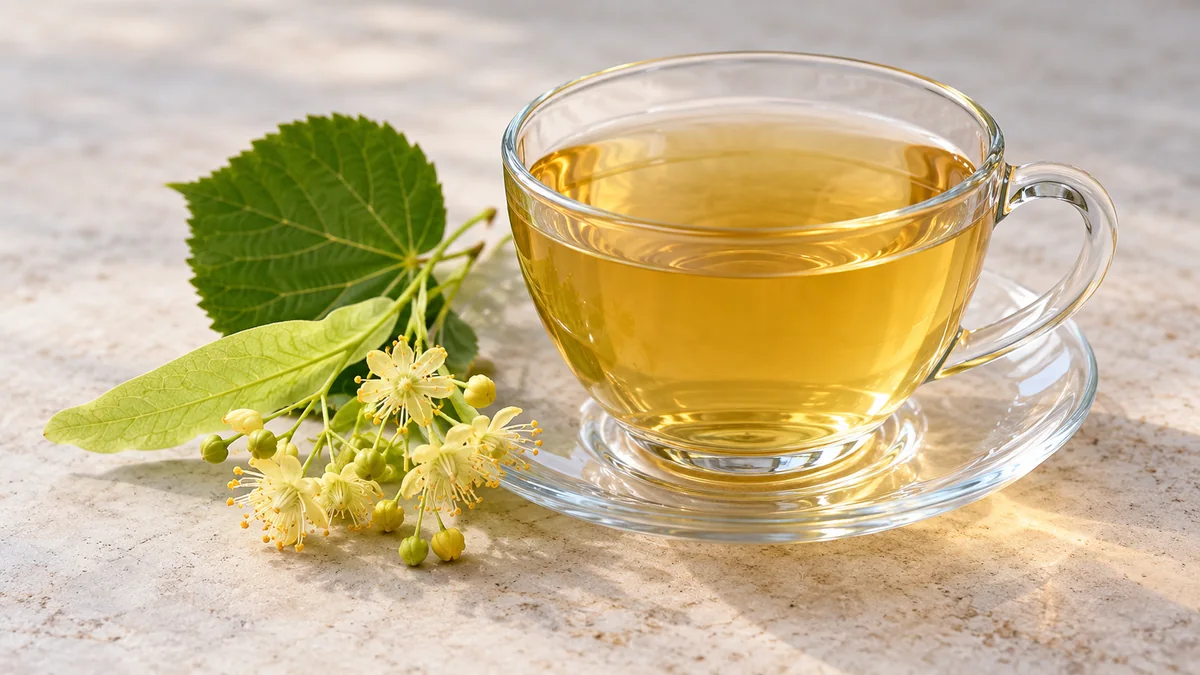
Check the plant name and the part used on the packaging. The European Medicines Agency (EMA), Tiliae flos, covers the flowers of Tilia cordata, Tilia platyphyllos, and Tilia × vulgaris, as well as their mixtures. The name “linden” without information about the ingredients is not enough to treat every product as the same preparation.
Choose clearly labelled tea from a reliable source. Check whether the package contains only linden or other herbs too. If there are several ingredients, read the entire list: the flavour, preparation instructions, and restrictions depend on the blend, rather than just its best-known ingredient.
This article is not a guide to foraging or identifying trees. The images are illustrations, not confirmation that a plant you have picked yourself is suitable for use. If you do not have reliable identification and information about its origin, choose a labelled product.
How do you prepare linden tea?
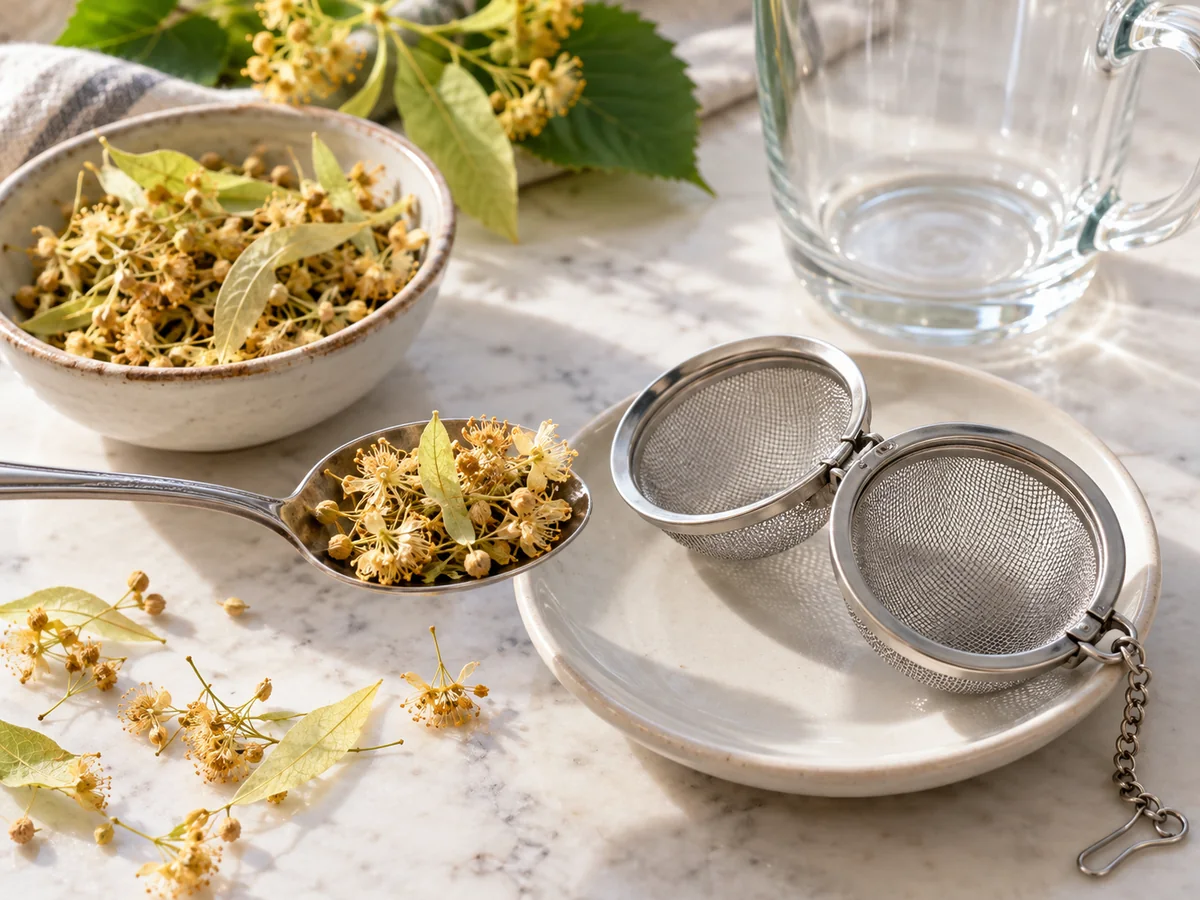
Read the instructions on your own package first. The amount of plant material in a tea bag and in loose tea can differ, and a heaped teaspoon of dried flowers is not an accurate measure of weight.
To prepare one cup of linden tea:
- Measure the flowers or use the number of tea bags stated on the package.
- Place the tea in a clean cup or an infuser with enough room for the plant material.
- Pour over the recommended amount of water at the temperature specified by the manufacturer.
- Cover and leave to steep for the time given in the instructions.
- Strain or remove the tea bag, then let the drink cool to a comfortable drinking temperature.
As a professional reference, the EMA monograph lists 1.5 g of comminuted flowers in 150 ml of boiling water for adolescents and adults for the preparations it covers. This is not a universal instruction for every blend or a recommendation to decide on a medicinal dose yourself. Follow the instructions for the specific product.
For a consistent flavour, use the same cup size and a similar steeping time. A darker colour does not prove a stronger effect. If the taste is too strong, check the amount and preparation time next time rather than assuming that the drink is more effective.
What does traditional use of linden mean?
EMA describes the traditional medicinal use of certain linden flower preparations for relieving symptoms of the common cold and mild symptoms of mental stress. These uses are based on long-standing use; this does not establish that every homemade tea has a clinically proven effect.
It would be misleading to infer that linden kills viruses, prevents infections, or treats an anxiety disorder. A pleasant break with a warm drink and treatment for an illness have different purposes. If the tea suits you, you can choose it for its flavour and as part of a routine, while respecting the product’s restrictions.
Rest and drinking plenty of fluids are part of basic care for a cough or cold, as explained in the NHS guide to coughs. Do not try to sweat out an illness with scalding tea or put off medical advice because you are drinking a herbal infusion.
If your main concern is a cough, see Honey for a Cough: What the Evidence Says and How to Use It. That article addresses a different question from choosing and preparing linden tea.
When should you take precautions or seek medical advice?
The restrictions in the EMA monograph apply to the particular herbal medicinal products it covers. They should not be interpreted as proof of safety for every product containing linden.
- Allergy: the preparation must not be used by anyone who is hypersensitive to the active substance.
- Pregnancy and breastfeeding: safety has not been established. Because there are insufficient data, medicinal use is not recommended.
- Children: use for cold symptoms is not recommended below four years of age; for mild symptoms of mental stress, the age limit is 12 years. Check the specific product with a paediatrician or pharmacist instead of reducing an adult dose yourself.
- Medicines: EMA states that no interactions have been reported. This does not guarantee that every combination is safe, especially if the product contains additional herbs.
Seek medical advice if cold symptoms last longer than a week while using the preparation, or if they get worse. Persistent symptoms related to stress also warrant professional advice.
Difficulty breathing, chest pain, or coughing up blood require urgent medical assessment, according to NHS guidance. Do not wait for a planned course of tea drinking to finish. A high temperature or sudden worsening is also a reason to seek advice rather than rely on a drink alone.
If you have been prescribed a fluid restriction or take long-term medication, check how the tea fits into your care plan. A product being herbal does not mean that it is suitable for everyone.
Can you sweeten linden tea with honey?
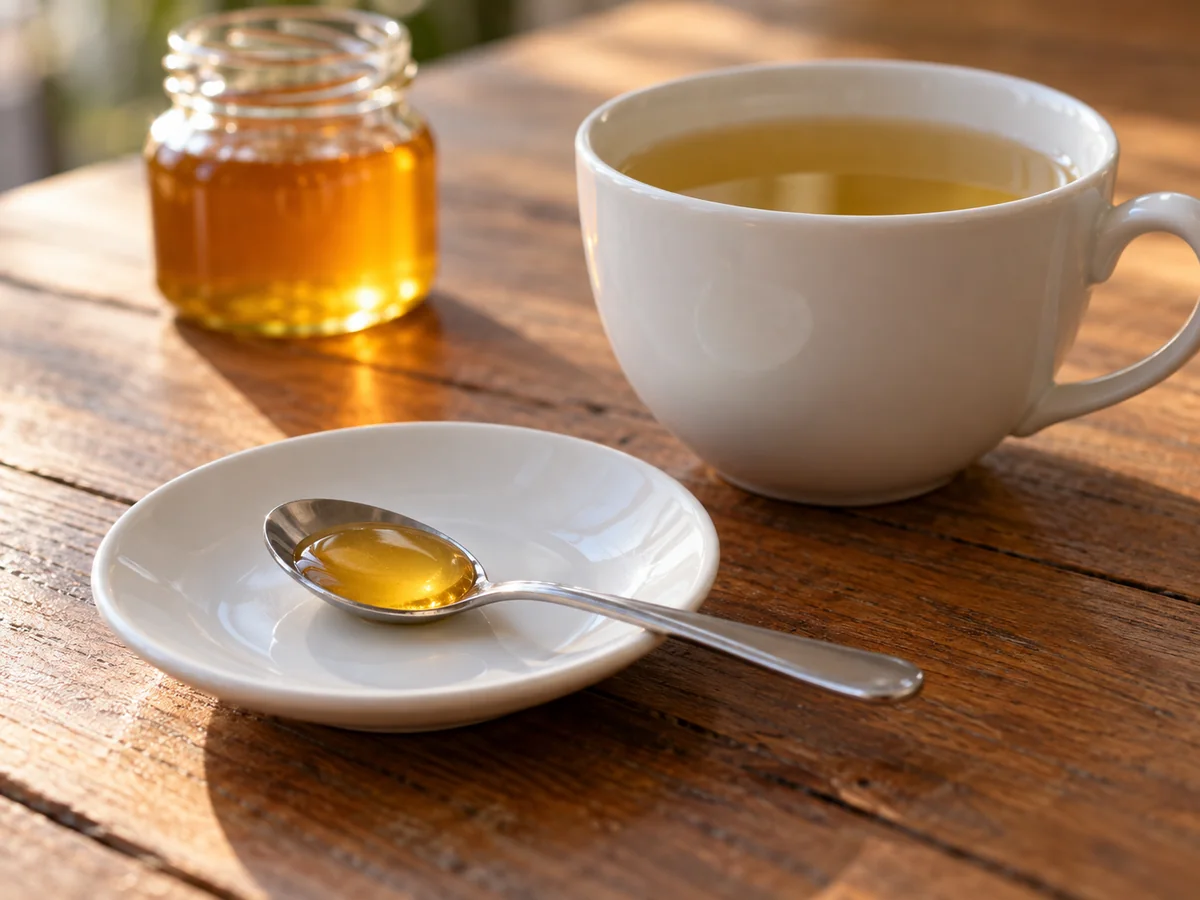
Yes, if honey is suitable for you and you prefer a sweeter flavour. Add a small amount once the drink has cooled enough to be comfortable to sip. Honey acts as a sweetener here; adding it does not turn the tea into a proven treatment.
Our guide to Honey in Tea: When to Add It and What Heat Does to Honey explains temperature and honey quality. For planning a portion, see Honey Calories and Nutrition. If you choose linden tea to reduce sweetened drinks, there is no need to sweeten every cup generously.
Do not give honey to children younger than 12 months, including in tea, because of the risk of infant botulism, as stated in CDC guidance. Reaching their first birthday does not automatically make linden flower tea appropriate; the choice of drink needs to be considered separately.
How should you store dried linden flowers?
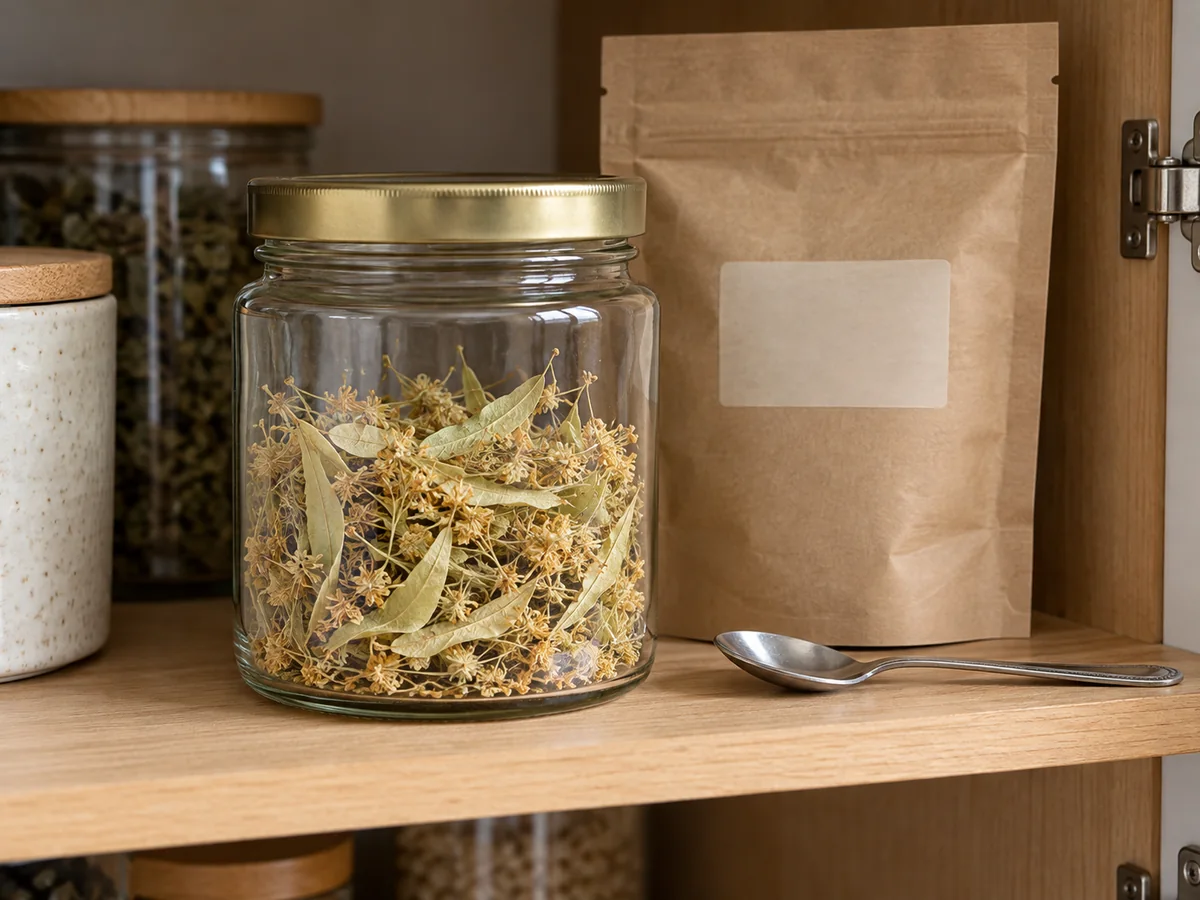
Keep the original package or retain its details about ingredients, expiry date, and storage conditions. If you transfer the tea to another container, use one that is clean, completely dry, and closes tightly. Follow the storage instructions and protect it from moisture and sources of heat.
Do not leave an open package near steam from a kettle. Use a dry spoon to take out the flowers and close the container immediately afterwards. Avoid mixing the remains of old and new packages, as this makes the expiry date and origin harder to track.
Do not use the contents if they have become damp, show visible mould, or smell unusual. Extra boiling is not a reliable way to make questionable plant material safe. Prepare the amount you intend to drink rather than leaving the infusion at room temperature for a long time.
Frequently asked questions
Is linden flower tea the same as linden honey?
No. Tea is made from plant material and water, whereas honey is a bee product. Both names referring to linden does not mean that they have the same composition or can be substituted for each other in instructions for use.
Should you mix linden with chamomile or lemon balm?
A blend is not necessary to prepare the drink. If you use a ready-made product, check all its ingredients and instructions. For individual herbs, see our guides to chamomile tea and lemon balm tea. Adding herbs does not guarantee a better effect.
How many cups of linden tea can you drink?
There is no number that suits every product and every person. Follow the label and instructions, particularly if the product is a herbal medicine. Do not increase the amount in the hope of recovering faster; persistent symptoms call for assessment of the cause.
Conclusion
For a good cup of linden tea, focus on clearly labelled flowers, proper preparation, and realistic expectations. Traditional use is not grounds for promising a cure. Add honey to taste if it is appropriate for you, and check the specific product and seek professional advice for children, pregnancy, breastfeeding, or persistent symptoms.