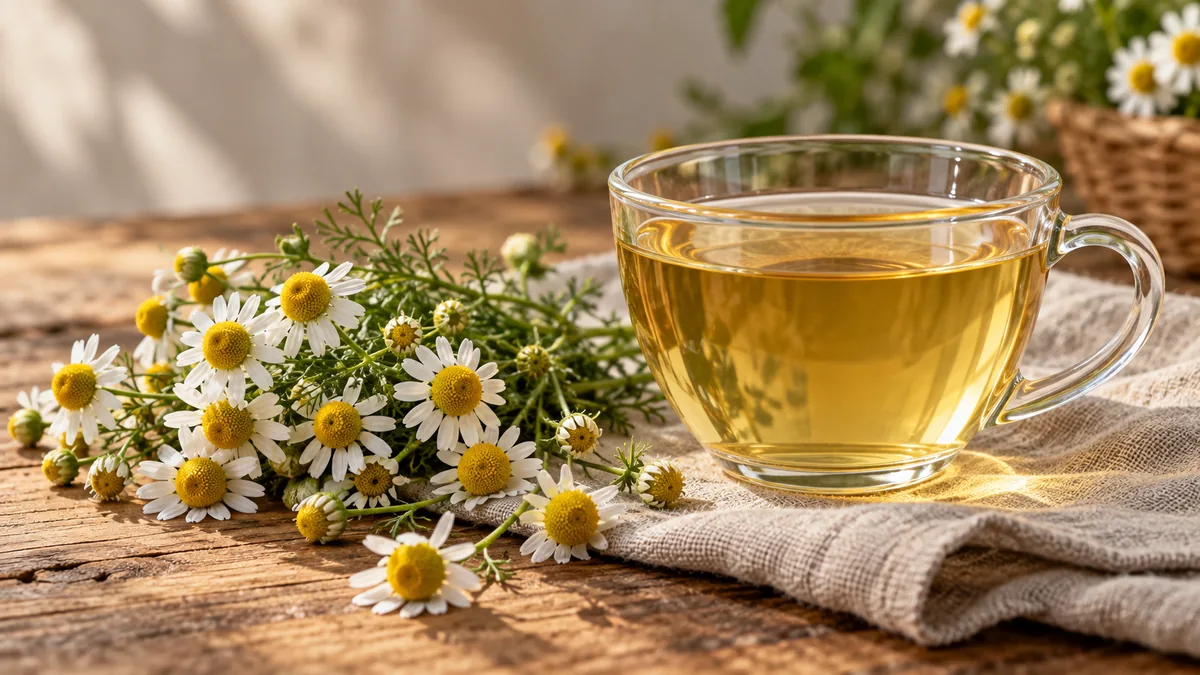
Chamomile tea is familiar to many people for its gentle aroma and its place in a quiet moment of the day. Habit, traditional use, and medical evidence are different things, however. This guide focuses on the flower heads of German chamomile (Matricaria recutita): how to prepare the drink, what expert institutions say about its uses, and when caution is needed.
Contents
What is chamomile, and which part is used for tea?
Chamomile tea is made with dried flower heads of German chamomile. Check the label for the plant name and the part used, especially when buying a blend. The name “chamomile” can also refer to Roman chamomile, a different species, so information about one plant should not automatically be applied to the other. The European Medicines Agency (EMA) reviews the flower of Matricaria recutita under the name Matricariae flos.
Tea made from the flowers differs from essential oil, concentrated extracts, and products intended for the skin or for rinsing the mouth. Different preparations have different purposes and instructions. For an everyday drink, choose a food-grade tea from a reliable supplier and follow the product label.
How do you make chamomile tea?
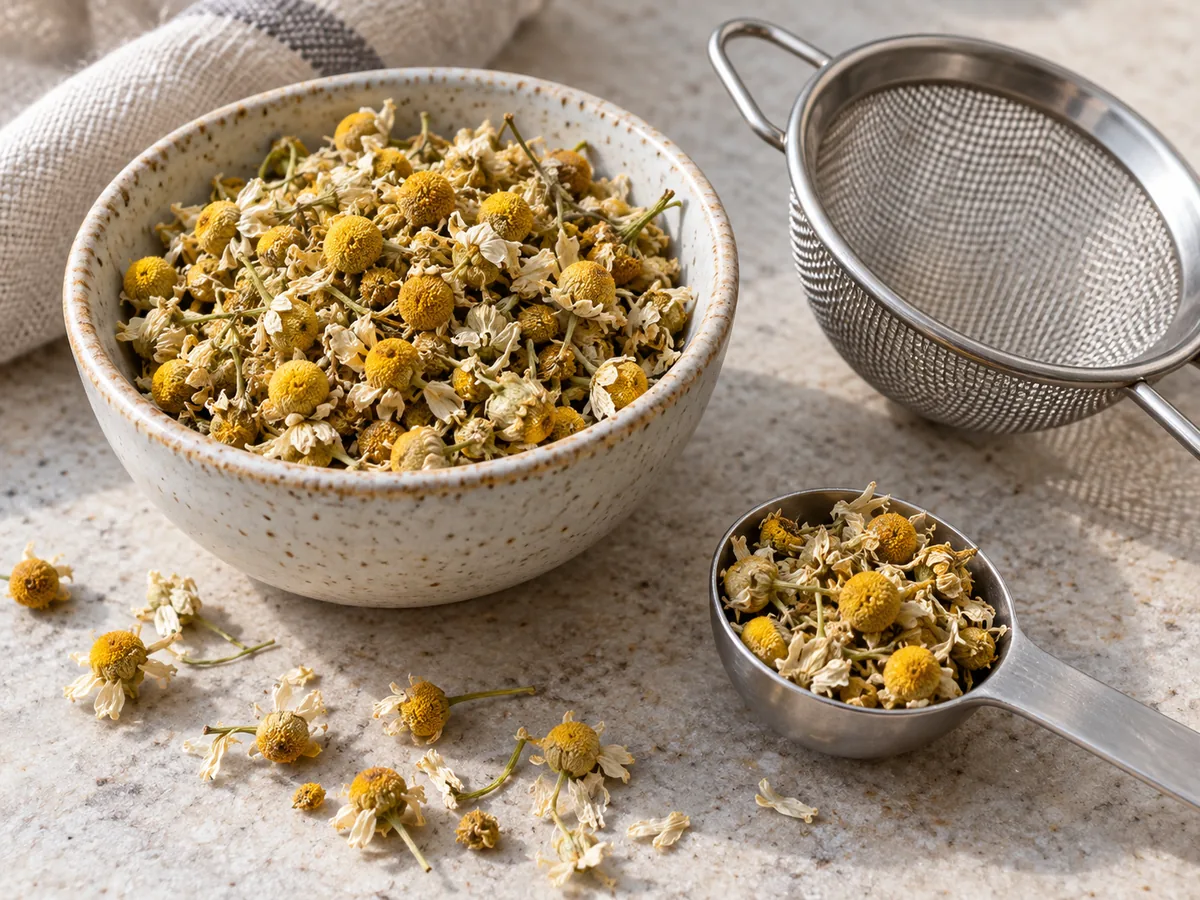
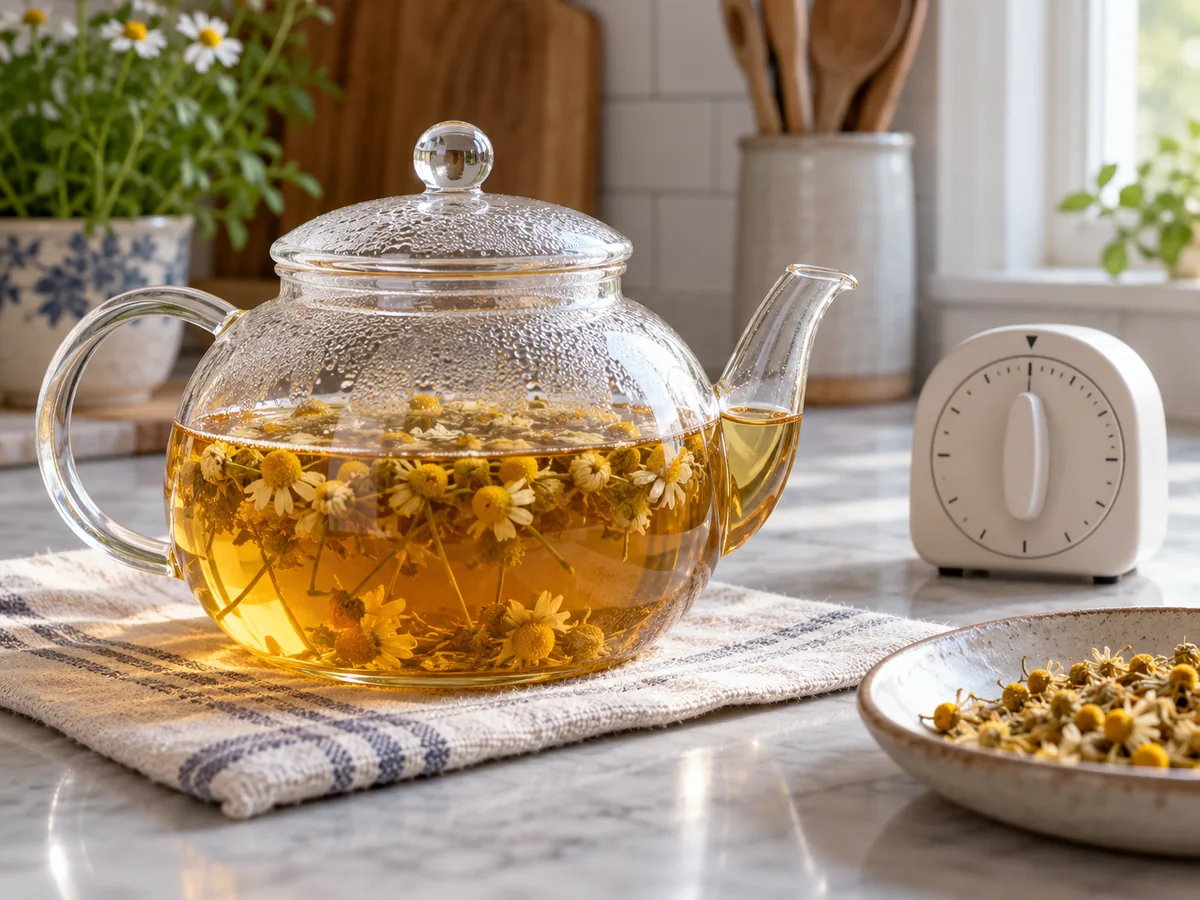
Put the amount of dried flowers, or a tea bag, specified on the package into a cup. Pour hot water over it, cover, and leave it to steep for about 5–10 minutes unless the manufacturer gives different instructions. Strain out the flowers or remove the tea bag, then let the drink reach a comfortable temperature before sipping. Steeping time and the amount of plant material affect flavor strength, and tea bags and loose teas do not necessarily contain the same weight of flowers.
Covering the cup helps it lose less heat during preparation and retain its aroma. If you are using a chamomile medicinal product with instructions for a particular therapeutic use, follow those instructions rather than this general kitchen method. Tea does not need to be very strong to be enjoyable.
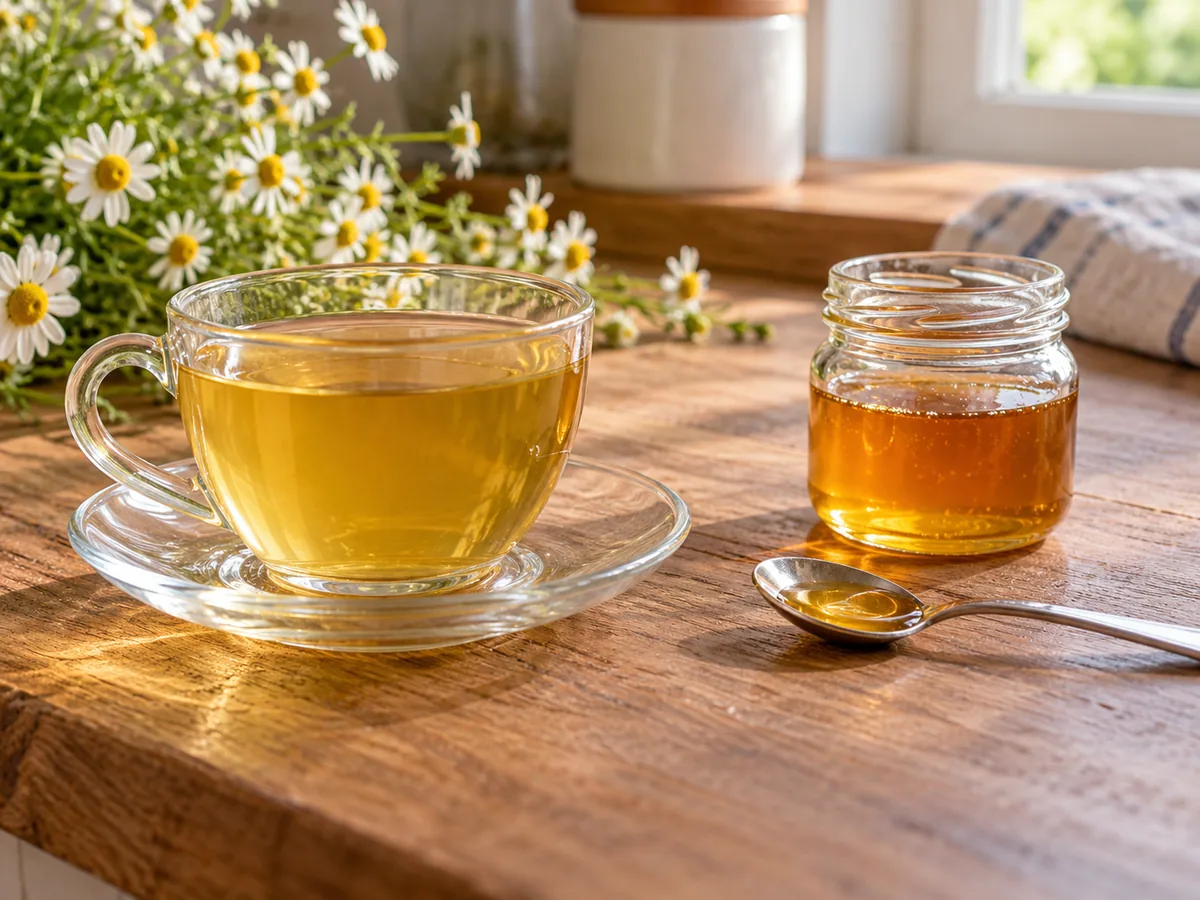
If you want to add honey for flavor, wait until the tea has cooled a little. We explain how heat affects honey in Honey in Tea: When to Add It. Honey is still a source of sugars and calories; measure your serving and compare it with our guide to honey calories and nutrition. Never add honey to drinks for children younger than 12 months.
What are chamomile’s traditional uses?
EMA describes the longstanding traditional use of preparations made from German chamomile flowers for minor digestive complaints, such as bloating and mild spasms. Its review also covers other uses of different preparations, including cold symptoms and conditions affecting the mouth, throat, or skin. This does not mean that drinking ordinary tea has been shown to treat all of these conditions: the preparation and route of use matter.
“Traditional use” reflects a long history of use and an assessment of suitability for certain mild complaints. It is different from strong evidence of effectiveness from good-quality clinical trials. The US National Center for Complementary and Integrative Health (NCCIH) says there is not enough reliable evidence to establish clinical benefit for various specific health claims about chamomile.
Does chamomile tea help with sleep?
A warm drink and an evening routine may feel pleasant, but that does not establish that chamomile itself treats insomnia. NCCIH notes that there has been little research on its effects on insomnia and that one study included in its review found no benefit for that condition. Findings from studies of concentrated supplements should not be applied to a cup of tea without checking the differences.
If sleep problems persist, interfere with daytime activities, or occur alongside other symptoms, speak with a healthcare professional rather than relying on tea as the only solution.
When should you be cautious?
Chamomile in amounts commonly found in tea and foods is likely safe for most people, but it can cause an allergic reaction. Extra caution is needed if you are allergic to ragweed, chrysanthemums, marigolds, daisies, or related plants in the Asteraceae family. If swelling, difficulty breathing, or other signs of a severe allergic reaction occur after use, seek emergency medical help immediately.
NCCIH reports interactions with warfarin and certain medicines processed by the liver, as well as a possible interaction with sedatives. If you take medicines, especially warfarin, ask a doctor or pharmacist before using chamomile regularly or taking concentrated preparations. There is little information about safety during pregnancy and breastfeeding, so discuss use during these periods with a healthcare professional.
Not every preparation is suitable for young children. EMA notes that chamomile herbal medicines are generally intended for adults and adolescents over 12, with only certain preparations recommended for younger age groups. Follow the specific product instructions and ask a pediatrician. If the symptoms for which you are using a herbal preparation do not improve or get worse, seek professional advice. For its traditional indications, EMA advises consulting a doctor or qualified healthcare professional if symptoms last longer than a week.
Frequently asked questions
Are chamomile tea and essential oil the same?
No. Tea is made by steeping flower heads in water; essential oil is a concentrated product with its own instructions. Their uses and precautions cannot be treated as interchangeable.
Does stronger tea mean a better effect?
There is no simple rule that a stronger infusion offers a greater health benefit. Follow the package instructions and choose a flavor you enjoy. If you are using a registered herbal medicine, its dosage should follow the instructions for that product.
Can you drink chamomile tea while taking medicines?
It depends on the medicine and your circumstances. Advice from a healthcare professional is particularly important if you take warfarin, sedatives, or other medicines that may interact with chamomile. Do not stop prescribed treatment because you are drinking tea.
Conclusion
German chamomile tea can be an enjoyable herbal drink. Prepare it according to the label, distinguish ordinary tea from concentrated preparations, and separate traditional use from proven treatment. Allergies, medicines, pregnancy, breastfeeding, and persistent symptoms call for additional caution and professional advice.