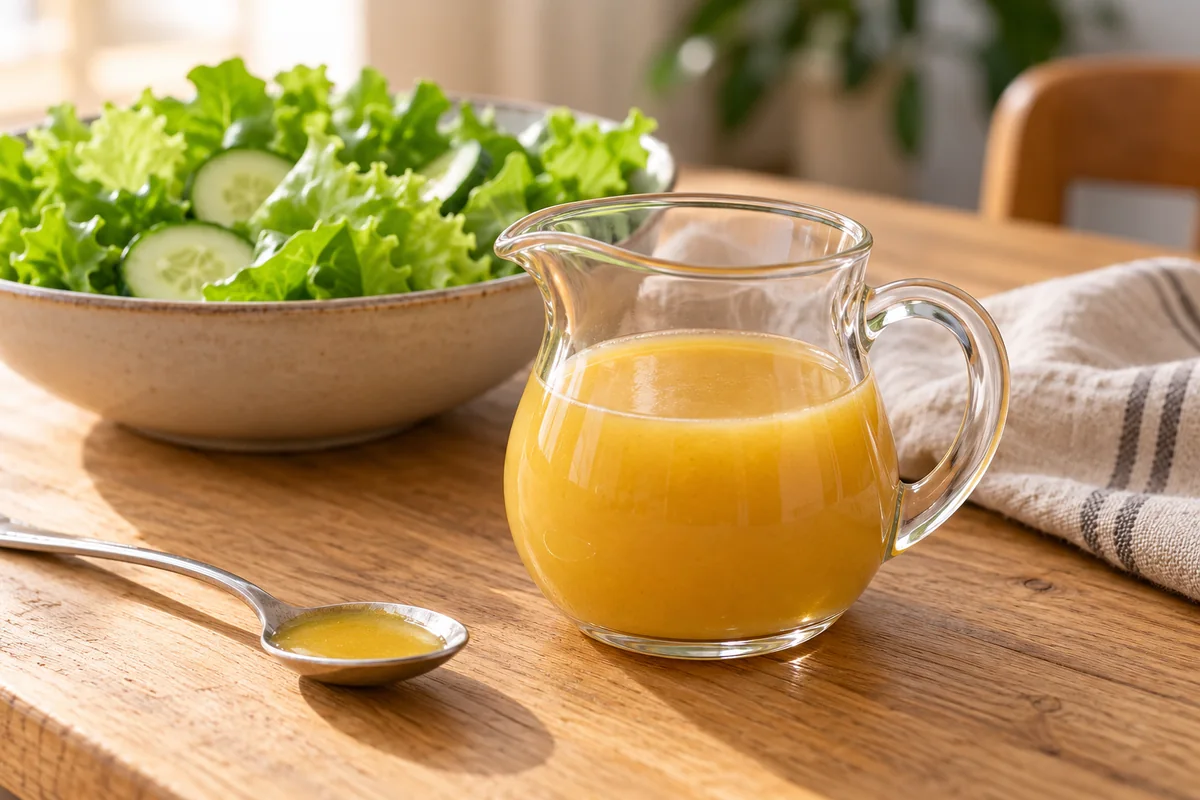
Honey mustard dressing starts with honey and mustard mixed with lemon juice, followed by olive oil whisked in gradually. For one small batch, use two tablespoons of oil and one tablespoon each of honey, mustard and lemon juice.
This recipe takes about five minutes and needs no cooking or mayonnaise. It makes approximately 80 ml, enough for four small salad portions; a teaspoon of water can loosen the dressing if needed.
Contents
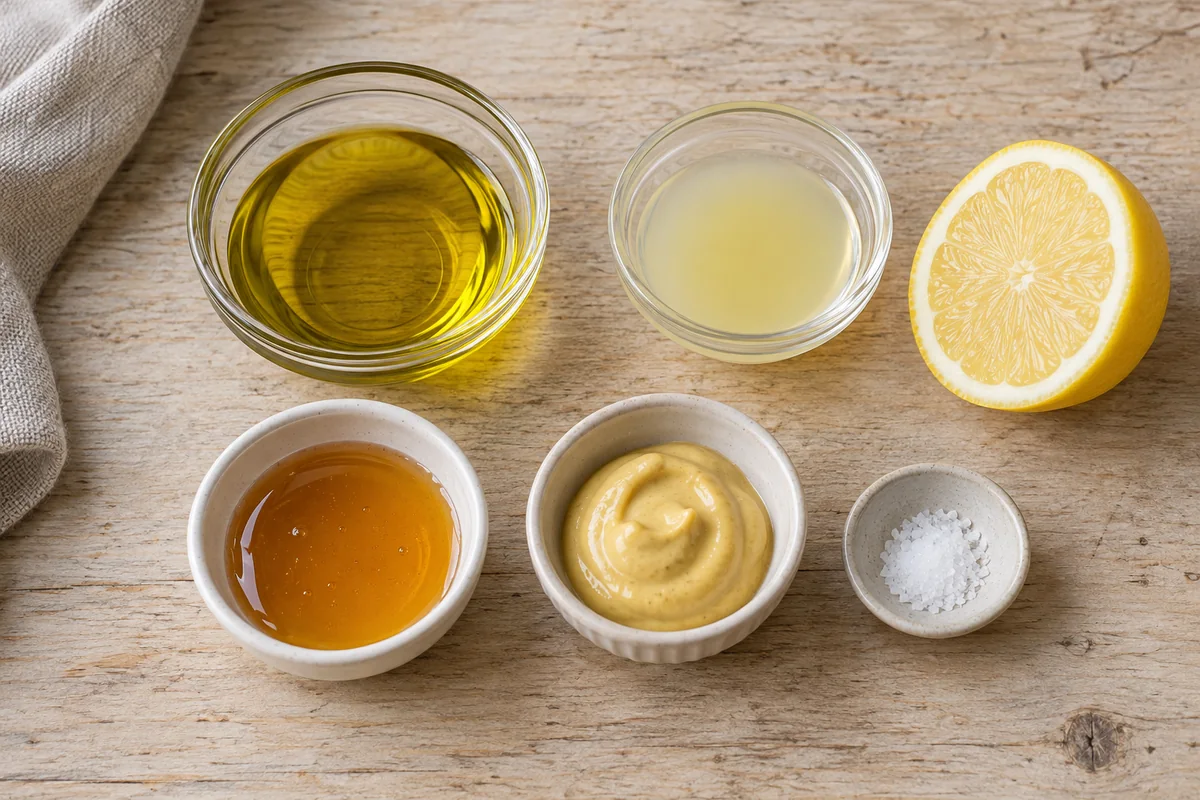
Honey mustard dressing ingredients
Start with a small batch so you can adjust the balance of sweetness and acidity to your mustard. Different brands can vary noticeably in saltiness, sharpness and flavor.
Measurements for four small salad portions
- 2 level tablespoons olive oil, 30 ml
- 1 level tablespoon lemon juice, 15 ml
- 1 level tablespoon runny honey, approximately 20 g
- 1 level tablespoon smooth Dijon mustard, approximately 15 g
- 1–2 teaspoons water, 5–10 ml, only if needed
- A small pinch of salt, depending on the mustard
- A little ground black pepper, optional
Here, a tablespoon means 15 ml and a teaspoon means 5 ml. The weights for honey and mustard are approximate; use measuring spoons for the liquids and a scale for the honey and mustard if you want consistent results.
You will need a small bowl and a whisk, or a clean jar with a tight-fitting lid. Strain the lemon juice if it contains seeds.
How to make the dressing step by step
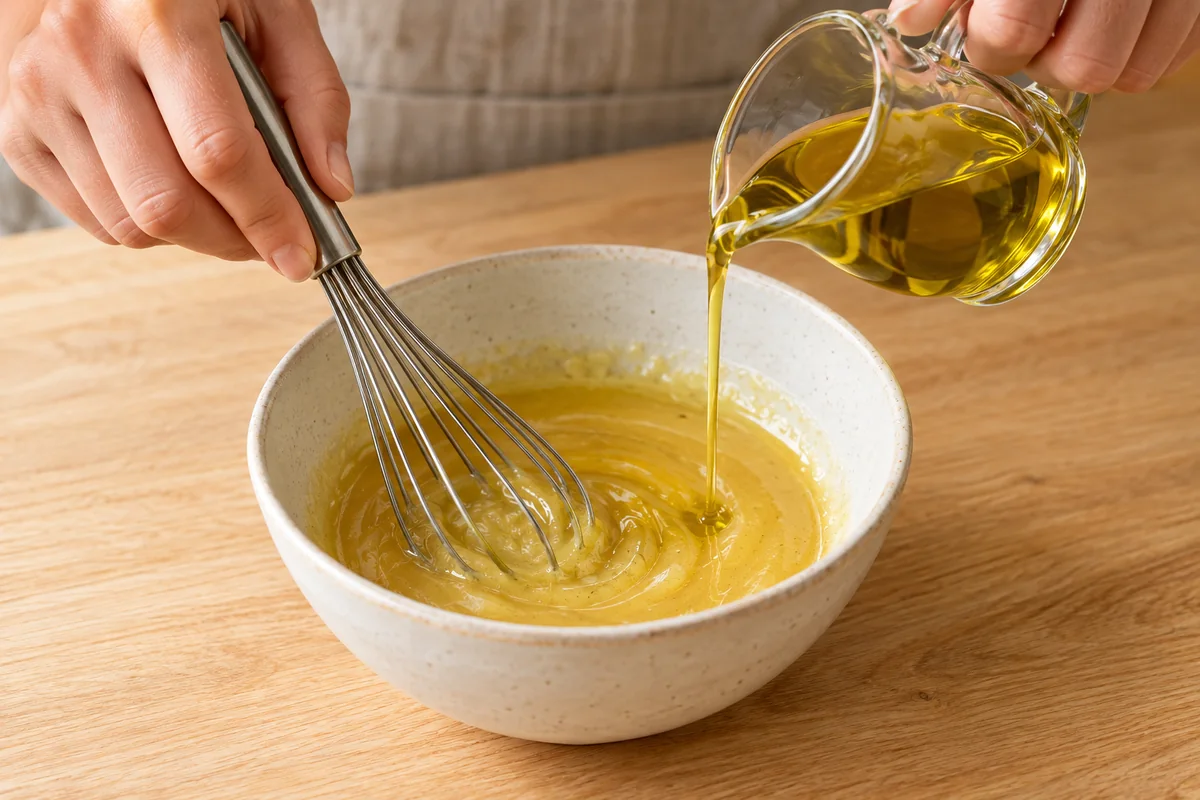
Aim for a smooth dressing that coats a salad leaf lightly. You do not need an electric mixer or prolonged whisking.
- Put the honey and mustard in a bowl. Add the lemon juice and stir until the honey is evenly mixed in.
- Pour in the olive oil gradually in a thin stream, whisking continuously. Continue until the mixture is smooth and slightly thickened.
- Taste the dressing on a washed, dried salad leaf. Only then add a little salt and, if you like, black pepper.
- If it is too thick, stir in one teaspoon of water. Add the second teaspoon only if needed.
- Dress the salad just before serving. Seal and refrigerate any unused dressing promptly.
Can you make it in a jar?
Yes. Put the main ingredients in a small clean jar, close the lid firmly and shake vigorously until combined. Leave the water and final seasoning adjustments until the end.
Leave a little empty space in the jar for shaking. Before opening it, allow dressing on the underside of the lid to run back down.
Which honey and mustard should you choose?
Choose a mild-tasting honey if you want the mustard and lemon to stand out. A more aromatic honey adds a stronger flavor of its own, which can work well with robust vegetables or cheese.
Acacia honey is one mild option, but this recipe does not require a particular variety. What matters more is that the honey mixes in easily and that you enjoy its balance with the mustard.
Smooth or wholegrain mustard?
Smooth Dijon is the starting point for an even texture. You can use another smooth mustard, although its saltiness and strength will change the result.
Wholegrain mustard leaves visible seeds and gives a different texture. It is a reasonable variation, but it will not look like the smooth dressing shown in the illustrations.
Can you use crystallized honey?
Yes, provided it is soft enough to mix. Combine it thoroughly with the lemon juice and mustard before adding the oil.
Hard crystals can make quick mixing difficult and may remain noticeable in the finished dressing. Read more about why honey crystallizes if you want to understand this natural change.
How to adjust the thickness and flavor
Taste a little dressing on your salad before making each adjustment. Mustard and lemon taste more intense straight from a spoon than when spread over vegetables.
| Problem | Small adjustment for this batch | Keep in mind |
|---|---|---|
| Too thick | Stir in 1 teaspoon water | Add gradually to avoid making it too thin. |
| Too thin | Whisk in 1/2 teaspoon mustard | This also changes saltiness and sharpness. |
| Too sweet | Add 1/2 teaspoon lemon juice | Taste again before adding more. |
| Too sour | Add 1/4 teaspoon honey | A small amount is often enough. |
| Flavors too strong | Whisk in 1 teaspoon olive oil | This also increases the total quantity. |
Why has the dressing separated?
The oil and watery ingredients may separate over time. Whisk the mixture again or shake the closed jar before serving.
Separation alone does not mean that the dressing has spoiled. However, shaking does not make improperly stored dressing safe; storage time and temperature still matter.
Which salads and vegetables go with it?
A simple starting point is green salad with cucumber. Dry the leaves well after washing, because water left on them dilutes the dressing.
Begin with one tablespoon of dressing per small portion, toss and add more only if needed. The leaves should be evenly coated without a pool of dressing at the bottom of the bowl.
Adding it to roasted vegetables
You can add a small amount to potatoes or carrots after roasting. In this recipe, the dressing is a finishing touch and is not baked with the vegetables.
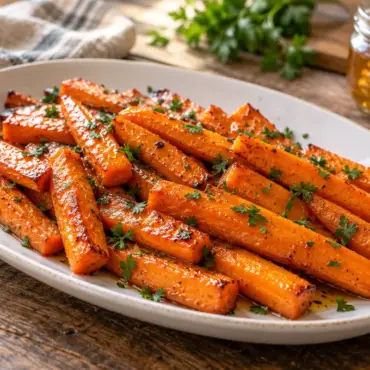
If you are making honey roasted carrots, taste a portion without extra dressing first. The carrots already have a honey coating, so combining the two may be sweeter than you want.
How to store homemade honey mustard dressing
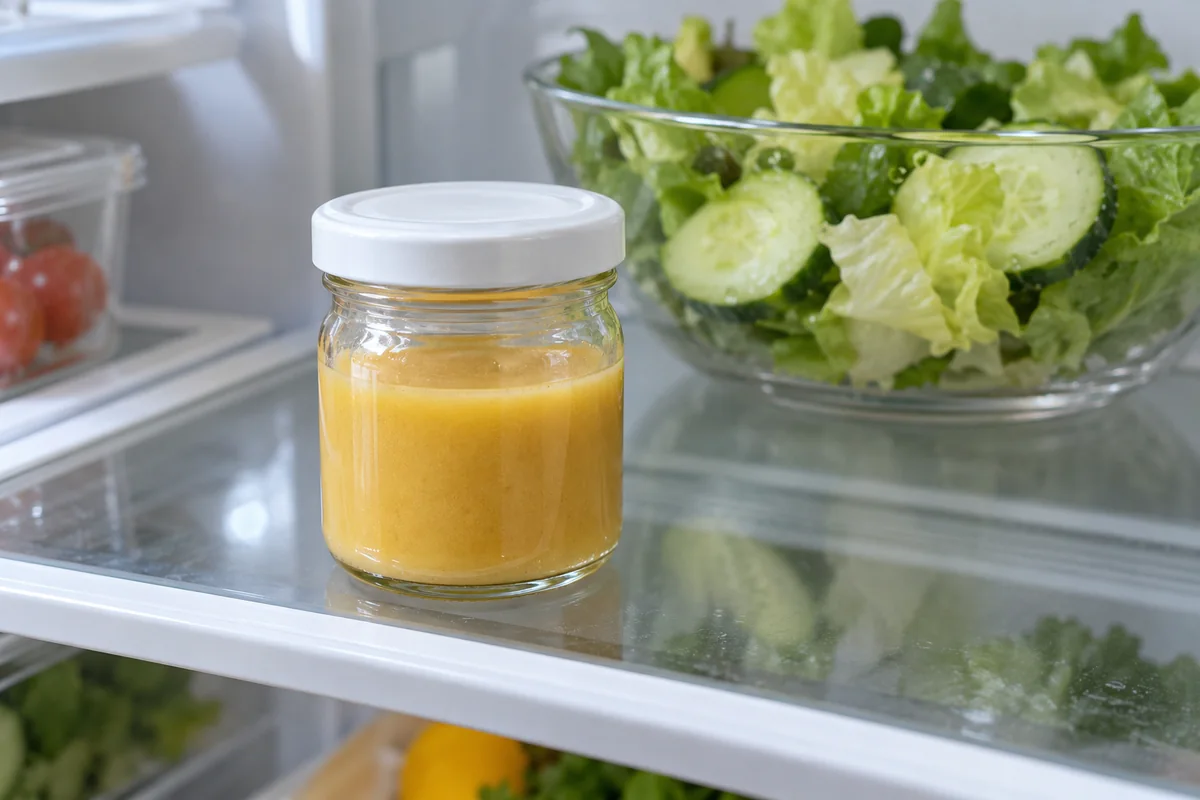
Keep the dressing in a clean, sealed jar in the refrigerator at 4°C or below. For this small homemade batch, plan to use it within three days; this is a cautious practical recommendation, not a laboratory-validated shelf life for this recipe.
Label the jar with the preparation date and use a clean spoon each time. Do not return leftovers from a plate or an already dressed salad to the jar.
Can it stay at room temperature?
Refrigeration is recommended for this homemade dressing. The presence of honey and lemon juice does not establish that the mixture is shelf-stable.
As a cautious serving rule, follow the general USDA guidance on time out of refrigeration: no more than two hours, or one hour when it is hotter than about 32°C (90°F). Discard dressing left out longer; appearance and smell cannot reliably confirm that it is safe.
Honey mustard dressing FAQs
Can apple cider vinegar replace lemon juice?
Yes, but acidity and flavor vary between products. Start with two teaspoons of apple cider vinegar instead of the full tablespoon of lemon juice, taste, then add a third teaspoon if needed.
Does this recipe contain mayonnaise?
The basic recipe contains no mayonnaise. Its texture comes from combining the oil with the other ingredients.
If you add mayonnaise, yogurt or other ingredients, you have changed the recipe. You will also need to reconsider how it should be stored.
Is this dressing suitable for everyone?
Mustard is an allergen, so check the label for ingredients and other allergens. Because the dressing contains honey, do not give it to babies under 12 months, in line with CDC guidance on honey in infant feeding.
Final tips
Honey mustard dressing needs only a few measured ingredients and a little mixing. Start with the quantities above, taste it on a salad leaf and adjust only what needs changing.
Make a small batch, dress the salad just before serving and refrigerate the rest promptly. This keeps the recipe practical for one meal or several small portions.