Chestnut honey comes from the nectar of sweet chestnut flowers and is known for its strong aroma and bitter finish. It often crystallizes more slowly than many other honeys, but neither bitterness nor staying liquid can prove that a jar is authentic.
If you are choosing honey for breakfast, cheese or a drink, start with the flavor you enjoy. This guide explains how chestnut honey differs from acacia and honeydew honey, how to use it and what to check before buying a jar.
Contents
What is chestnut honey and where does it come from?
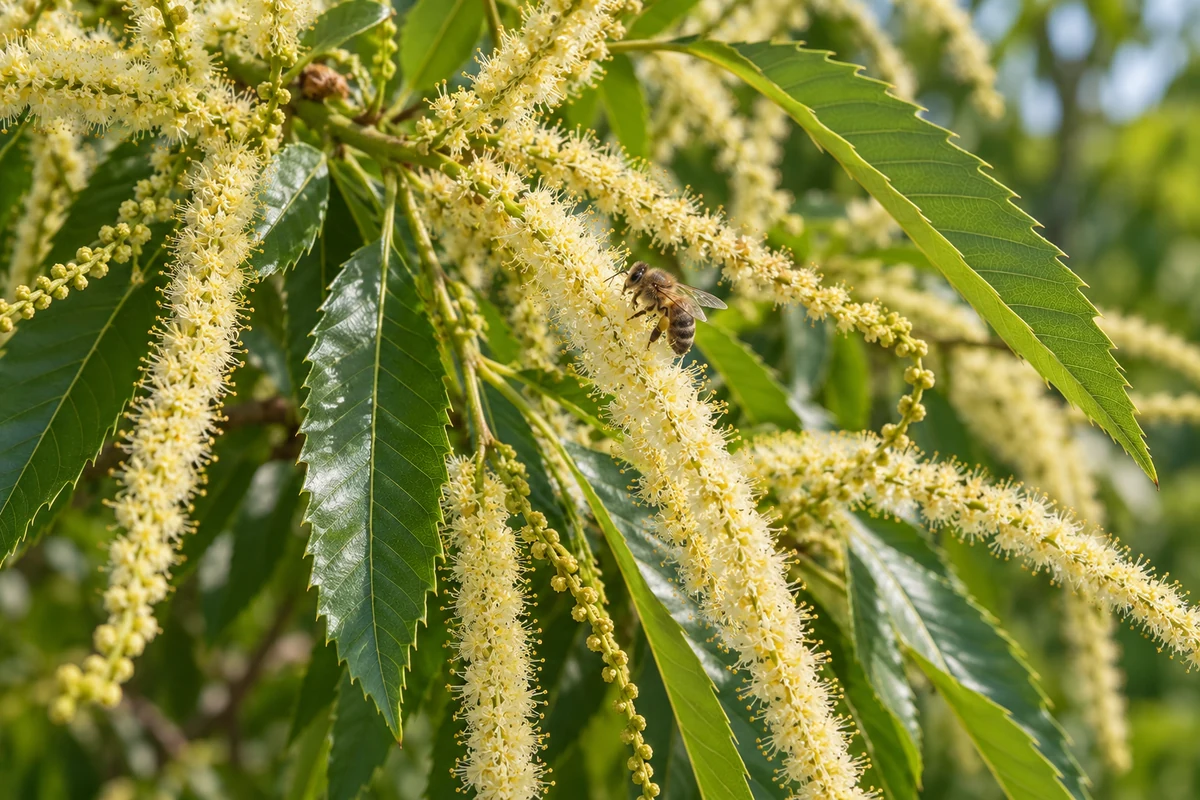
When sweet chestnut trees flower, bees collect nectar from their blossoms. Chestnut honey is made from that nectar; it is not honey with chestnut nuts mixed into it.
Sweet chestnut is Castanea sativa. It is different from the horse chestnut often planted along streets, so do not use the two names interchangeably when discussing this honey.
Does every jar taste the same?
Not necessarily. The area where bees forage, the weather and other plants nearby can affect a batch, so two jars of the same honey type may differ in color and aroma.
Monofloral, or single-flower, honey does not mean that every pollen grain comes from one plant. The name describes its predominant botanical origin, assessed alongside other characteristics and appropriate analysis.
As a regional example, the Banski kestenov med specification (Croatian) describes honey from a defined area of Banovina. Its specific origin and composition requirements should not be applied to every chestnut honey on the market.
Why does chestnut honey taste bitter?
Bitterness can be a natural part of its flavor, alongside sweetness and a lingering aroma. If you normally eat mild acacia honey, your first taste may seem much more intense.
A study of sensory and physicochemical properties of honey from Bosnia and Herzegovina described chestnut samples with characteristic bitterness and differences linked to year and origin. This helps explain why every jar should not be expected to taste identical.
How to try it for the first time
Taste a small amount on its own, then try a little on bread or with cheese. You can judge whether you enjoy the finish before adding a large amount to a meal.
If the bitterness does not appeal to you, there is no need to eat it because someone calls it the “healthiest” honey. Choose a milder type for everyday sweetening and save chestnut honey for combinations you enjoy.
Bitterness is different from spoilage
An expected bitter note is different from a new, unusual sour or alcoholic smell. If honey starts foaming, fermenting or smelling noticeably different, do not assume that it is simply a characteristic of the variety.
For help distinguishing natural changes from problems, read our guide to whether honey expires and how to store it.
What color is chestnut honey, and what can color tell you?
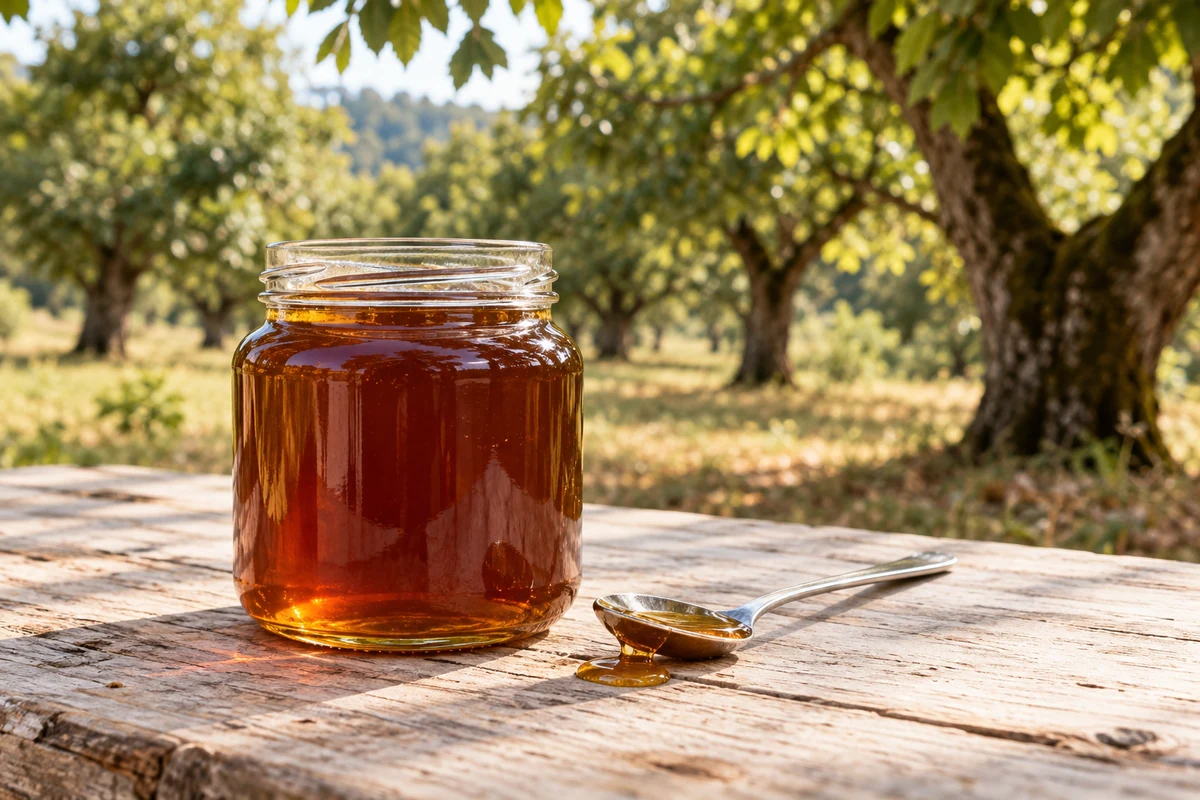
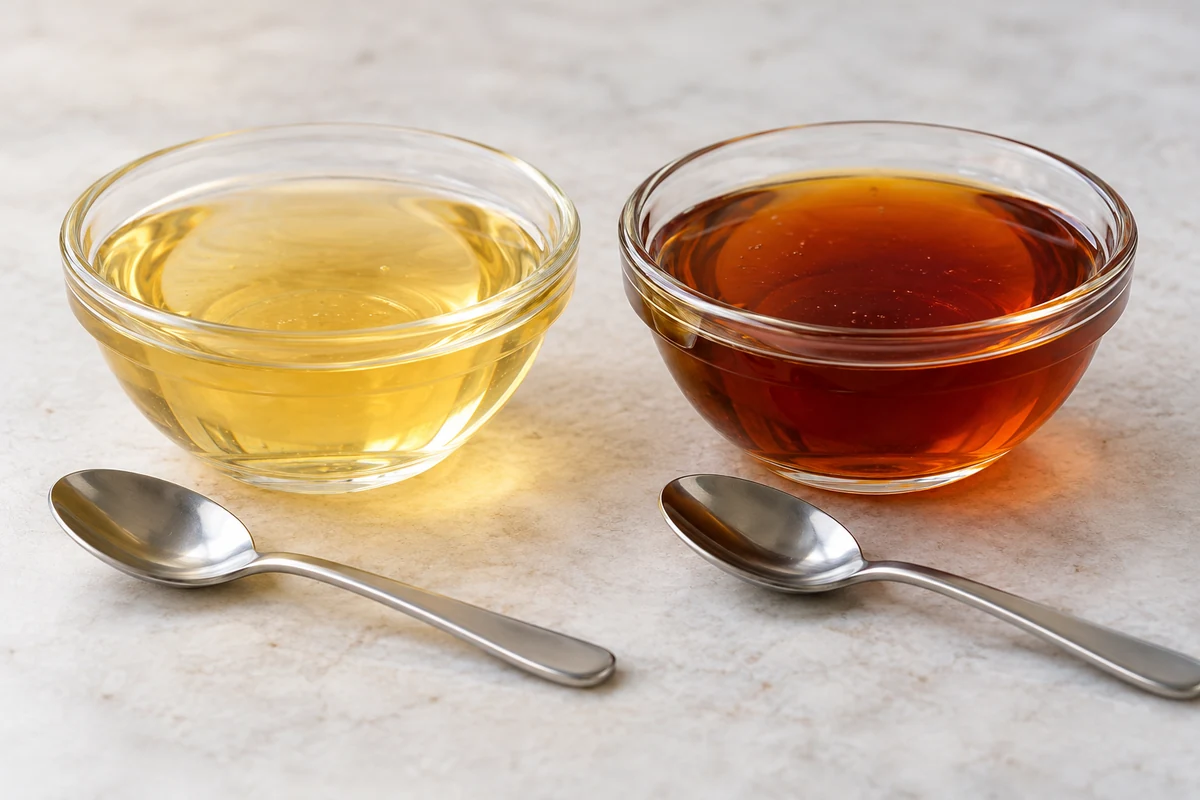
Chestnut honey is often amber to brown, sometimes with reddish tones. Shades vary: the regional Banski specification also describes lighter amber samples, so “it must be almost black” is not a reliable rule.
Color helps describe honey, but cannot establish its composition, origin or purity. A darker shade or stronger bitterness does not prove that one jar is better quality than a lighter sample.
When comparing jars, consider the lighting, the depth of the honey and the color of the glass. A product photograph cannot replace the label or information from the producer.
Does chestnut honey crystallize?
Yes, chestnut honey can crystallize, although it is known for slower crystallization. The claim that real honey must become solid quickly does not apply to every variety.
Sugar ratios, moisture and storage conditions all affect crystal formation. Research on different honey types linked the rate of crystallization to sugar composition and water content, rather than the plant name alone.
If crystals appear
A change in texture alone does not mean honey has spoiled, and you do not have to liquefy it straight away. You can spread thicker honey on toast or stir it into a meal where that texture works well.
If you prefer liquid honey, avoid strong heat or unnecessarily long heating. Our guide to why honey crystallizes explains the process and useful precautions.
Chestnut, acacia and honeydew honey: what is the difference?
Compare origin and flavor first, then decide which honey suits your meal. A dark color does not make chestnut honey and honeydew honey the same type.
| Honey type | Origin and flavor | When to try it |
|---|---|---|
| Chestnut | Sweet chestnut nectar; strong aroma, often with a bitter finish | With mature cheese, bread and walnuts |
| Acacia | Black locust nectar; usually mild flavor and a lighter color | When you want the honey to have less influence on the meal |
| Honeydew / forest | Mainly honeydew; characteristics depend on the source and area | When exploring a different style of dark honey |
The table shows general differences, not guaranteed characteristics of every jar. For more detail, explore acacia honey properties and our guide to honeydew honey, also called forest honey.
Is chestnut honey the same as forest honey?
A chestnut tree may grow in a forest, but that does not automatically make its flower honey a honeydew honey. The important distinction here is what the bees collect: nectar or honeydew.
If a seller uses both names, ask how the honey is described on its label and how its origin was assessed. A clear explanation is more useful than assuming that all dark honeys are interchangeable.
How to use chestnut honey in food
Start with a small amount and add more gradually to get used to its stronger flavor. Aim to complement the meal without covering up all the other tastes.
You can try it:
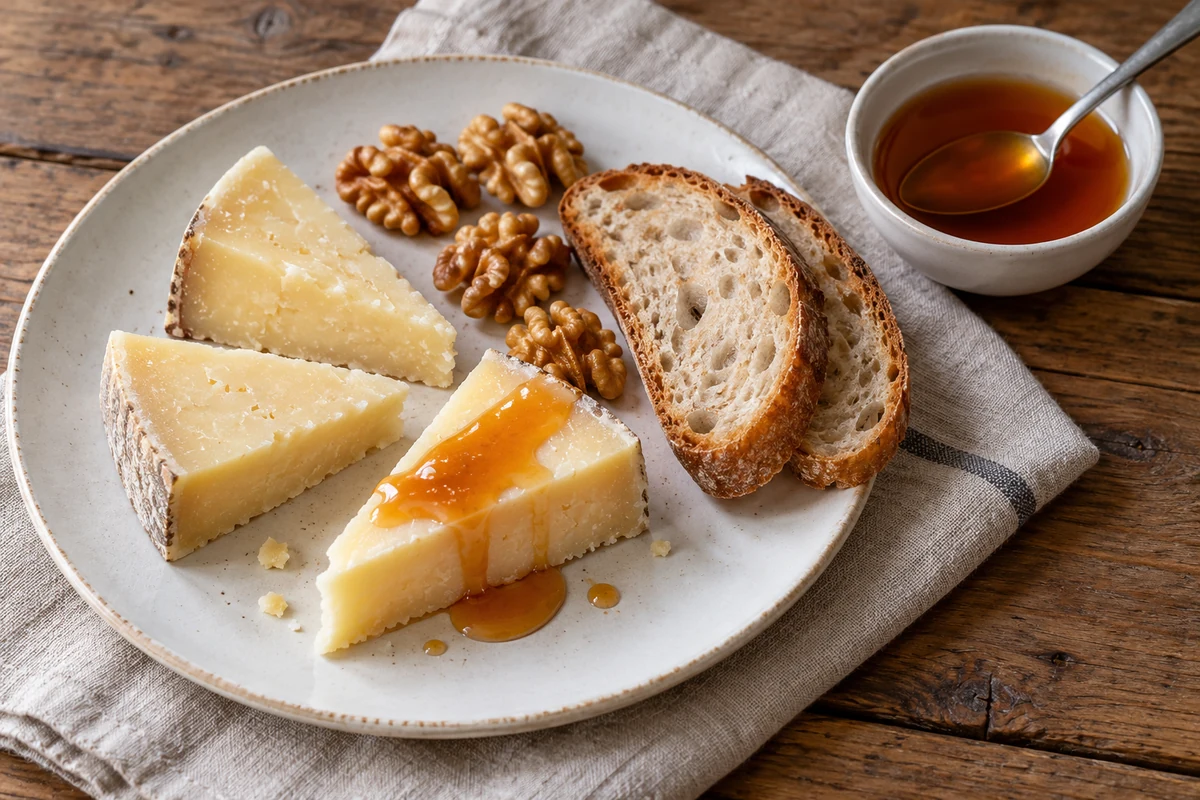
- with mature cheese and a piece of bread;
- with walnuts, if you normally eat them and have no allergy;
- over plain yogurt or oatmeal, checking whether you enjoy the bitter note;
- in a salad dressing, where a little honey balances acidity;
- in a drink, if you want a more pronounced flavor than acacia honey provides.
Adapting a recipe
When a recipe simply asks for “honey,” choosing chestnut honey may change the final taste. For a delicate dessert, try a small amount in a little of the mixture before changing the whole batch.
You do not need a “therapeutic dose” or a rule about eating it on an empty stomach. Treat it as a food ingredient and include it in your overall sugar intake.
Composition and health: what does research actually show?
Studies of individual chestnut honey samples examine phenolic compounds and antioxidant activity. For example, a study of samples from Artvin analyzed the chemical composition and laboratory antioxidant activity of eight samples.
These results do not show that eating the honey treats a disease. Differences among samples also mean that the same health effect cannot be assigned to every jar, or used to call it the best honey for health.
Bitter honey still contains sugars
A less sweet sensation does not mean the honey is sugar-free. The World Health Organization includes sugars naturally present in honey among free sugars, whose overall intake should be limited.
Bitterness is therefore not a reason to eat unlimited amounts, or evidence that it is a suitable choice for diabetes. If you are changing your diet because of a medical condition, discuss the type and amount with a healthcare professional who knows your situation.
Precautions for infants and people with allergies
Do not give honey to infants under 12 months, including chestnut honey. The CDC warns about infant botulism; a honey’s botanical origin or variety does not remove that risk.
Avoid honey if you have a known allergy to it. If you have reacted to similar products before, ask a healthcare professional before trying it; this guide is not an allergy test.
What to check when buying chestnut honey and how to store it
Look for a clear product name, origin, producer or packer details, net weight and a date on the label. If single-flower origin matters to you, ask whether suitable analysis is available for that batch.
Bitterness, color and behavior in water cannot reliably prove authenticity at home. Read our guide to how to tell if honey is real without unreliable tricks for a broader explanation.
How to compare prices
Compare the price per kilogram, not just the price of a jar. Divide the pack price by its weight in kilograms.
For example, a 500 g jar priced at €10 costs €20 per kilogram. This is an illustrative calculation, not a current offer or an estimate of the market price of chestnut honey.
Check origin, availability and delivery charges too. A higher price alone does not prove better quality, and this article does not mean our shop has this variety in stock.
Storage after opening
Keep honey tightly closed in a dry place, away from direct sunlight and heat. Use clean, dry utensils, without food residues or water.
Follow the storage instructions on the label. The honey storage guide linked earlier explains moisture, changes in smell and shelf life in more detail.
Frequently asked questions
Is bitter chestnut honey spoiled?
A bitter note can be normal for this variety. A new sour or alcoholic smell, foaming or fermentation needs a different assessment and should not be dismissed because of the honey’s name.
Does real chestnut honey have to be dark?
There is no single shade that reliably proves authenticity. Color varies between regions and batches, so assess origin using the label and suitable analysis.
Does it have to stay liquid?
No. Slow crystallization is common, but crystals do not rule out a chestnut origin and are not, by themselves, a sign of spoilage.
Which is better: chestnut or acacia honey?
Acacia honey is often a practical choice for mild sweetening, while chestnut honey suits a stronger aroma if you enjoy its bitterness. Flavor preference does not prove that one variety has a medical advantage.
Choose chestnut honey for its distinctive taste and how it works with food. Start with a small jar if it is new to you, check the origin and label, and do not expect color or bitterness to replace a reliable quality assessment.
If you are still comparing varieties, continue with the linked guides to acacia and honeydew honey. They will help you choose a honey that suits your meals and preferences.