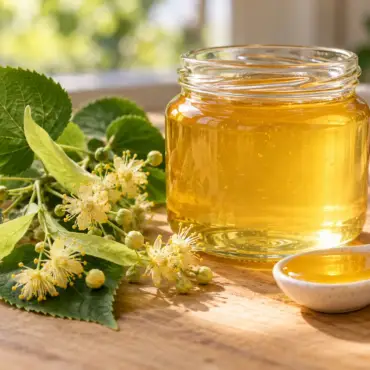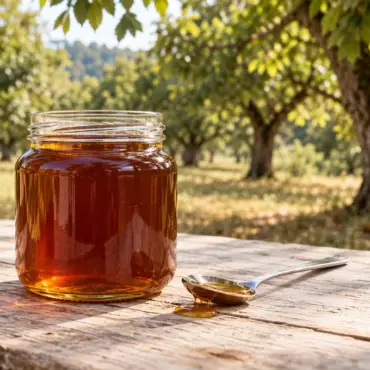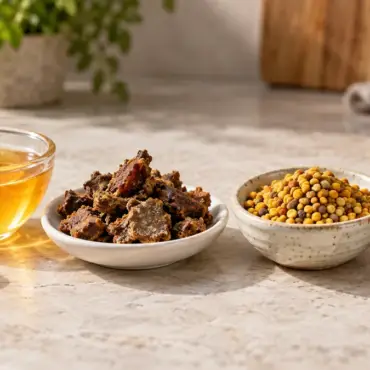
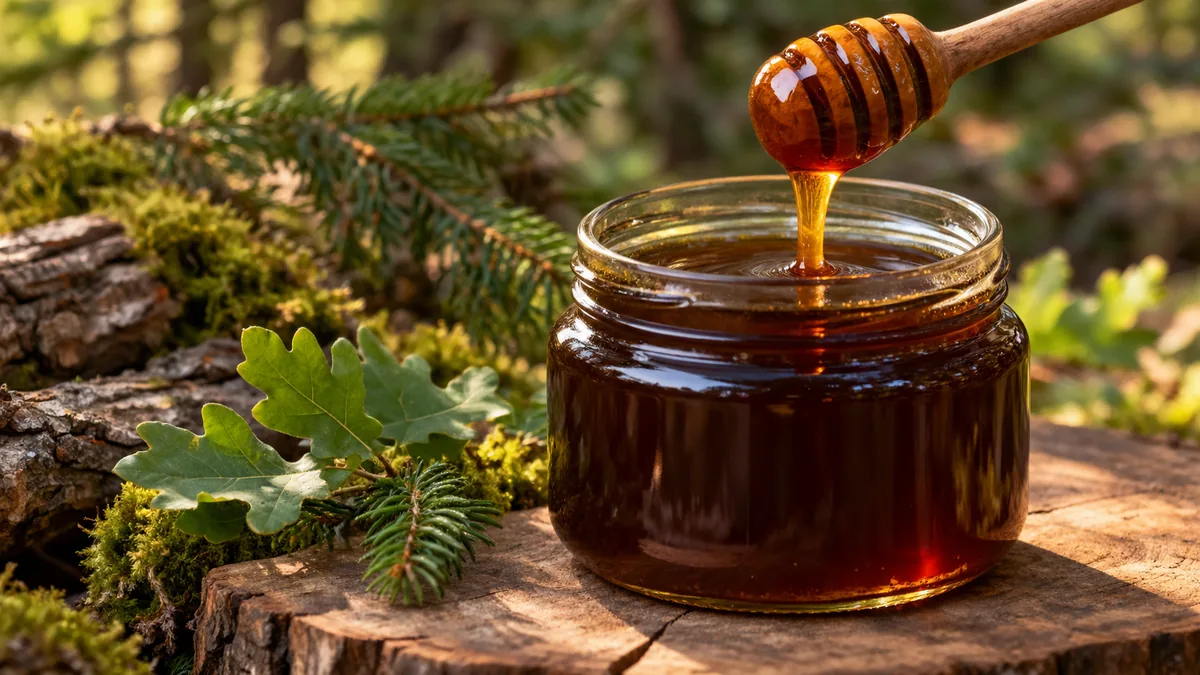
Forest honey, more precisely known as honeydew honey, differs from acacia and wildflower honey first of all in how it is produced. While blossom honeys are made mainly from flower nectar, this type is produced from honeydew — sweet substances found on the living parts of plants and associated with sap-feeding insects.
Because of that different origin, forest honey can also differ in color, aroma, taste, and several physicochemical characteristics. It is usually darker and more intense in flavor than acacia honey, and it can also be quite different from wildflower honey.
In Serbia, this type is often sold under names equivalent to “forest honey” or “black honey.” In English, honeydew honey is the more precise term when the origin matches the formal definition. Below, we explain how it is made, what it tastes like, how it differs from blossom honey, how to use and store it, and what to look for when choosing it.
Contents
What is honeydew honey and how is it made?
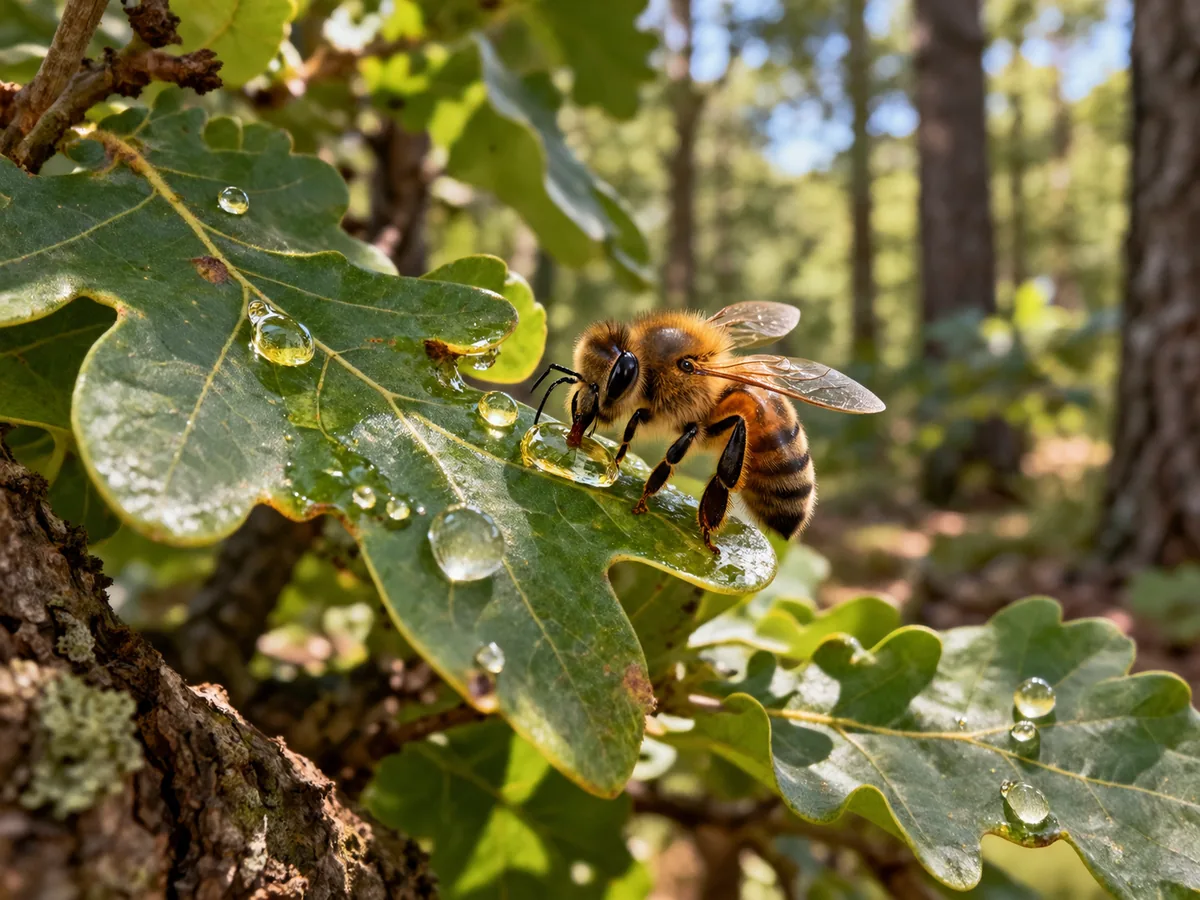
Serbian honey regulations classify honey by origin into blossom or nectar honey, honeydew honey, and baker’s honey. It is defined as honey made from excretions of plant-sucking insects or secretions from the living parts of plants. The same general distinction is used in the international Codex Standard for Honey.
This is the main difference from acacia, wildflower, and other nectar honeys: the starting material is not primarily flower nectar. In forest environments, honeydew can appear on different trees and other plants. Bees collect it, process it, and store it in the comb where it matures into honey.
That is why “forest honey” is a useful everyday description of where the honey comes from, while “honeydew honey” more precisely describes how it was produced.
Are forest honey, black honey, and honeydew honey the same?
In everyday use, these names can overlap, especially in local markets. However, they are not equally precise technical terms.
Which term is most precise for origin?
“Honeydew honey” identifies honey by the material the bees collect. “Forest honey” is a common descriptive name because this kind of honey is often associated with forest vegetation. “Black honey” is a local or trade expression that mainly points to the dark appearance of the product. Color alone, however, is not enough to prove that a honey is honeydew-derived.
For that reason, it is better to check labeling, origin, and producer information rather than relying only on the shade of the honey in the jar.
How does honeydew honey differ from blossom honey?
The most important difference is origin. Blossom or nectar honey is made from plant nectar, while this type is made mainly from honeydew and related substances collected from living plant surfaces.
The difference is also reflected in laboratory parameters. Serbian regulations set a minimum electrical conductivity of 0.8 mS/cm for honeydew honey, while most blossom honeys are generally expected to remain below 0.8 mS/cm. Electrical conductivity is one of the characteristics associated with the mineral and organic-acid content of honey.
For a comparison of two common nectar honeys on our site, see Acacia Honey vs Wildflower Honey: What’s the Difference and Which Should You Choose?
What does forest honey taste and look like?
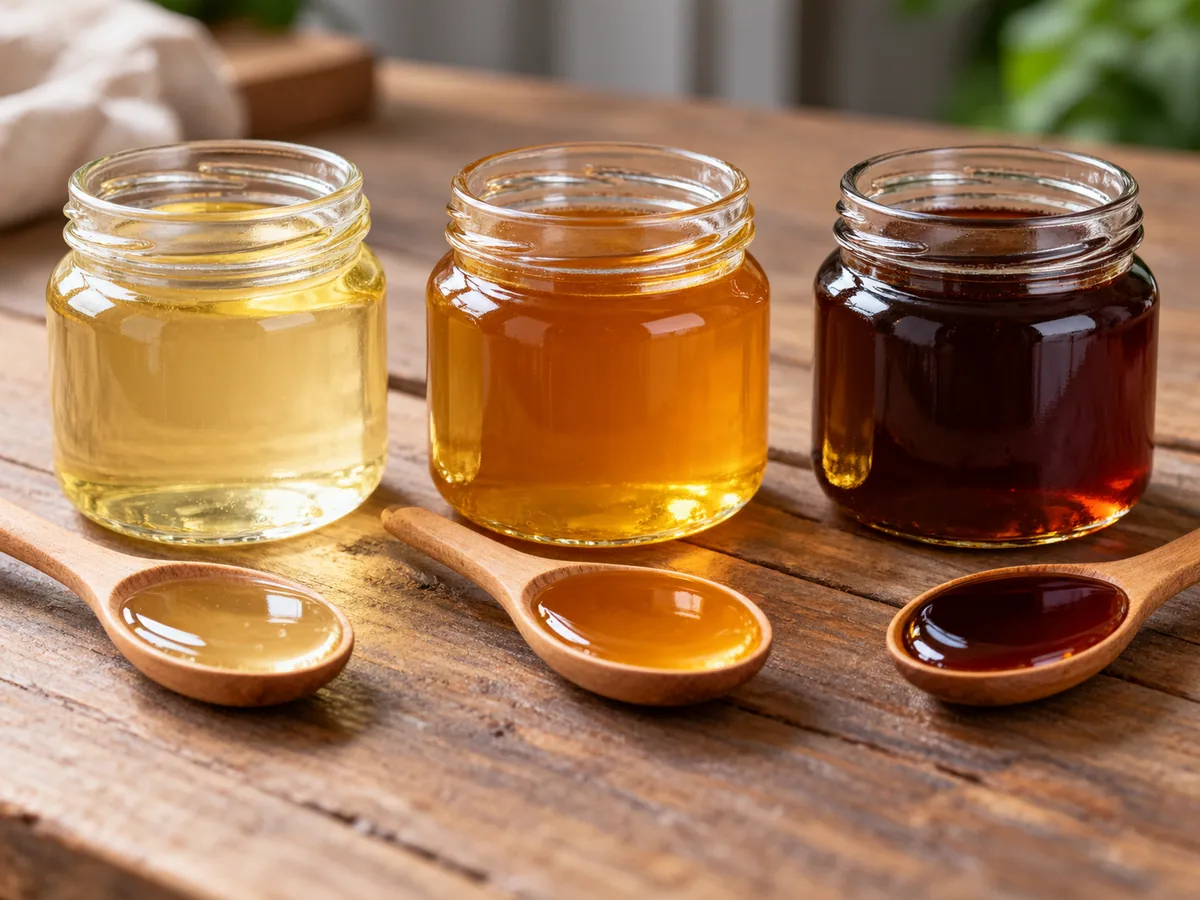
Forest honey is often dark amber to deep brown, and some varieties can look almost black or show greenish tones. The exact shade depends on origin and season, so darker color by itself is not proof of quality or authenticity.
The flavor is usually stronger and less floral than that of acacia or wildflower honey. Depending on origin, it may show malty, caramel-like, woody, or mildly resinous notes. It can seem less sweet, but that does not mean it contains little sugar — it is still honey and is made up largely of sugars.
What do we know about its composition?
Scientific reviews report that honeydew honey often has a different profile from blossom honey. Across many samples, higher values are frequently reported for electrical conductivity, mineral content, proteins, phenolic compounds, and certain oligosaccharides, although the exact composition varies with botanical and geographical origin. A useful overview is available in this review of the physicochemical characteristics of honeydew honey.
This does not mean that every sample has the same composition, or that a dark color can tell you the exact level of any mineral or bioactive compound. Reliable determination of origin and quality requires appropriate laboratory analysis.
Is forest honey “healthier” than blossom honey?
It is not useful to label one type of honey as universally healthier. This type of honey may contain higher levels of some minerals and phenolic compounds than certain blossom honeys, but it is still a sugar-rich food. It makes more sense to choose it for origin, quality, flavor, and intended use than because of claims that one variety can treat disease.
If you are interested in honey as a sweetener, see our guide Honey Instead of Sugar – Differences, Benefits, and How Much to Use.
Does forest honey crystallize?
It can. The rate of crystallization depends on the balance of different sugars, water content, temperature, and other characteristics of the specific honey. Some varieties remain liquid for a long time, while others can partly or fully crystallize over time.
Crystallization by itself is not a sign that honey has spoiled or that sugar was added. It is a natural structural change in honey. For more detail, see Why Does Honey Crystallize?
How can you use forest honey?
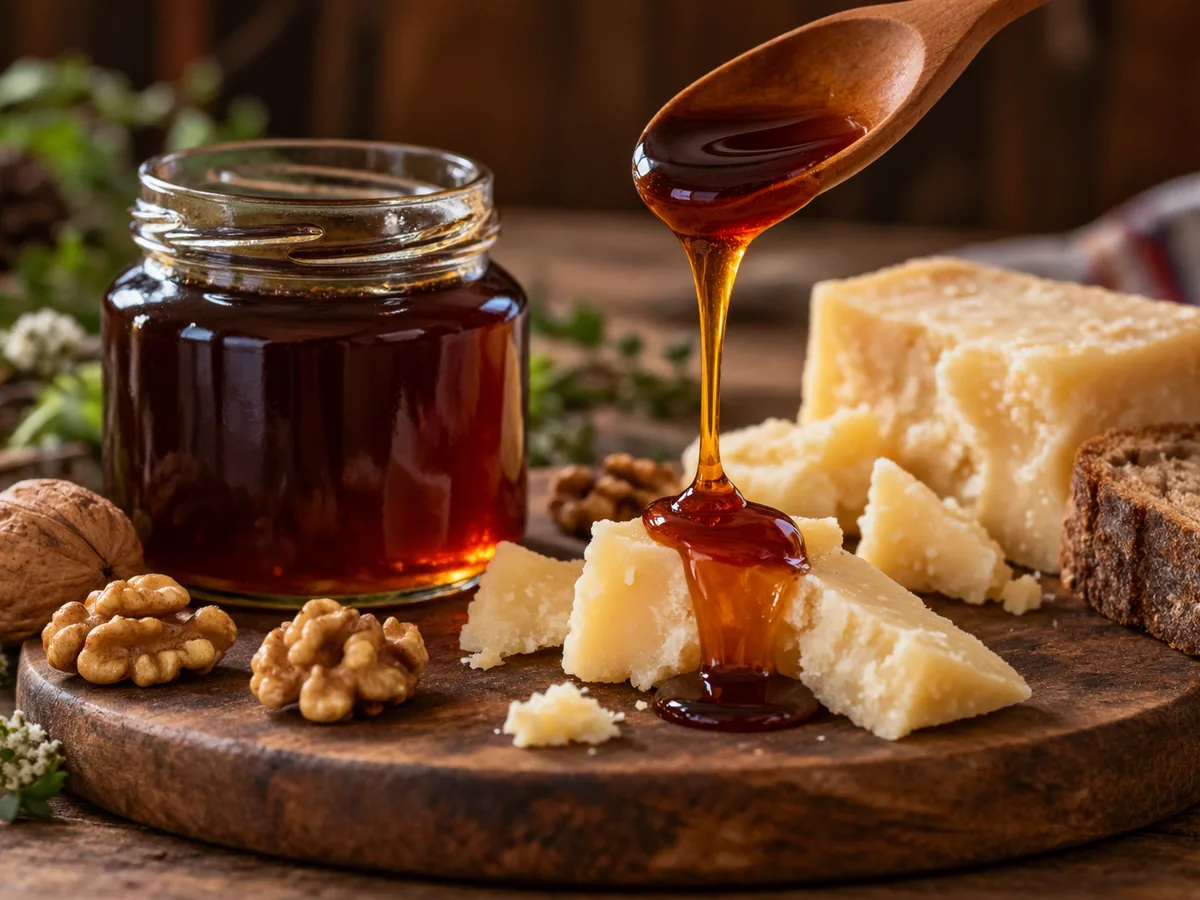
Because its flavor is usually more intense, forest honey works well when you want the honey itself to be noticeable. It can be used with tea, yogurt, oatmeal, cheeses, dressings, marinades, or some desserts.
Since the flavor can be strong, it is practical to start with a smaller amount and add more only if needed. Like other types of honey, it should still be treated as a sweetener and used in moderation.
How should forest honey be stored?
Forest honey should be stored like other honeys: tightly closed, in a dry place, away from direct sunlight and heat. Refrigeration is generally unnecessary, and lower temperatures can make crystallization occur faster or become more noticeable.
Use a clean, dry spoon, because introducing water or contaminants can affect quality. For a fuller storage guide, see Does Honey Expire? How Long It Lasts and How to Store It Properly.
How can you choose good forest honey?
Start with the label, producer, and origin. Dark color, thickness, or the fact that the honey is liquid are not enough to reliably establish authenticity.
Home tests using water, a spoon, paper, or a flame cannot reliably prove that honey is genuine. We explain this in more detail in How to Tell If Honey Is Real: What You Can Actually Check.
How to compare prices and product listings
When comparing honeydew honey prices, check the net weight first. The price of one jar is not the price per kilogram: divide the pack price by its weight in kilograms.
| What to check | How to compare listings |
|---|---|
| Price per kilogram | Multiply a 250 g pack price by 4 or a 500 g price by 2; for 1 kg, use the listed price. |
| Origin and labeling | Check the stated honey type, producer and origin. Dark color alone does not establish authenticity. |
| Availability | Select the pack size and check whether it is in stock. |
| Total cost | Include delivery charges and check the delivery terms, rather than comparing jar prices alone. |
A higher price alone does not prove better quality. Compare the unit price alongside origin, labeling and the information the producer can provide.
Check the current price and stock status for your chosen pack on our Crni med / forest honey from Jastrebac product page (Serbian). A displayed price does not mean the item is in stock; check availability before ordering.
Frequently asked questions about honeydew honey
Is “black honey” the same as forest honey?
In local trade, especially in Serbia and nearby markets, a very dark forest honey may be called “black honey.” However, “black honey” is not a precise international category. Honeydew honey is the clearer term when the product matches the formal definition.
Is forest honey made from flower nectar?
Not primarily. Bees collect honeydew and related substances from living plant surfaces and then process and store them in the comb.
Is every dark honey forest honey?
No. Color can be a useful characteristic, but it is not enough to determine origin. Some nectar honeys can also be dark.
Does forest honey crystallize?
Yes, it can. The rate and pattern of crystallization depend on the composition of the specific honey and on storage conditions.
Can babies eat forest honey?
No. Like other types of honey, honeydew honey should not be given to children younger than 12 months because of the risk of infant botulism. This recommendation is also stated by the CDC.
Conclusion
Honeydew honey stands out because its origin is different from that of classic nectar honeys. “Honeydew honey” is the most precise term when the honey matches that definition, while “forest honey” is a common everyday description and “black honey” is mainly a local trade name.
Its dark color, stronger flavor, and characteristic composition make it appealing to people who prefer more intense honeys. When choosing it, focus on origin, labeling, and a reliable producer rather than home tests or claims that one type of honey can treat specific diseases.