Honey does not begin in a jar, and the beekeeper does not make it in place of the bees. The process starts with plants. Bees collect nectar, carry it to the hive, transform it, and store it in honeycomb cells. Once the honey is ripe, a beekeeper may take a portion of the stores and prepare it for jars.
The question of how honey is made has two parts: the colony’s work, from flower to capped comb, and the beekeeper’s work, from choosing ripe frames to filling jars. Knowing the difference also helps when choosing honey for its floral origin and flavor.
Contents
What do bees make honey from?
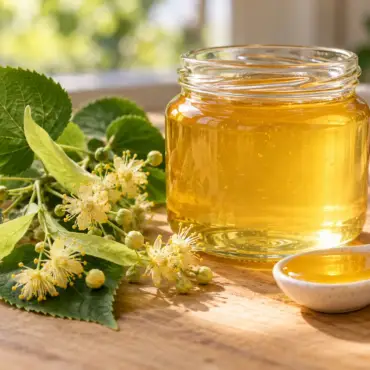
The best-known starting point is flower nectar. A worker bee visits flowers and collects the sweet liquid they produce. She carries the nectar in a honey sac, separate from the stomach used to digest her own food. Back at the hive, she passes it to other workers. USDA Agricultural Research Service: nectar transport
Nectar is not the same as pollen. Pollen is an important source of nutrients for the colony and is stored separately; honey is not made by simply mixing pollen with water. Bees can also collect honeydew, a sugary substance associated with plants and insects that feed on them. Honey therefore does not always begin with flower nectar. FAO/Codex: blossom and honeydew honey
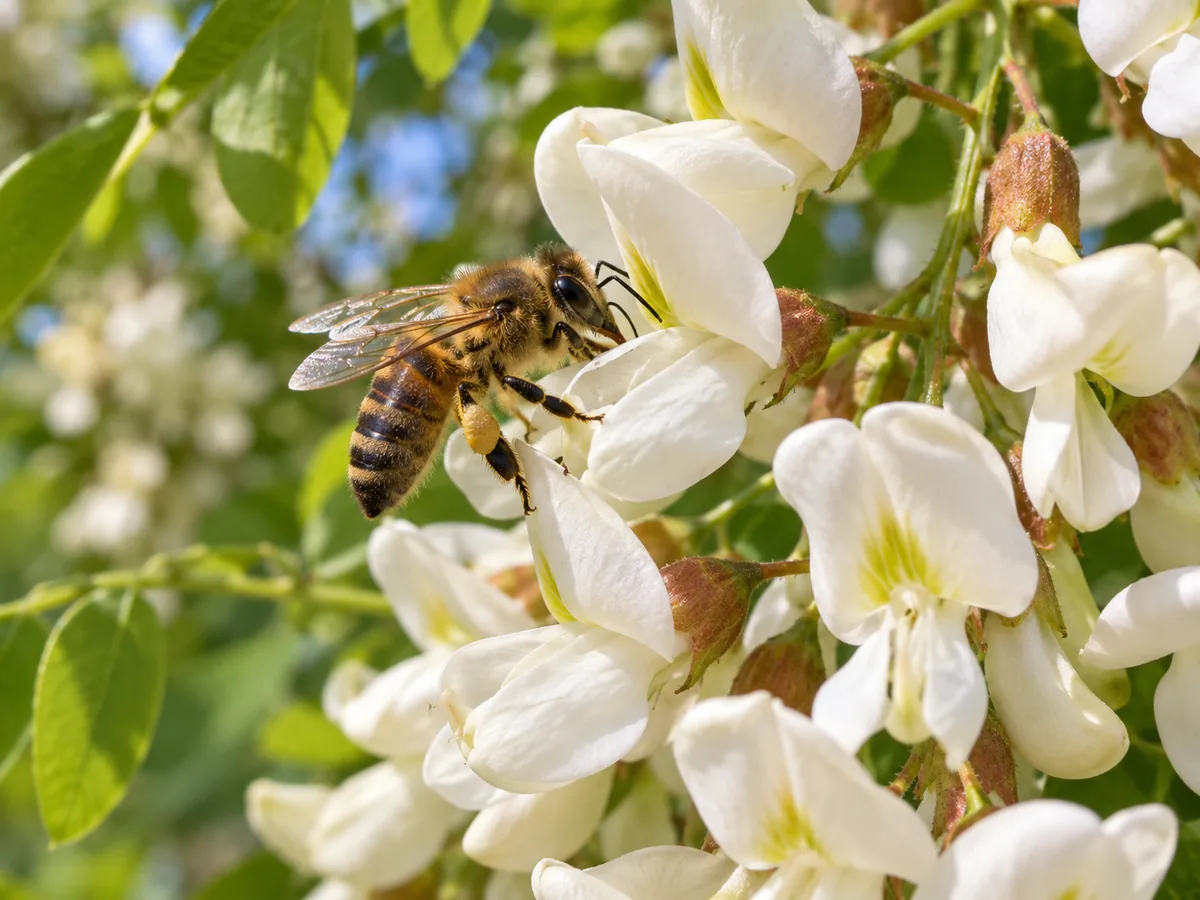
Does every jar come from a single kind of flower?
Not necessarily. Bees visit plants available during a nectar flow, and what enters the hive depends on place, weather, and flowering season. Names such as acacia or wildflower honey describe a relevant botanical origin; they do not mean that every drop came from one blossom. For more on differences in flavor, color, and crystallization, see our comparison of acacia and wildflower honey.
What happens to nectar inside the hive?
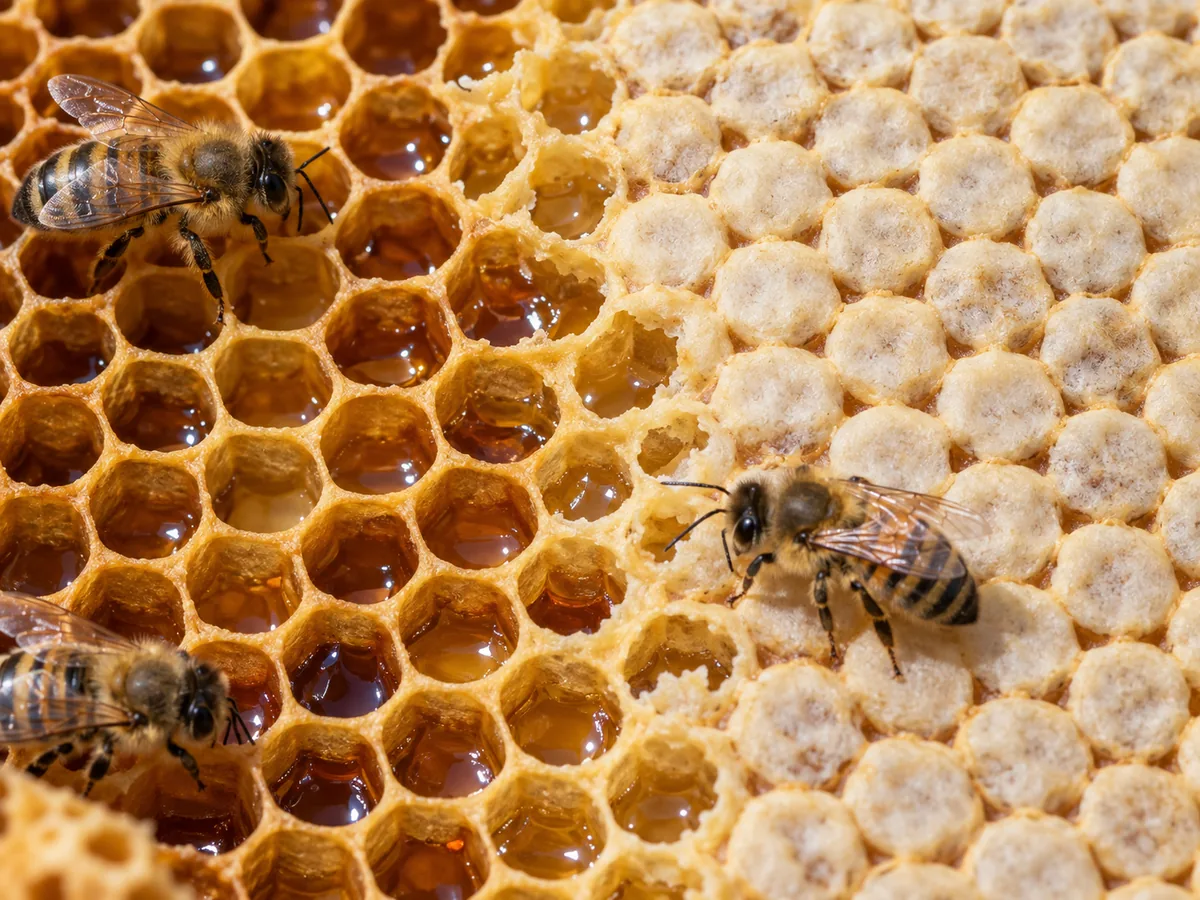
The work continues when nectar reaches the hive. Workers pass it on and distribute it among the comb cells. As they process it, they add enzymes and some of the water gradually evaporates. Airflow generated by the bees’ wing movements helps concentrate the liquid. This does not happen instantly; the pace depends on the nectar and conditions in the hive. FAO: evaporation and ripening
Honey is therefore much more concentrated than the nectar from which it began. Its principal sugars are glucose and fructose, while its aroma, color, and balance of components vary with plant origin. Saying that a bee merely puts nectar into a cell leaves out the key steps: transformation and loss of water. FAO/Codex: honey composition
Why do bees cap the cells with wax?
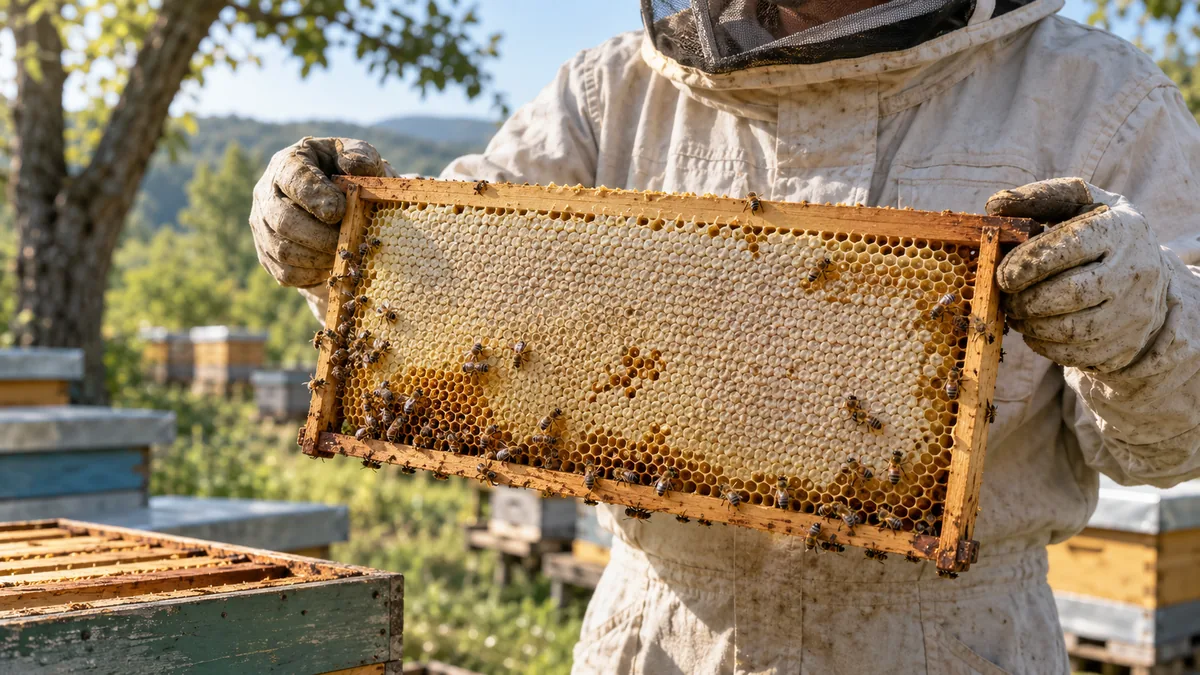
Once honey has ripened, bees seal the comb cells with a thin layer of wax. A frame with many sealed cells is often called capped comb. Capping is a useful sign when judging ripeness, although a responsible beekeeper also considers the colony and the quality of the honey instead of relying on a photograph or a fixed number of days. FAO: ripening and capping
How do blossom honey and honeydew honey differ?
Blossom honey begins mainly with nectar from flowers. Honeydew honey begins mainly with honeydew. Bees collect, transform, and store both in the comb. The distinction is the starting material, not whether bees are involved. FAO/Codex: origins of honey
Different origins can produce different colors and aromas, but appearance alone cannot reliably establish the source of a jar. Learn more in our guide to honeydew honey.
When does the beekeeper take honey from the hive?
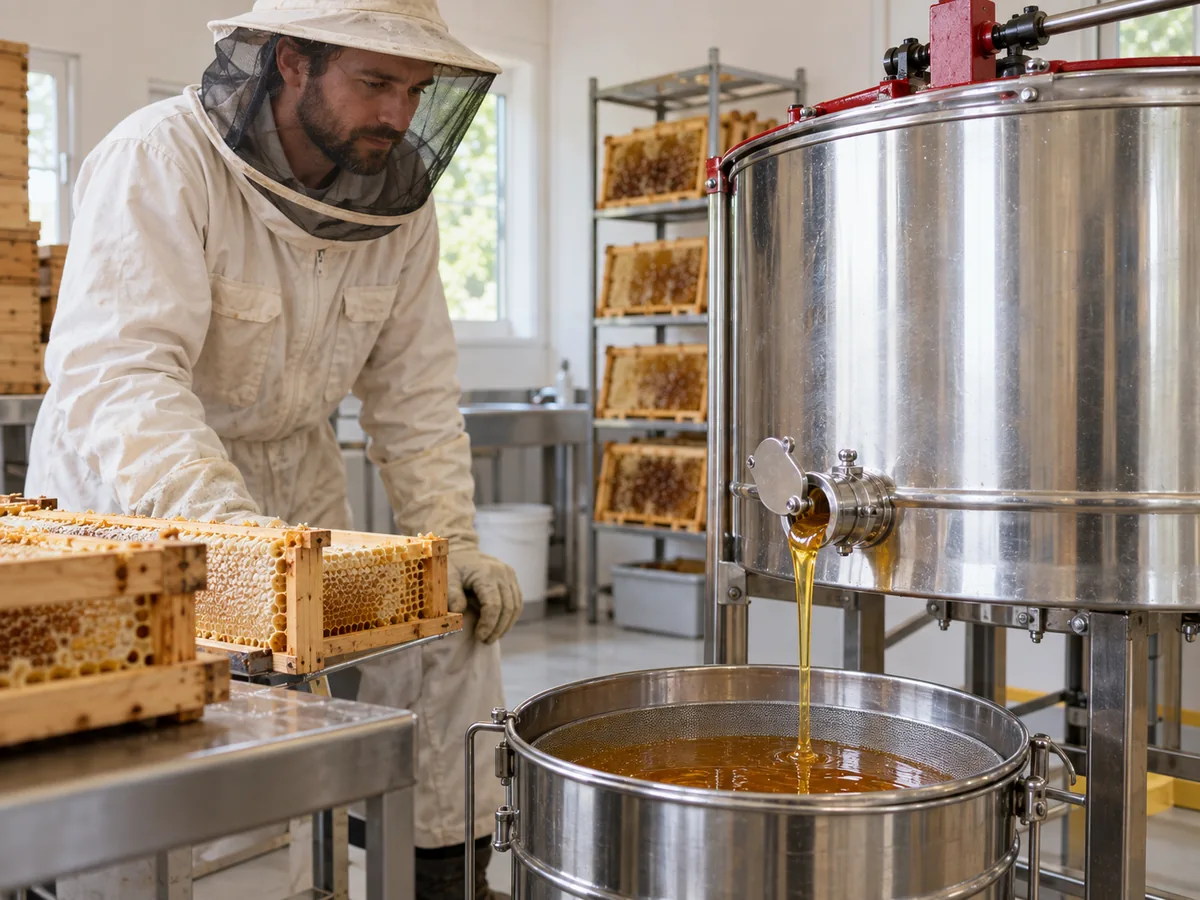
A beekeeper inspects the colony and frames, then selects ripe honey for extraction. In a hive with movable frames, honey can be taken from suitable combs without unnecessarily taking brood or pollen. The colony needs some of its own stores, especially when forage is scarce, so the amount available for harvest is never unlimited. FAO: choosing frames and harvesting
The wax cappings are removed and the frame is placed in a honey extractor. As the frame spins, honey leaves the cells; the comb can remain intact for the bees to use again. The beekeeper then strains out larger pieces of wax and other particles and stores or jars the honey in clean, suitable containers. These steps handle honey the bees have already made; they do not turn nectar into honey. FAO: uncapping, extraction, and straining
Is extracted honey different from comb honey?
The main difference is the form in which it reaches the buyer. Extracted honey has been removed from the comb; comb honey remains in its wax cells. Extraction by itself does not make honey better or worse. Origin, ripeness, hygiene, and storage all matter. FAO/Codex: styles of honey
What determines the color, flavor, and texture of honey?
Plant origin strongly influences aroma, flavor, and color. Nectar from different plants, and honeydew, do not yield identical honey. The balance of glucose and fructose and storage conditions also affect whether honey stays liquid or crystallizes. Crystallization alone does not mean honey has spoiled; read our explanation of why honey crystallizes. FAO/Codex: color, flavor, and crystallization
Once honey is in a jar, keep it tightly closed in a dry place away from direct sun and excessive heat. Honey can absorb moisture from the air, so a good seal helps preserve its quality. To learn what a buyer can and cannot check without laboratory testing, see how to tell if honey is real. FAO: storage after extraction
Common questions about how honey is made
Do bees make honey from pollen?
No. Pollen matters to the colony’s diet, but flower nectar is the starting material for blossom honey. Honeydew is the starting material for honeydew honey. Honey may contain pollen particles, but that does not change the basic process. FAO/Codex: definition and origin of honey
How long does it take to make honey?
There is no single timetable that applies to every nectar flow and hive. Ripening depends on the water content of the starting nectar, the amount collected, and conditions inside the hive. It is more useful to assess the ripeness of the comb than to promise a precise number of days. FAO: honey ripening
Does a beekeeper produce honey?
Bees make honey. Beekeepers manage hives, care for colonies, select suitable frames for harvest, and handle the honey during extraction and packing. The roles are different.
Can you identify honey’s origin by color alone?
Not reliably. Color may suggest differences, but it cannot prove botanical origin or authenticity. A label, details about the producer, and appropriate analyses offer a better basis for checking than a quick look at the jar or a spoon test.
Conclusion
The journey from flower to jar begins with nectar or honeydew, continues with transformation and ripening in the comb, and ends with careful extraction and packing. Bees make honey; the beekeeper decides when and how to harvest a portion of their stores for people.
When choosing honey, type and flavor are useful starting points. Acacia honey, for example, is one option, but no single variety represents every nectar flow or every stage described here.