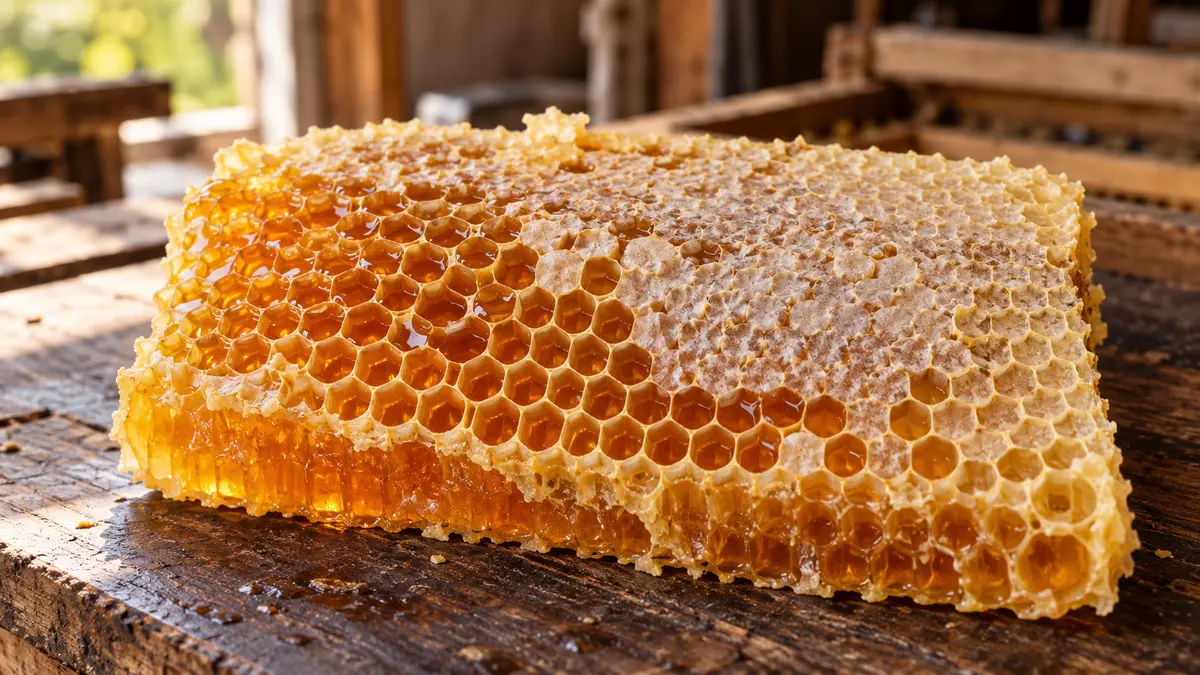
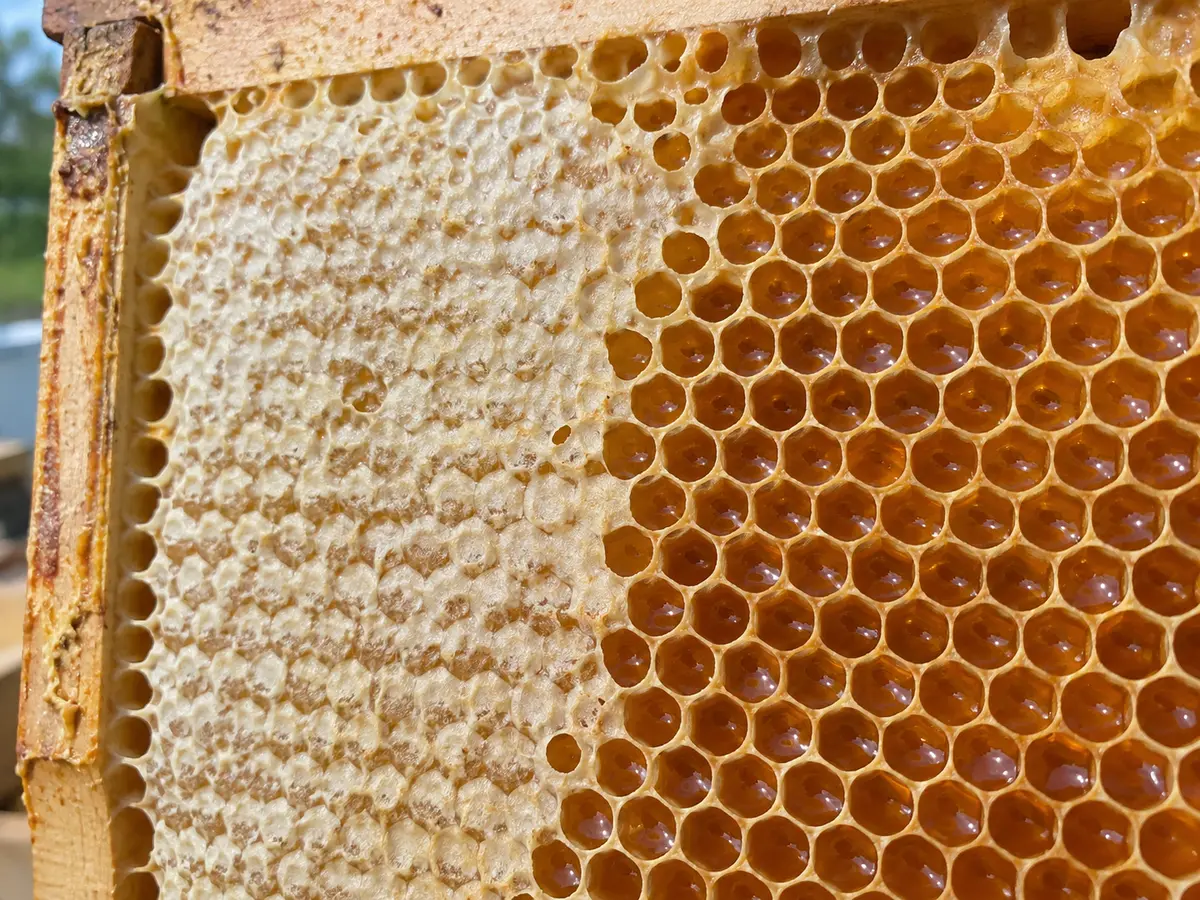
Comb honey is honey still held in the wax cells built by bees. As bees fill the cells with ripe honey, many are covered with a thin layer of wax. The product may be sold as a whole section of comb or a cut portion. Unlike extracted honey, it reaches your table without the honey first being removed from those cells.
If you are buying it for the first time, you may be wondering what to do with the wax, how to serve a piece of comb, and how to keep the rest after opening. Here are practical answers, without assuming that one form of honey is automatically better than another.
Contents
What is comb honey?
Honeycomb is a structure of hexagonal cells made from beeswax. Bees use it, among other things, to store honey. Sections sold as comb honey are taken from comb containing honey rather than brood. Under the European definition, comb honey is honey stored in the cells of freshly built broodless comb and sold in whole combs or sections. EU Honey Directive – definition of comb honey
You may also see a piece of comb placed in a jar of extracted honey. That is a different presentation, described separately as chunk honey or cut comb in honey under the EU definition. Check the product name and ingredients on its label, then whether the package protects it from leaks and moisture.
For a closer look at how bees collect nectar, process it, and cap the cells, read our guide to how honey is made.
Do you eat the comb with the honey?
Yes. A small piece of comb honey is usually served with the wax cells intact. Beeswax is part of the bite and can be chewed. Some people swallow it; others discard the remaining wax after chewing. You do not need to eat a large amount of wax to enjoy the honey. FAO describes beeswax as a material also used by the food industry. FAO – beeswax and its uses
The presence of comb does not, by itself, prove that honey is authentic, and it does not justify health claims. A trustworthy producer, clear labeling, suitable storage, and, where a professional answer is needed, appropriate testing tell you more about origin and quality. See what you can actually check when buying honey.
An important note for babies
Honey, including comb honey, must not be given to children younger than 12 months because of the risk of infant botulism. This applies regardless of where the honey comes from or how it is presented. CDC – foods and drinks to avoid for infants
How do you serve comb honey?
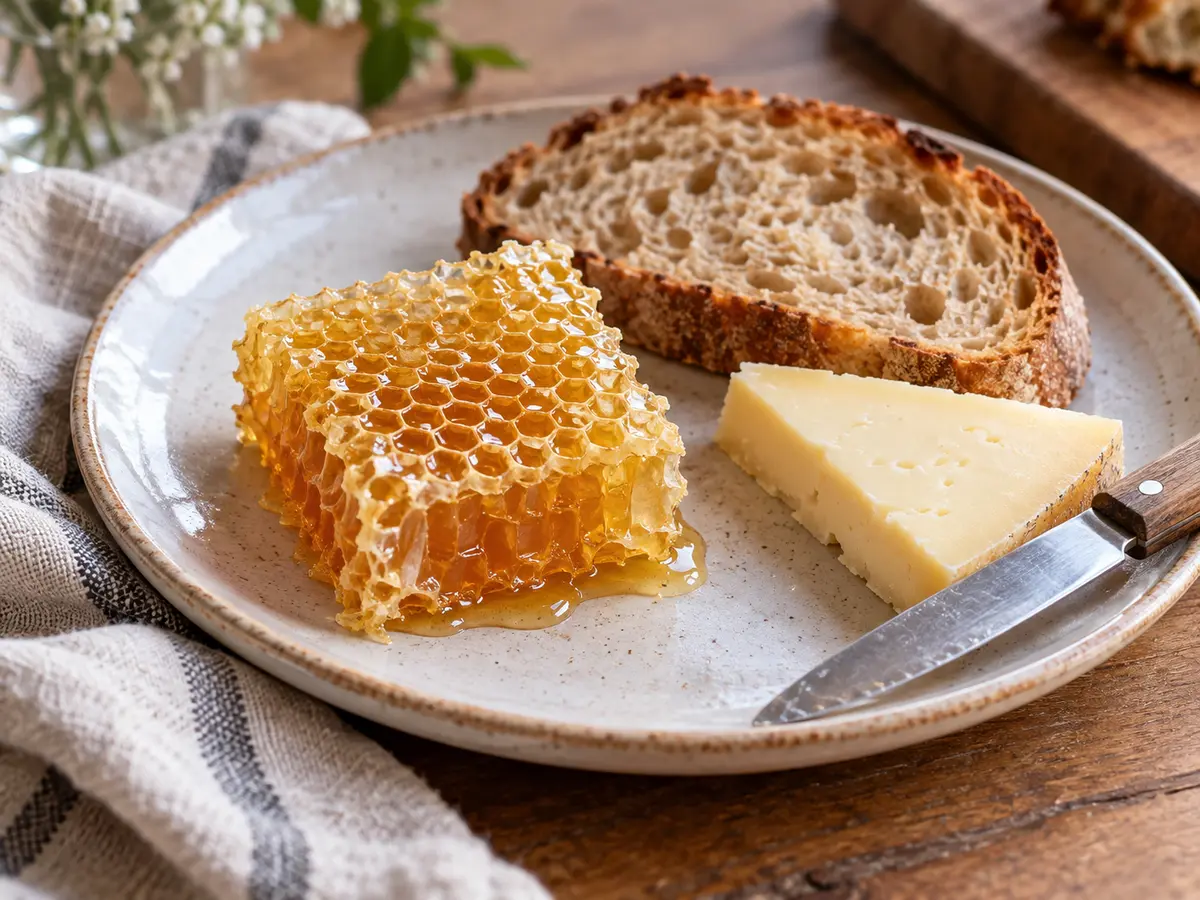
Cut a small piece with a clean knife and place it on a plate. You can try it on its own or serve it with bread, mild cheese, yogurt, or fruit. Honeycomb breaks and sticks easily, so begin with a small serving. Return the remaining piece to a well-closed container after cutting.
The flavor depends largely on the honey’s floral source, while the thin walls of the wax cells change its texture. A piece of comb can be an enjoyable way to compare honey varieties, but its appearance alone cannot prove a single floral origin. If you are choosing between varieties, see our comparison of acacia and wildflower honey.
Comb honey vs extracted honey: what is the difference?
To make extracted honey, a beekeeper removes the wax cappings from the cells, spins the frames to remove the honey, and packs it in suitable containers. With comb honey, you receive the honey along with part of its wax structure. This describes how the product is presented; it is not a simple dividing line between “real” and “bad” honey. FAO – extracting honey
Either form may vary in floral origin, aroma, and color. Quality depends on the maturity of the honey and proper handling and storage. Comb is no substitute for information about the producer and origin. A change in texture over time does not necessarily mean the honey has spoiled: honey crystallization is natural in and outside the comb.
How do you choose and store comb honey?
When buying, check the label, make sure the package is intact, and look for protection from moisture, dust, and foreign odors. Some cells may have visible wax cappings, while a cut edge can expose the honey in others. The color of the wax or honey alone is not an authenticity test.
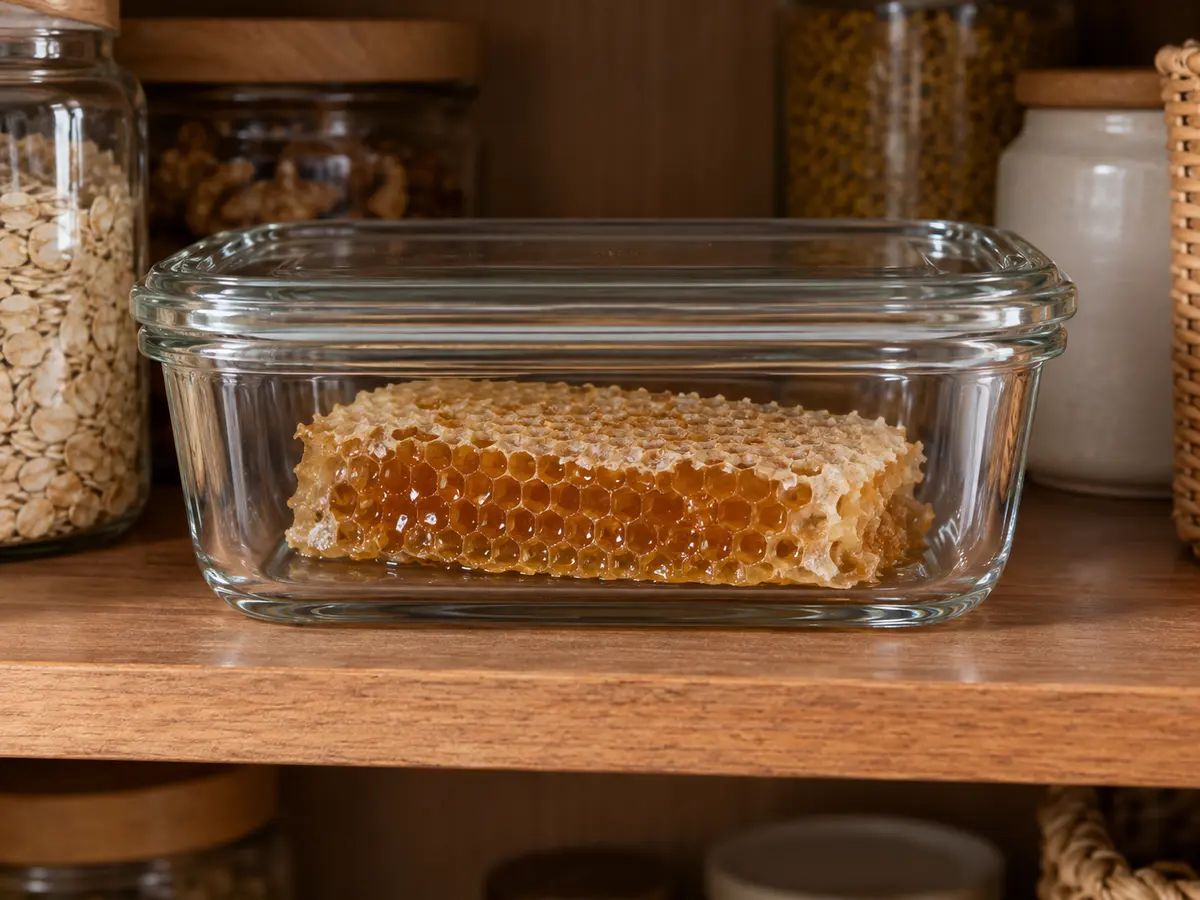
At home, keep the comb in a clean, tightly closed food-safe container, in a dry place away from direct sunlight and excessive heat. After opening, use a clean, dry utensil and close the container again. Cut cells may leak honey, and honey absorbs moisture from its surroundings. FAO notes that comb and wax cappings are vulnerable to sun, rough handling, and poor storage conditions. FAO – handling and storage of comb honey Our guide to storing honey properly covers the general principles.
Quick questions about comb honey
Do I have to swallow the wax?
No. You may chew a small piece with the honey and discard the remaining wax if you prefer. A moderate serving and a comfortable way of eating it matter more than any rule about swallowing the wax.
Do capped cells always mean the honey is ripe?
Wax cappings offer a useful visual clue, but they cannot replace proper handling, quality checks, or information about origin. Do not infer every property of a product from one picture of a comb.
Is comb honey healthier than extracted honey?
There is no simple rule that a particular form of packaging guarantees a greater health benefit. Both forms are primarily honey, with a high sugar content. Choose according to origin, taste, convenience, and trust in the producer, and use honey in reasonable amounts. We discuss the difference between honey and sugar separately.
Conclusion
Comb honey lets you taste honey in the wax cells where bees stored it. Serve a small piece, chew or discard the wax as you prefer, and protect the rest from moisture and heat. When buying, rely on the label and producer rather than the myth that comb alone guarantees quality.