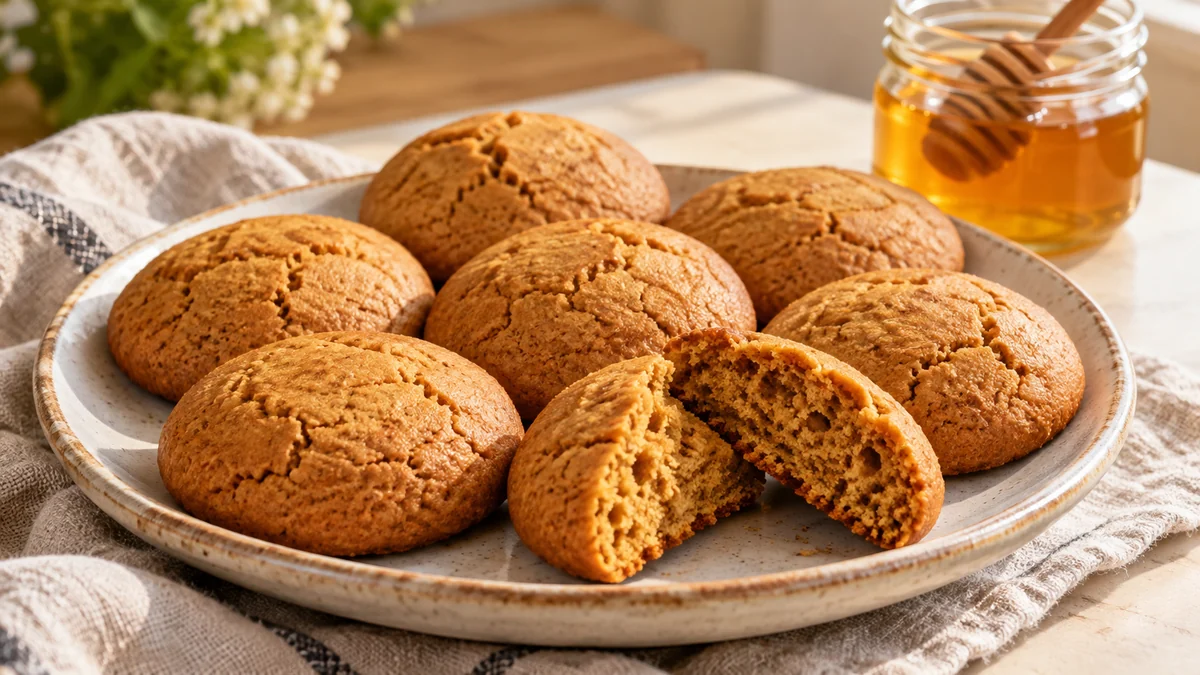
Soft honey cookies are made with honey, butter, flour and spices, but their texture also depends on how you handle the dough. Weigh the flour, chill the soft dough and bake until the surface sets, rather than waiting for the cookies to become hard in the oven.
This recipe makes round cookies shaped with a spoon or small cookie scoop, without rolling out the dough or using cutters. Below you will find quantities for about 40 small cookies, baking instructions and advice for sticky dough or dry cookies.
Contents
Ingredients for soft honey cookies
Gather a kitchen scale, two bowls, a mixer or sturdy wooden spoon, baking sheets, baking parchment and a cooling rack. This recipe contains wheat flour, butter and egg, so it is not gluten-free, dairy-free or egg-free.
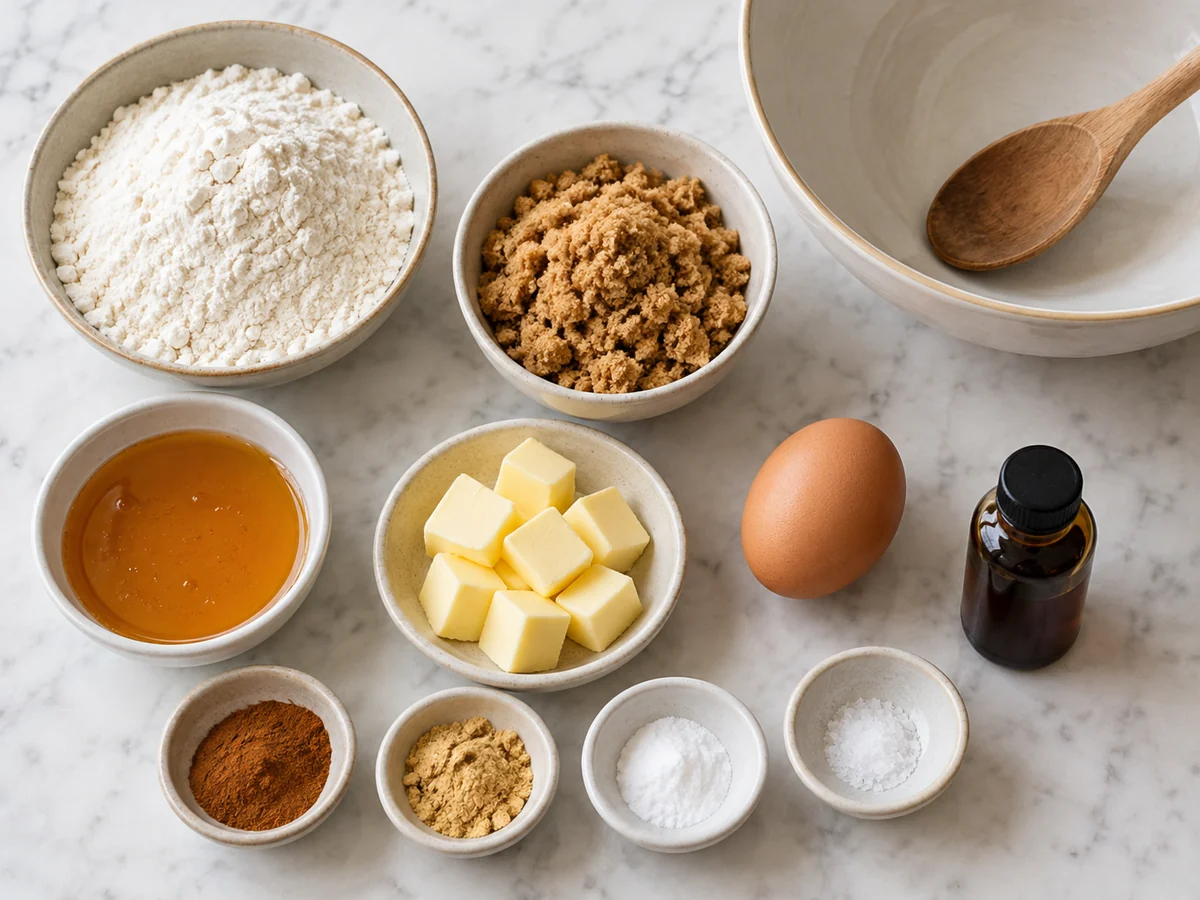
For approximately 40 cookies, using about 20 g of dough per cookie:
- 270 g cake flour or all-purpose wheat flour
- 170 g softened butter
- 135 g brown sugar
- 170 g liquid honey
- 1 medium egg, about 50 g without the shell
- 1 teaspoon vanilla extract, about 5 ml
- 1 level teaspoon baking soda, about 5 g
- 1½ teaspoons ground cinnamon
- 1½ teaspoons ground ginger
- ½ teaspoon ground cloves
- ½ teaspoon ground nutmeg
- ¼ teaspoon salt
The yield is approximate: smaller portions make more cookies, while larger portions make fewer. Weigh the first few portions to keep the sizes even.
The base is adapted from UC Davis Honey and Pollination Center’s Honey Spice Cookies, with quantities expressed in grams. We do not claim that this adapted version has been personally tested in the P&P Honey kitchen; use the first batch to check your oven.
Allow about 25 minutes of active preparation, at least an hour to chill the dough and around 12–14 minutes of baking per tray. With two successive batches and time to cool the finished cookies, plan for about two hours and ten minutes; longer dough chilling increases the total time.
How to make honey cookie dough
1. Beat the butter and sugar
The butter should be soft enough to mix easily, but not melted. Beat it with the brown sugar until evenly combined.
Add the egg, honey and vanilla, then mix again. Scrape the bowl with a spatula so no unmixed butter remains at the bottom or around the sides.
2. Mix the dry ingredients separately
In a separate bowl, combine the flour, baking soda, spices and salt. This helps distribute the small amounts of baking soda and spices evenly throughout the dough.
Add the dry mixture in a few additions and mix only until no dry flour remains. There is no need to knead for a long time or produce firm dough suitable for rolling out.
3. Chill before shaping
Cover the bowl and refrigerate the dough for at least one hour, or until it can be portioned and shaped. If it is still too soft, chill it longer rather than immediately adding more flour.
You can also chill it overnight. Before shaping, let it soften only enough to scoop, and keep the remaining dough cold while the first batch bakes.
Do not taste raw dough. The FDA warns that raw flour and eggs can contain harmful microorganisms; wash your hands, utensils and work surface after handling them.
Shaping and baking the cookies
Even portions and space on the tray
Preheat a conventional oven to 175°C (347°F). For a fan oven, about 160°C (320°F) is a starting point; follow the manufacturer’s guidance and check the first batch early.
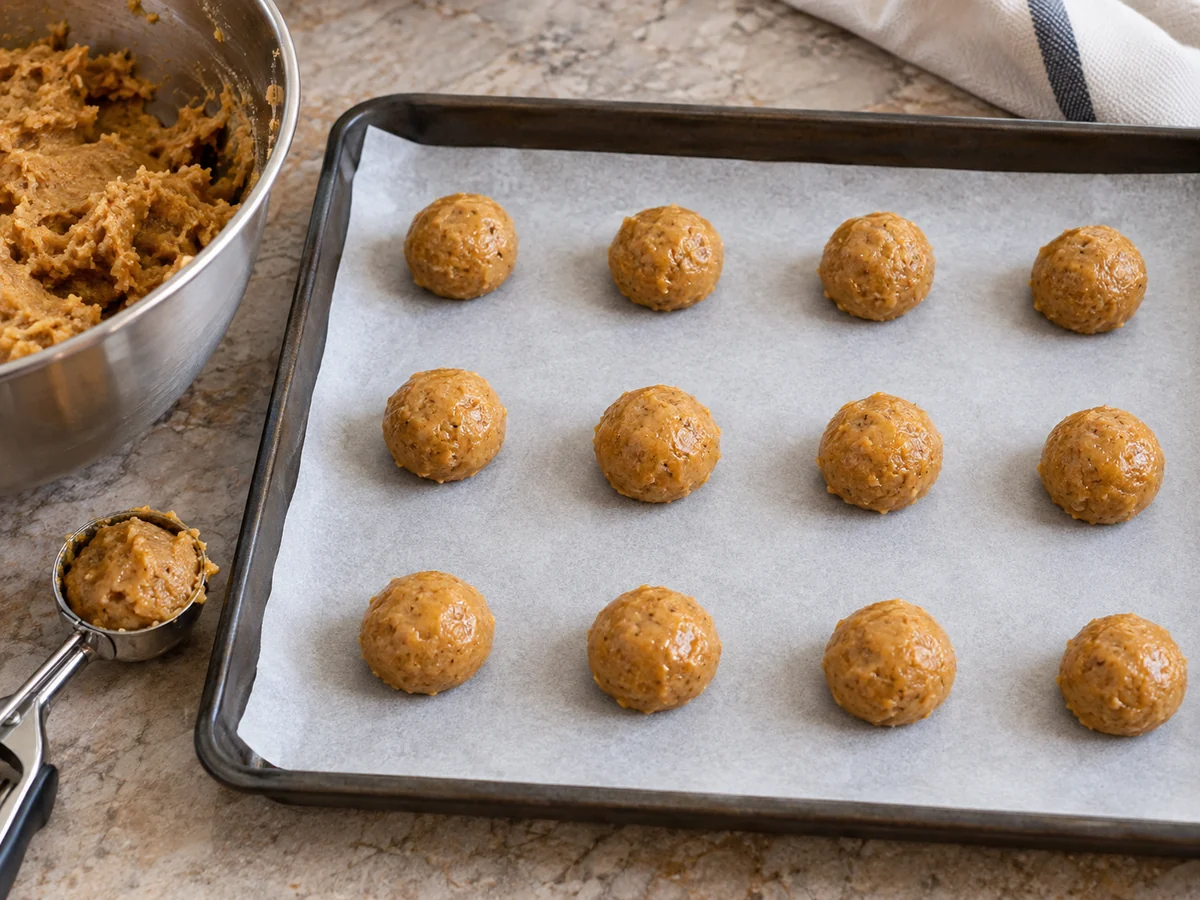
Line a cool baking sheet with parchment suitable for the baking temperature. Portion the dough into pieces of about 20 g, shape small balls and leave at least 5 cm (2 inches) of clear space between them, as they will spread.
Do not try to fit all the dough onto one small tray. Keep the remaining dough refrigerated while each batch bakes, and use a cooled baking sheet for the next batch.
When are they baked enough?
Bake on the middle rack for approximately 12–14 minutes, checking the first batch a little earlier. Portion size, baking-sheet colour and the oven’s actual temperature can affect the time needed.
The surface should lose its raw, glossy appearance, and the edges should be set and slightly darker. Small cracks are expected; the centre remains softer than the edges, but should not be liquid or visibly raw.
Leave the cookies on the tray for about five minutes, until firm enough to move. Carefully transfer them to a cooling rack and let them cool before sealing them in a container.
| Stage | What to do | What to check |
|---|---|---|
| Mixing | Combine the wet and dry ingredients | No visible dry flour |
| Chilling | Cover and refrigerate for at least one hour | Dough can be portioned |
| Shaping | About 20 g per cookie, spaced apart | Even balls on a cool tray |
| Baking | About 12–14 minutes at 175°C | Set surface and edges, no raw centre |
| Cooling | Briefly on the tray, then on a rack | Completely cool before packing |
Which honey to use and substitutions to avoid
Use honey whose flavour you enjoy. Mild honey lets the spices stand out, while a stronger honey flavour becomes part of the cookies’ overall aroma.
For a comparison, read our guide to acacia honey versus wildflower honey. You do not need to buy a special expensive variety for this recipe.
If your honey has crystallized, gently warm the measured amount in a lukewarm water bath so it mixes more easily. Our guide explains why honey crystallizes in more detail.
Do not replace all the sugar with extra honey without adjusting the recipe. Honey also adds water, which changes how the dough behaves; see our guide to using honey instead of sugar.
Why are the cookies hard, dry or spreading too much?
Treat the first batch as a check on portion size and baking time. If the result is not right, change one thing in the next batch so you can identify the likely cause.
| Problem | Possible cause | What to change |
|---|---|---|
| Dry or hard cookies | Overbaking or extra flour | Weigh the flour and check earlier |
| Excessive spreading | Warm dough or a hot baking sheet | Chill the dough and use a cool tray |
| Dark edges with a raw centre | Oversized portions or too high a temperature | Keep portions even and check the oven temperature |
| Uneven baking | Unequal portions | Weigh about 20 g of dough per cookie |
| Soft after baking, hard the next day | Poor container seal or overbaking | Use a tightly sealed container and shorten the next bake |
A little stickiness is not necessarily a fault in this dough. Adding flour just to keep your hands completely clean can change the intended balance of ingredients.
A darker colour does not always mean the cookies are done, because honey, brown sugar and spices all affect colour. Watch the edges and surface, then assess the texture of the first cooled batch.
How to store honey cookies
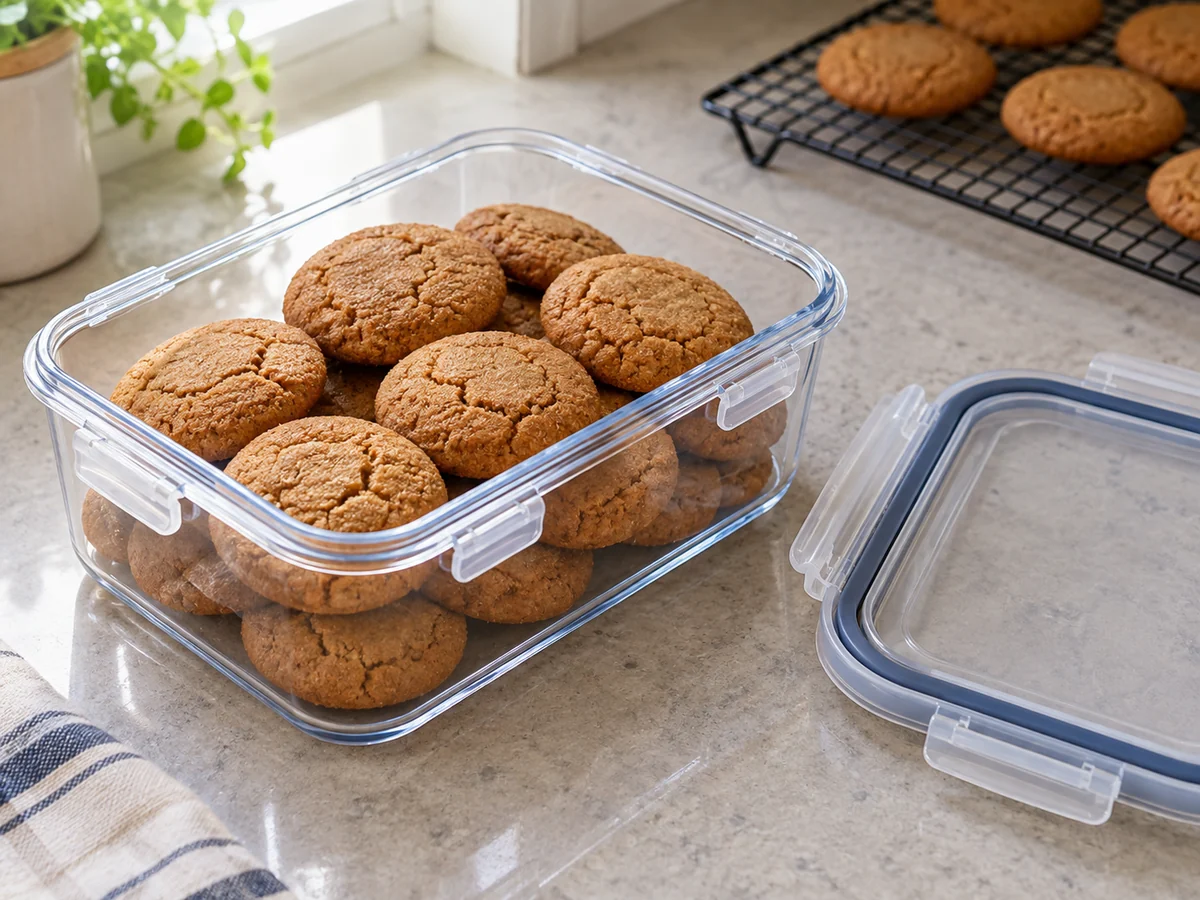
Put completely cooled cookies in a clean, dry container with a tight-fitting lid. Keep it in a moderately cool, dry place, away from sunlight and heat.
King Arthur Baking recommends an airtight container and storing soft and crisp cookies separately, to avoid moisture and flavours transferring between them. Refrigeration is not the first choice for these plain cookies without a perishable filling; freezing is more suitable for longer storage.
For practical planning, make an amount you will eat over a few days, rather than expecting several weeks of unchanged softness. Quality depends on baking, the container’s seal and room conditions; discard cookies with mould or other signs of spoilage.
To freeze them, pack completely cooled cookies in a sealed container or freezer bag and label the date. Thaw them in the closed packaging and assess their texture; we do not give an unverified storage limit for this particular adapted recipe.
Frequently asked questions
Can I use cookie cutters with this dough?
This recipe makes round cookies from balls of dough. For precise stars or other shapes, choose a recipe intended for rolling out, because this dough is softer and spreads during baking.
Can I leave out ginger or reduce the spices?
For a milder flavour, reduce individual spices without increasing the flour. Using less spice will change the aroma, but will not turn this recipe into a different type of dough.
Are these cookies vegan or sugar-free?
This version contains butter and egg, so it is not vegan or suitable for fasting diets that exclude those ingredients. It contains brown sugar and honey, so it is not sugar-free; honey does not make these cookies a diet food.
Can I give them to a baby?
Do not give foods containing honey to babies younger than 12 months, including these cookies. Read more about age and other considerations in our honey for children guide.
Spiced cookies for your next break
Pay particular attention to accurate weighing, chilling the dough and checking the first batch. Once you find the right baking time for your tray and cookie size, write it down for next time.
If you enjoy honey in homemade desserts, try our honey cake too. It is a different dessert for occasions when you prefer a cake served in slices.