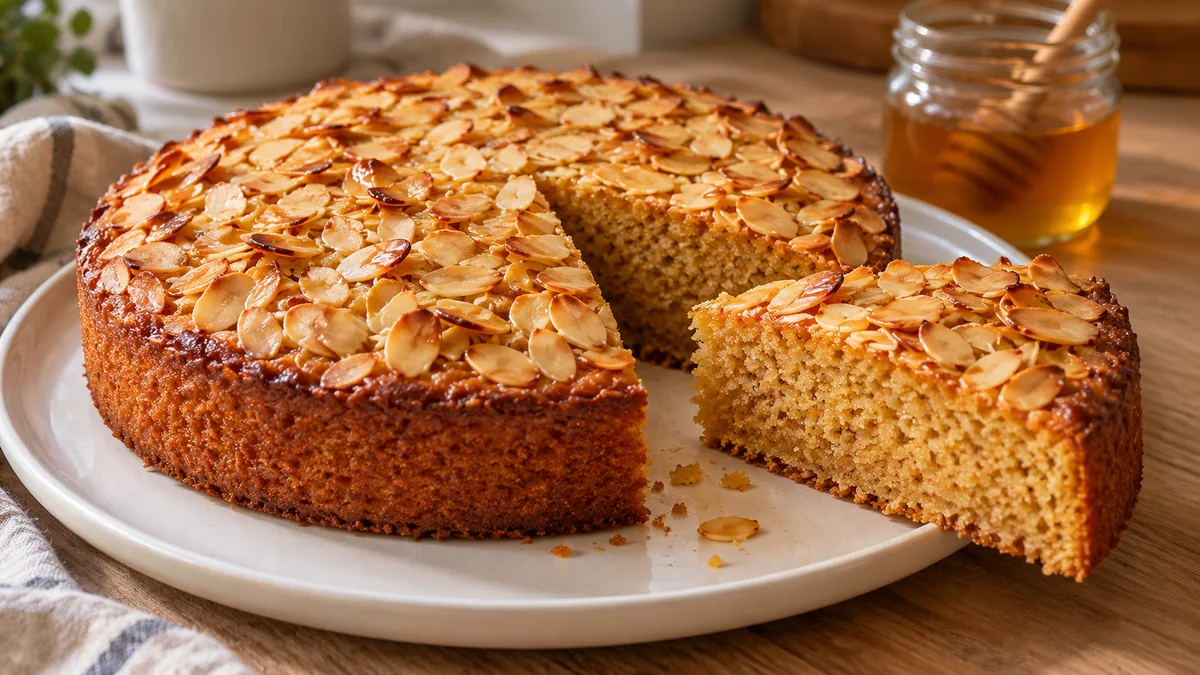
Honey cake with almonds is a simple homemade dessert baked in one round pan, without a filling or glaze. Honey brings its characteristic flavor, while sliced almonds add texture. Once cooled, the cake can be cut into portions to serve with coffee or tea.
You will need a kitchen scale, mixing bowls, a mixer, and a suitable cake pan. Measuring matters here: honey contributes moisture as well as sweetness, so changing its quantity also changes the balance of the batter.
Contents
Honey cake recipe with almonds
The quantities and baking method below follow the King Arthur Baking honey cake recipe, with additional practical notes on serving and storage. Use a 23 cm (9-inch) round pan. Allow about 20 minutes for preparation, 50–55 minutes for baking, and extra time for cooling.
Ingredients:
- 113 g sliced blanched almonds
- 142 g whole wheat flour
- 90 g all-purpose flour
- ½ teaspoon baking soda
- ½ teaspoon salt
- 170 g unsalted butter
- 340 g honey
- 4 large eggs
- 57 g plain yogurt
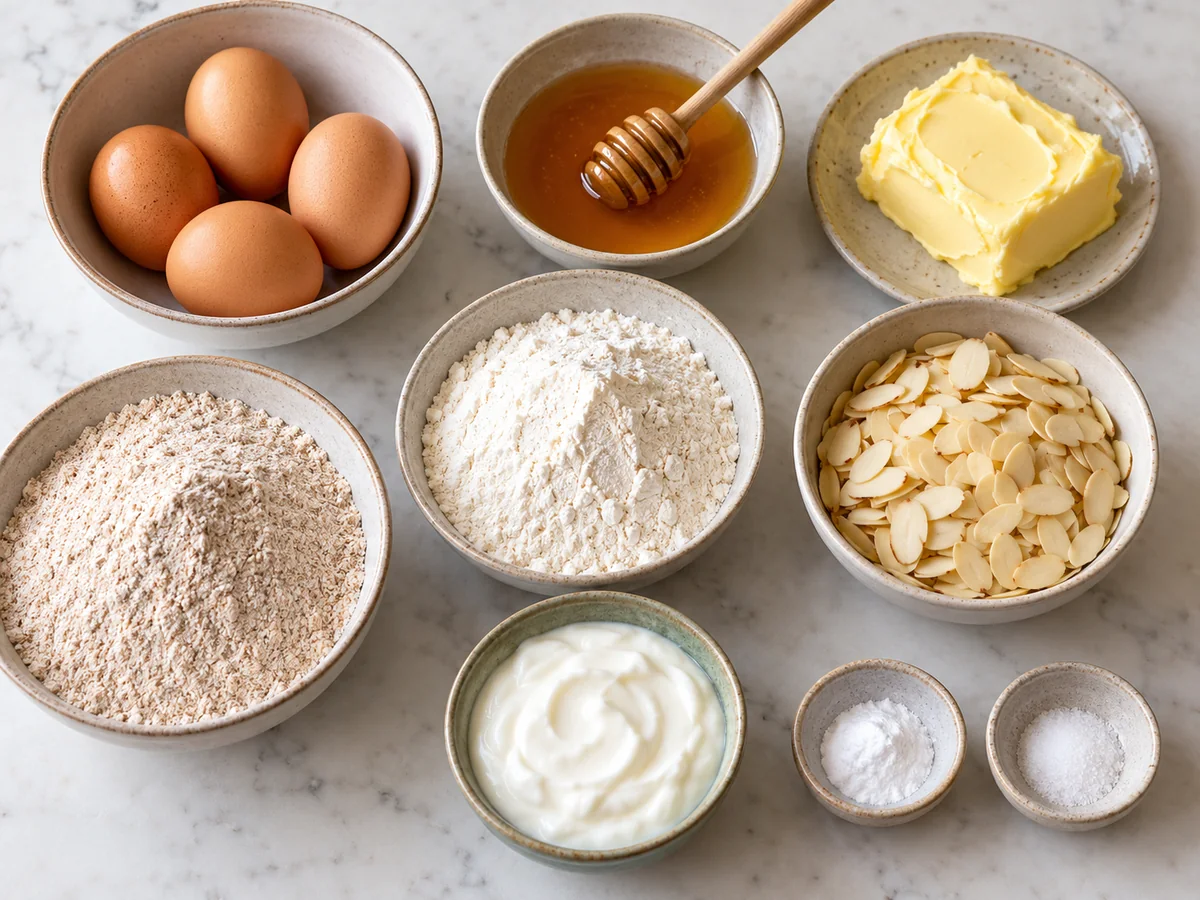
Bring the butter, eggs, and yogurt to room temperature before mixing.
Method:
- Heat a conventional oven to 325°F (about 165°C). Grease the pan and spread 85 g almonds over its base.
- Combine both flours, baking soda, and salt.
- Beat butter, honey, and eggs together. Incorporate the dry mixture, then yogurt and remaining almonds. Scrape the bowl and mix for one minute.
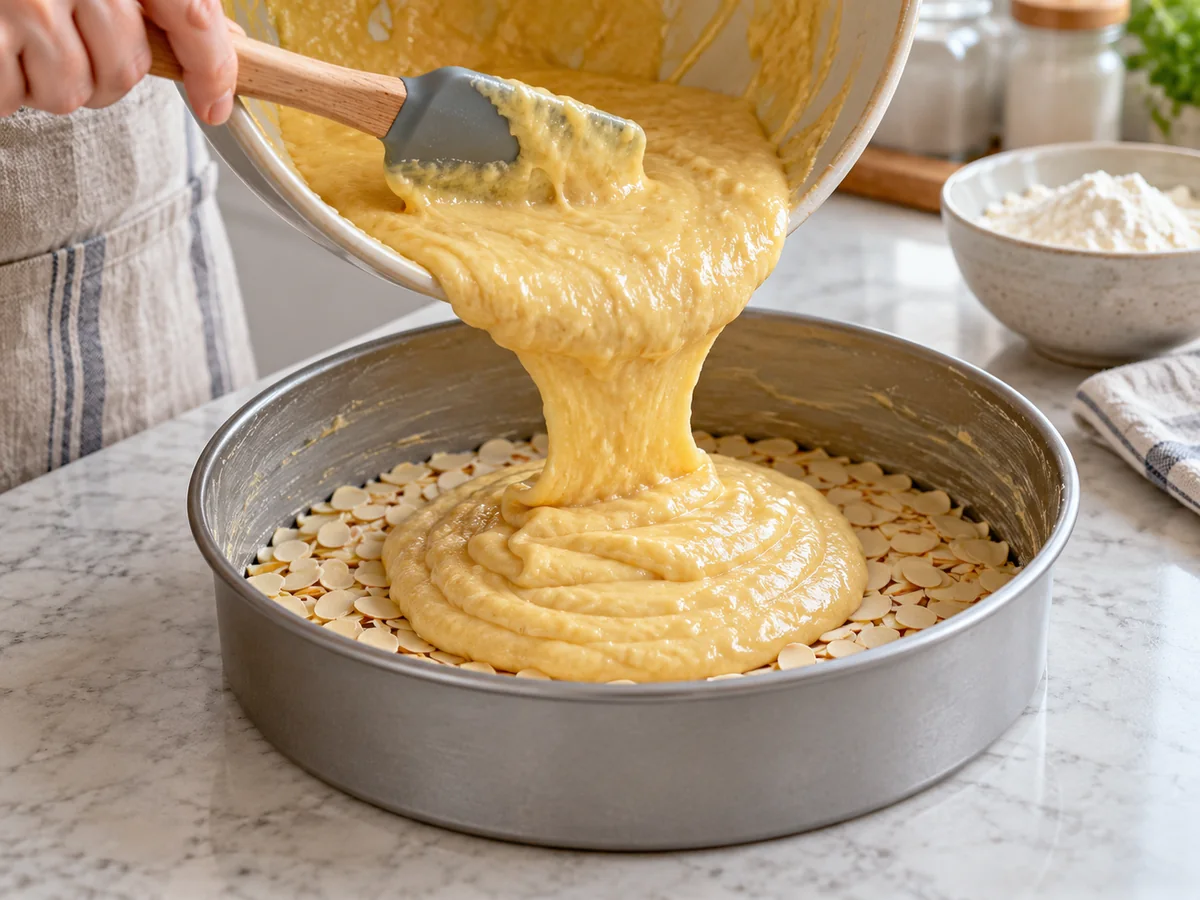
- Spread batter gently over the almond layer. Bake for 50–55 minutes, until the edges separate from the pan.
- Rest on a rack for 15 minutes, then turn onto a plate and leave to cool.
Which honey should you choose?
Choose honey whose flavor you already enjoy. A mild variety lets the almonds remain noticeable, while a stronger variety gives the finished cake a more pronounced honey flavor. There is no single choice that suits everyone’s taste.
If you are deciding between familiar varieties, our comparison of acacia honey and wildflower honey explains their differences. For your first attempt, choose one variety and keep the other ingredients unchanged. That makes it easier to decide whether you want a different flavor next time.
Crystallized honey can also be used if it is softened enough to mix evenly. The important point is to avoid hard clumps in the batter. Read more about why honey crystallizes if you are unsure about the change in texture.
Weigh honey directly into a suitable bowl rather than estimating it by spoonfuls. Honey left on the spoon or the sides of another container can make the actual amount different from the amount you intended to add.
Common baking mistakes to avoid
Divide the almonds before you start. Some form the layer at the bottom of the pan, while the rest go into the batter. When you turn the cake out, the bottom layer becomes the top. This small preparation step helps you follow the method without stopping halfway through mixing.
Avoid changing the flour, honey quantity, and pan size all at once. Each change can affect the result, and several changes together make it harder to understand why a cake baked differently. First follow the stated quantities and use the recommended pan.
Ovens can behave differently, so do not judge doneness by color alone. Follow the baking instructions and watch the edges as the recommended time approaches. A darker surface does not, by itself, tell you that the center is ready.
Give the cake time to cool before turning it out and slicing it. Handling it too early can damage its shape. Keep the plate and cooling space ready before removing the pan from the oven, so the final steps are as organized as the mixing.
Serving honey cake and choosing portions
This dessert does not need a cream filling or a sweet glaze. Serve a plain slice and let the honey and almonds provide the flavor. For a simple presentation, cut even wedges after the cake has cooled.
You can divide it into 10–12 portions, depending on the size you want. This is a serving suggestion, not a nutrition calculation. Smaller or larger slices will contain different amounts of the ingredients.
Honey still contributes sugars and energy. Using it instead of white sugar does not make the dessert sugar-free, and adding more honey increases the quantity in the recipe. Our article on honey instead of sugar explains why the two are not interchangeable in every situation.
If you want to calculate nutrition per slice, include every ingredient in the whole cake and divide the total by the actual number of servings. Honey alone cannot provide an accurate estimate for the finished dessert.
How to store the cake
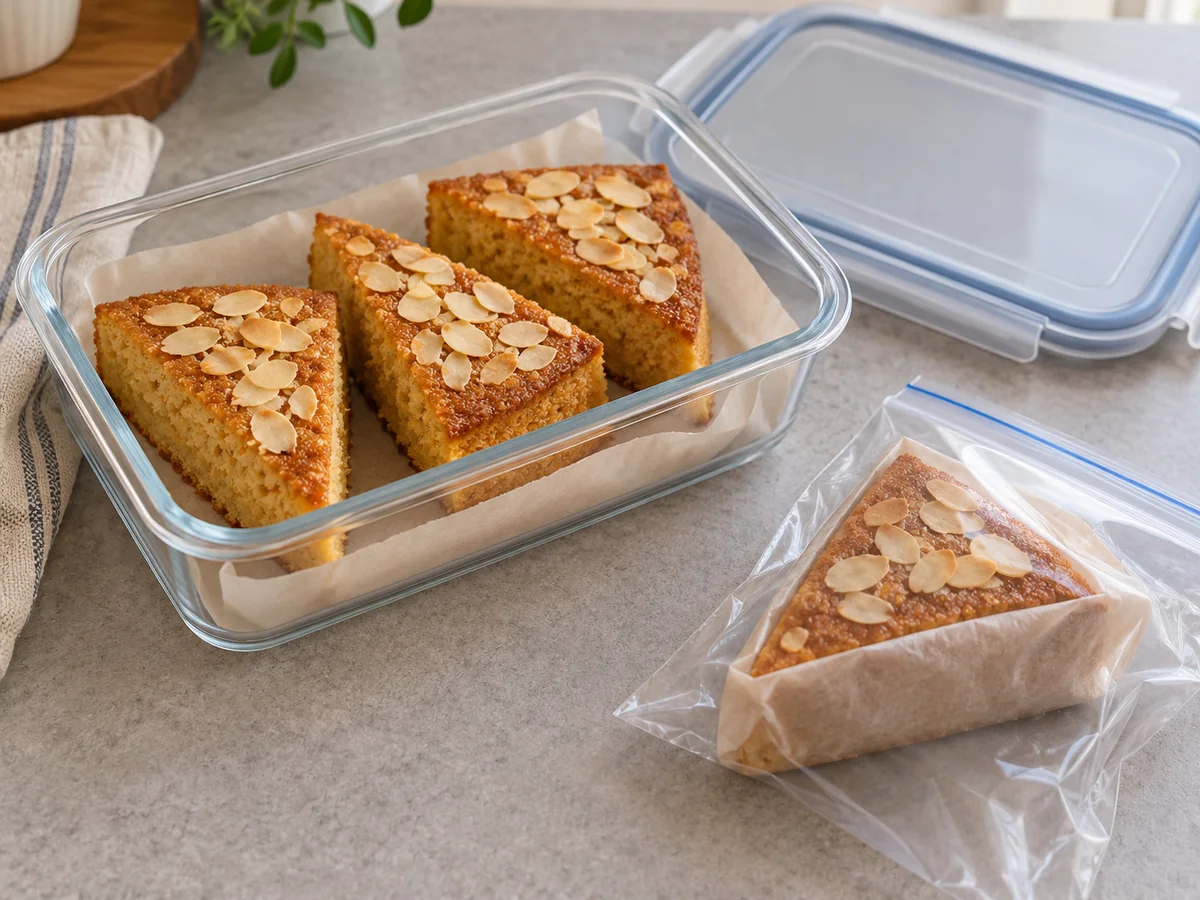
Let the cake cool completely before putting it in a clean, covered container. Suitable wrapping helps keep it from drying out and picking up odors from other foods. Do not close a container around a warm cake, because condensation can collect inside.
If the room is warm or you do not plan to eat it soon, refrigerate it in appropriate packaging. You can also freeze individual portions, well wrapped and marked with the date. Separate portions make it easier to take out only what you need.
Storage life depends on temperature, packaging, handling, and the condition of the ingredients. A fixed number of days cannot guarantee safety in every home. Discard the cake if you notice mold or an unusual smell rather than trying to save the unaffected-looking pieces.
These notes apply to the plain cake described here. Adding cream, fresh fruit, or another filling changes the storage considerations, so check the requirements of those ingredients separately.
What to check before serving
This recipe contains wheat, eggs, dairy, and almonds. Check ingredient labels and the needs of the people you are serving. A recipe that is suitable for one household may not be suitable for someone with a food allergy.
Do not taste raw batter. Raw flour and eggs can carry germs, and baking is an essential part of preparation. Wash your hands and clean bowls, utensils, and work surfaces after handling the uncooked mixture. The CDC guidance on raw dough and batter explains these precautions.
Do not give honey, including honey in foods, to babies younger than 12 months. This cake is therefore not suitable for that age group. See the CDC guidance on foods to avoid for infants. For older children, choose an appropriate portion and consider desserts as part of their overall food intake.
Frequently asked questions
Can I reduce the amount of honey?
Reducing it changes the sweetness and the balance of wet and dry ingredients. For a first attempt, follow the stated amount. If you want a less sweet dessert, choose a recipe developed for that purpose rather than making a large reduction without adjusting the rest.
Can I replace baking soda with baking powder?
They are different ingredients and should not be exchanged in equal quantities without adapting the recipe. Use the specified baking soda for this version.
Can I use a different pan?
A different pan changes the depth of the batter and can change the baking time. Start with the recommended round pan. If you later adapt the size or shape, take those changes into account rather than assuming the same timing will apply.
Conclusion
For a successful honey cake, measure carefully, use the recommended pan, and follow the baking and cooling steps. Choose a honey flavor you enjoy, allow the cake to cool before slicing, and package the remaining portions appropriately.