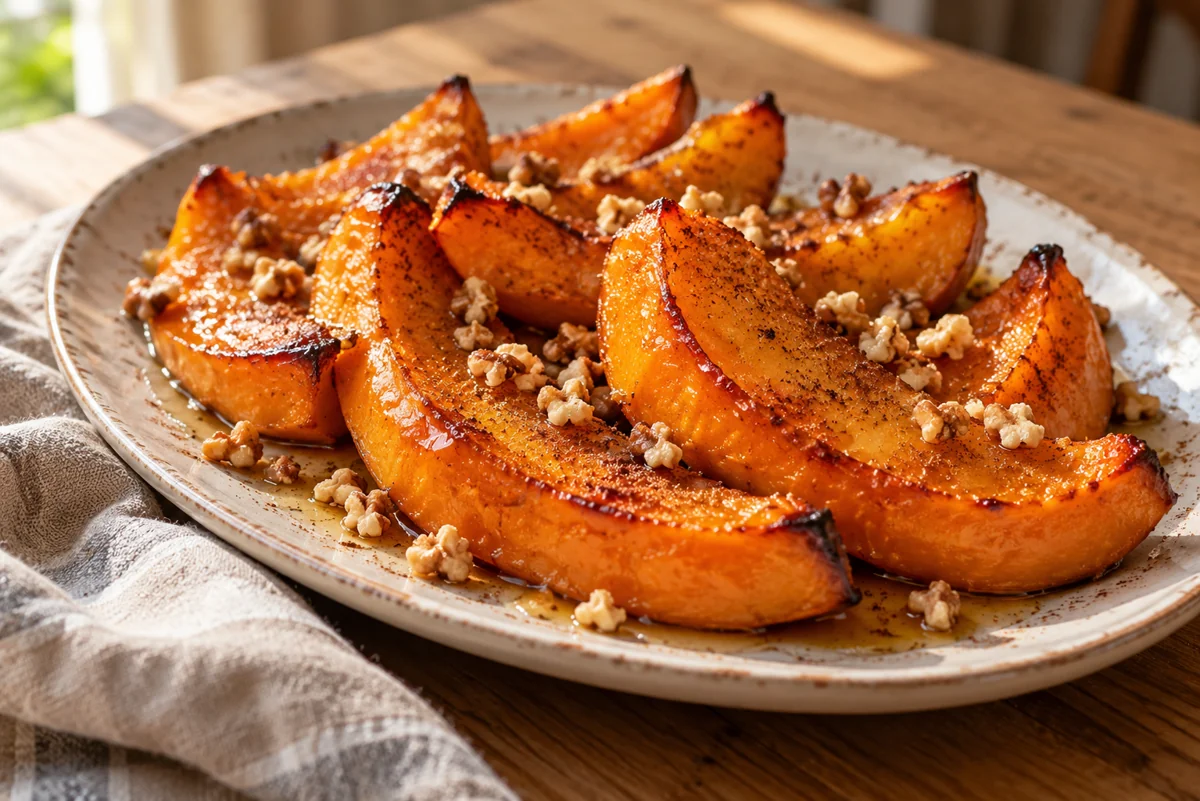
Honey roasted pumpkin is made by roasting peeled pieces until tender, then drizzling them with a measured amount of honey. For slices about 2 cm (¾ inch) thick, start at 200°C (392°F) in a conventional oven or 180°C (356°F) in a fan oven, and check tenderness rather than relying only on the clock.
In this recipe, honey goes on after roasting while the pumpkin is still warm, so the topping does not need another spell in the oven. You get a simple dessert with cinnamon and optional walnuts, with quantities for four servings and practical tips to avoid watery or dry pieces.
Contents
Choosing pumpkin for roasting
Choose an edible pumpkin or winter squash with firm flesh and no rotten or damaged areas. Butternut squash is a convenient option because its long neck is easy to cut into even pieces, but you can use another edible variety suitable for roasting.
If you shop at a market, ask whether the variety has sweet flesh and roasts well. Different varieties vary in flavour and water content, so the same topping will not always produce exactly the same result.
Should you peel it?
For this recipe, peel the pumpkin so every piece is ready to eat once cooked. If you buy prepared pumpkin, the weight below refers to the flesh without skin, seeds or the fibrous centre.
Wash the whole pumpkin before cutting and use a stable chopping board. If a knife slips on the hard skin, do not force it through; buying a halved pumpkin or prepared pieces can make the job easier.
Even thickness matters more than shape
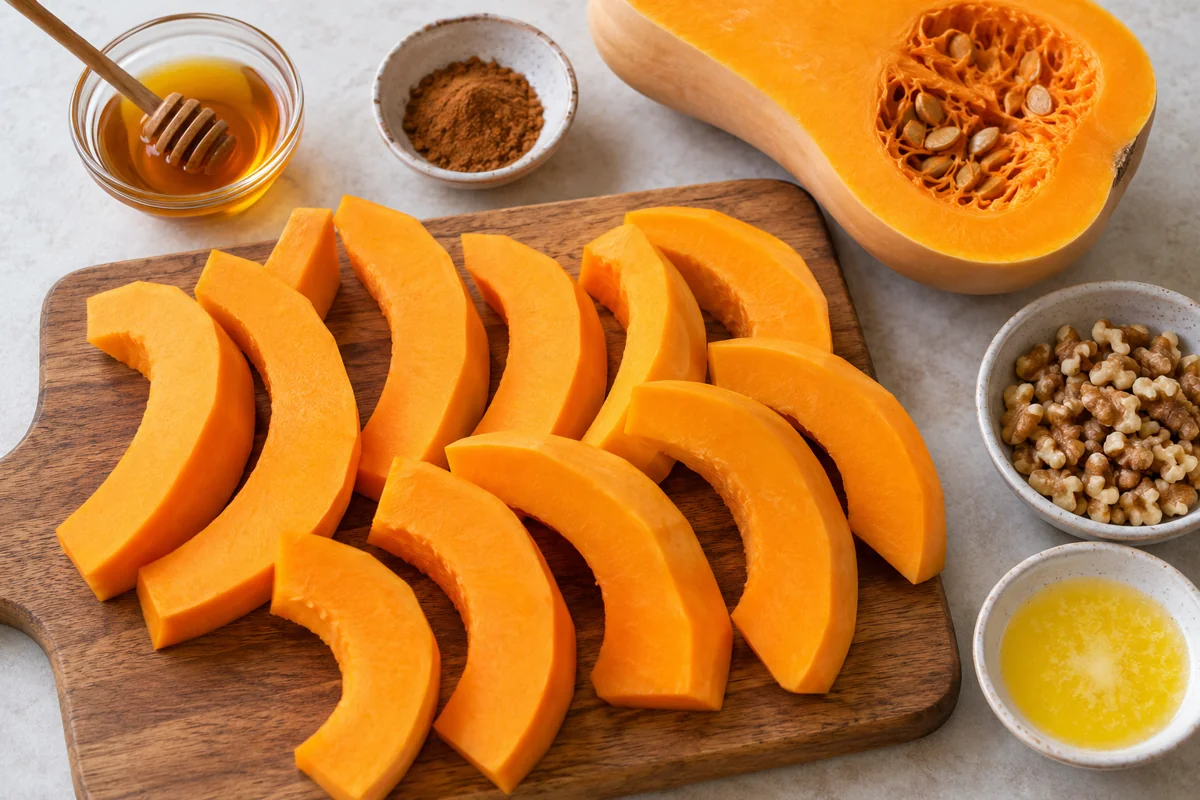
The slices may be straight or crescent-shaped, depending on which part you use. Aim for about 2 cm (¾ inch) thick, as thin ends can darken while thicker parts remain firm.
Honey roasted pumpkin: ingredients
Allow about 15 minutes for preparation and 35–45 minutes for roasting, or roughly an hour in total.
These quantities make four dessert servings. You will need a large baking tray, baking paper rated for the chosen temperature, a small bowl and a fork to test tenderness.
- 1 kg peeled, deseeded edible pumpkin or butternut squash
- 15 g melted butter or 15 ml neutral oil
- 30 g honey
- ½ teaspoon ground cinnamon, adjusted to taste
- a small pinch of salt
- 30 g chopped walnuts, optional
Keep the honey and walnuts separate from the fat used to coat the raw pumpkin. They go on after roasting, making it easy to leave some portions without nuts or with less topping.
Using oil instead of butter makes this version dairy-free, but it does not make it vegan. Honey is a bee product; a vegan version needs a different sweetener, with the flavour and quantity adjusted separately.
How to roast pumpkin step by step
1. Heat the oven and prepare the pieces
Preheat a conventional oven to 200°C (392°F), or a fan oven to 180°C (356°F). Cut the peeled, deseeded pumpkin into slices of similar thickness and pat the surface dry with a clean paper towel if damp.
2. Coat and arrange
Mix the melted butter or oil with the cinnamon and a small pinch of salt. Lightly coat the pumpkin and arrange it on a lined tray in a single layer, leaving a little space between the pieces.
If 1 kg of pumpkin will not fit without overlapping, use two trays or roast in batches. Crowded pieces trap more steam and are less likely to brown well.
3. Roast until tender in the centre
Roast on the middle shelf and start checking after 25 minutes. The total roasting time is often around 35–45 minutes, but the variety, slice thickness and actual oven temperature can shift that range.
If the underside darkens quickly, carefully turn the pieces with a wide spatula. If the surface has enough colour but the centre is still firm, lower the temperature and continue roasting, checking regularly.
4. Add honey, then walnuts
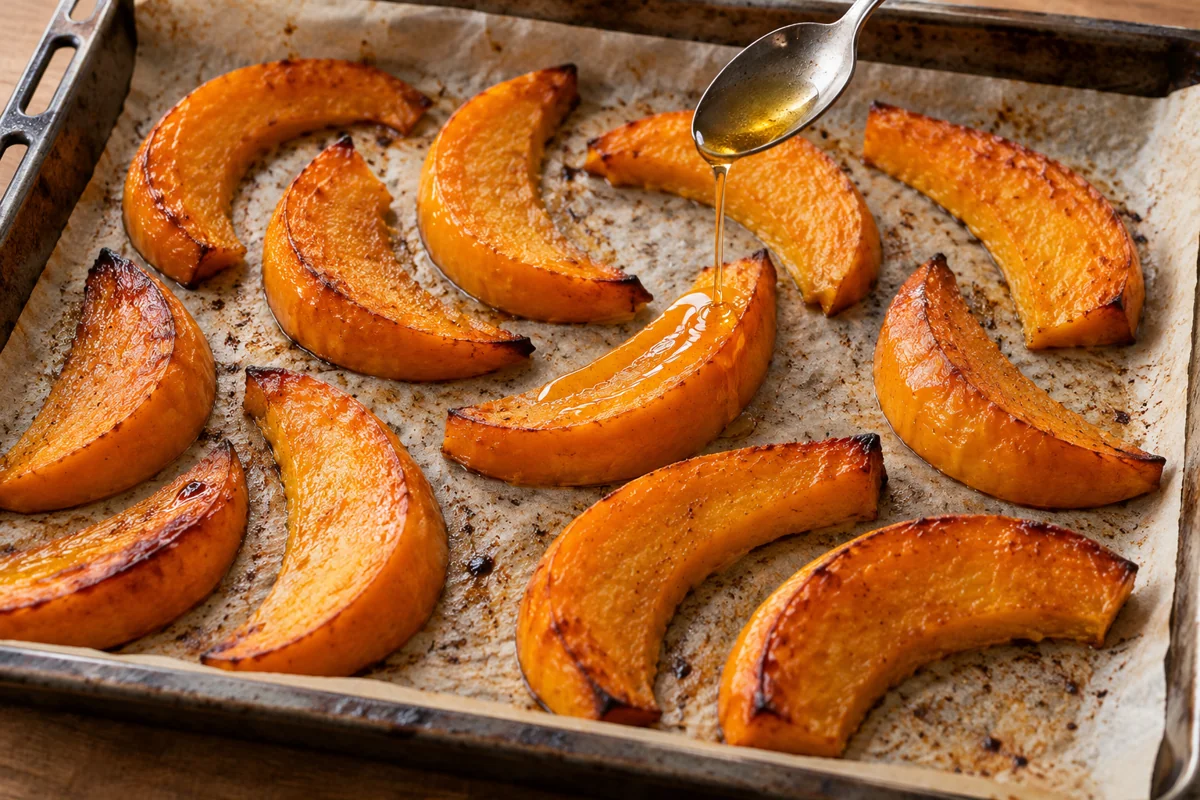
Remove the tray when a fork slides easily into the thickest part. Wait a few minutes, drizzle the 30 g of honey over the warm pumpkin, then add the chopped walnuts if using.
The warmth helps the honey spread into a thin coating. In this recipe, the tray does not go back into the oven, so there is no additional baking stage that could scorch the honey.
| Stage | What to do | What to check |
|---|---|---|
| Preparation | Cut slices about 2 cm thick. | The pieces are roughly even. |
| Arrangement | Coat and spread in a single layer. | The pieces do not overlap. |
| Roasting | Start checking after 25 minutes. | A fork slides easily into the centre. |
| Finishing | Add honey and optional walnuts out of the oven. | Use a thin topping and adjust portions to taste. |
Choosing honey and toppings
Use a honey you enjoy; an expensive speciality variety is unnecessary. For a mild flavour, try a little acacia honey, while a stronger honey may be more noticeable alongside the cinnamon.
To compare flavours, read our guide to acacia honey vs wildflower honey. Here, honey adds sweetness and flavour; it does not turn the dessert into a treatment.
Do not serve food containing honey to babies under 12 months. For age guidance and further precautions, see honey for children.
What if the honey has crystallized?
Put a small, measured amount in a bowl and gently warm it in a lukewarm water bath until it is easier to drizzle. There is no need to heat the whole jar or boil the honey.
Crystallization alone is not a reason to throw honey away. Read more in our guide to why honey crystallizes.
Cinnamon, walnuts and a less sweet serving
Start with the small amount of cinnamon listed, then adjust to taste next time. Walnuts are optional: leave them out if there is a nut allergy or you simply prefer a soft texture.
Taste a small piece of roasted pumpkin before adding the topping, as some varieties are already quite sweet. You can use less than 30 g of honey; there is no need to add more just to make the surface shinier.
Common mistakes and how to avoid them
If your first tray does not turn out as expected, you do not need to change every ingredient. Start by checking the slice thickness, spacing on the tray and when you tested tenderness.
| Problem | Possible cause | What to change |
|---|---|---|
| The pumpkin is watery. | An overcrowded tray, damp surfaces or a variety with more water. | Pat the pieces dry, leave gaps and do not add water to the tray. |
| The edges are dry but the centre is firm. | Uneven thickness or excessive heat. | Cut even slices and test the thickest part; lower the temperature if needed. |
| The topping tastes bitter. | Honey was roasted for too long or the surface burned. | Add honey after roasting; blackened pieces are not the goal. |
| The dish is too sweet. | A sweet variety with too much topping. | Taste the pumpkin and reduce the honey. |
| The pieces fall apart. | Overcooking or very small pieces. | Start checking earlier and remove pieces as they become tender. |
Serving and storing leftovers
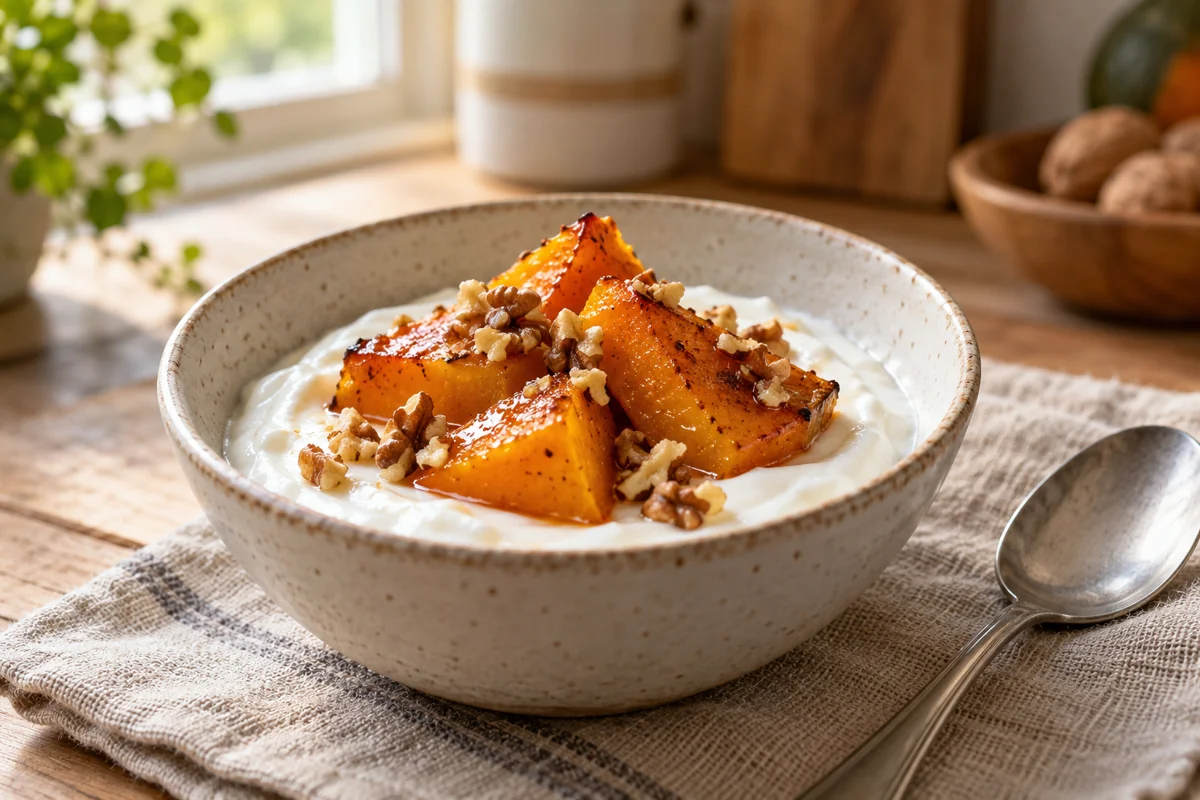
Enjoy the warm pumpkin on its own or add a few spoonfuls of plain yogurt. The cool yogurt contrasts with the warm, soft pumpkin, while walnuts add crunch.
For breakfast, add a few pieces to oatmeal with honey. Taste the combination before adding more sweetener, as the pumpkin already has honey on it.
Cooling and refrigeration
Transfer leftovers to a shallow container and refrigerate within two hours of preparation, or within one hour if the room is hotter than about 32°C (90°F). Do not leave the tray on the table all evening to cool completely.
Keep in a closed container at 4°C (40°F) or below and use within three to four days. This follows USDA guidance on handling leftovers; adding honey does not replace refrigeration.
If reheating, warm only the amount you plan to eat, to at least 74°C (165°F) in the centre, in line with leftover safety guidance. Oven reheating can dry the surface further, while a microwave generally gives a softer texture.
Honey roasted pumpkin FAQ
Does the honey have to roast with the pumpkin?
No. In this recipe, it goes on after roasting, making it easier to control sweetness and avoid scorching the topping.
Should I add water or cover the tray?
This method uses neither added water nor a covered tray. The aim is tender pieces with some browned surface, rather than cooking them in extra liquid.
Can I make it without butter?
Yes, use the stated amount of neutral oil instead. Leaving out both butter and oil can make the result drier and less evenly browned, so it is not quite the same method.
Do I need to add sugar?
This recipe needs no additional white sugar. Honey still contains sugars, so “no white sugar” does not mean the dessert is sugar-free or calorie-free.
For more on portions, read about honey calories and nutrition. Adjust the topping to the rest of your meal and your needs.
Can I use frozen pumpkin?
This method is written for fresh pumpkin. Frozen pieces may release more water and need a different roasting time, so do not use the same timings without checking doneness or following the package instructions.
A simple dessert to make your own
Evenly cut pieces and checking tenderness before removing the tray make the biggest difference to this roasted pumpkin. Add the honey at the end, start with a modest amount, and adjust the cinnamon and walnuts to taste.
If you like honey with walnuts, try our honey with walnuts recipe. It is a different preparation, while this dessert uses the oven to soften the pumpkin itself.