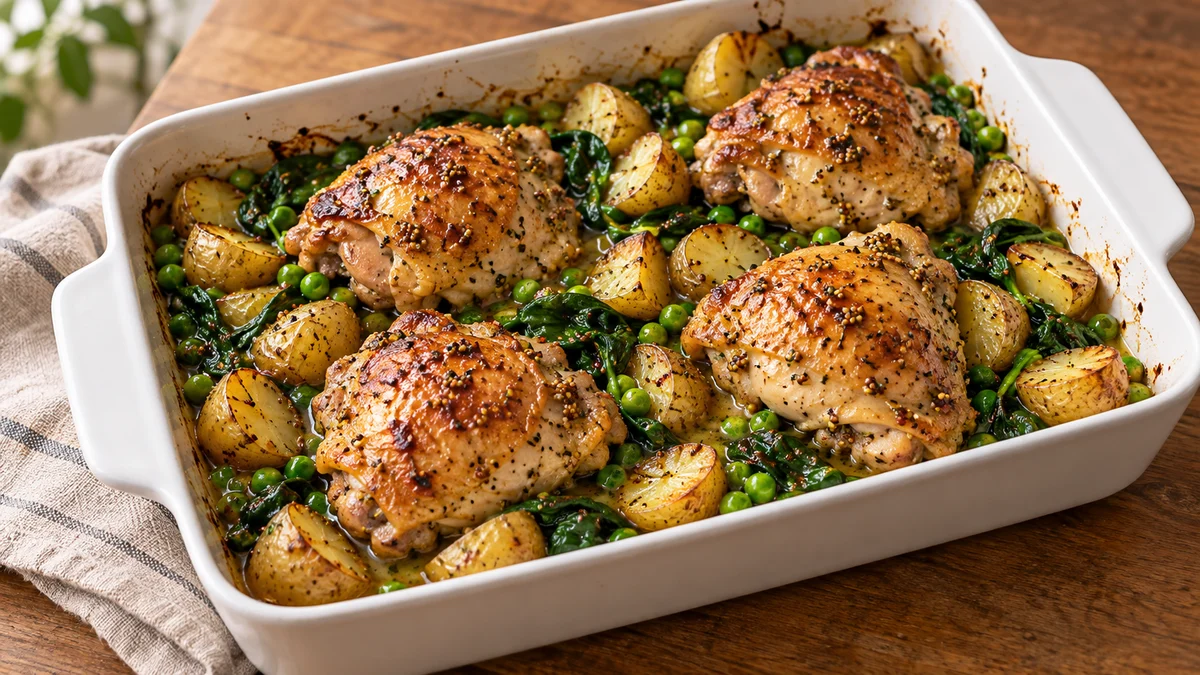
Honey mustard chicken combines gentle sweetness with tangy lemon and garlic. In this recipe, chicken thighs roast alongside potatoes, while spinach and peas go in near the end. A single roasting dish gives you both the meat and its side vegetables, with a few straightforward steps.
Use a wide roasting tin or ovenproof dish and a food thermometer. Cooking times are a guide: the size of the pieces and your oven affect the result. The temperature inside the chicken matters more than the colour of its skin.
Contents
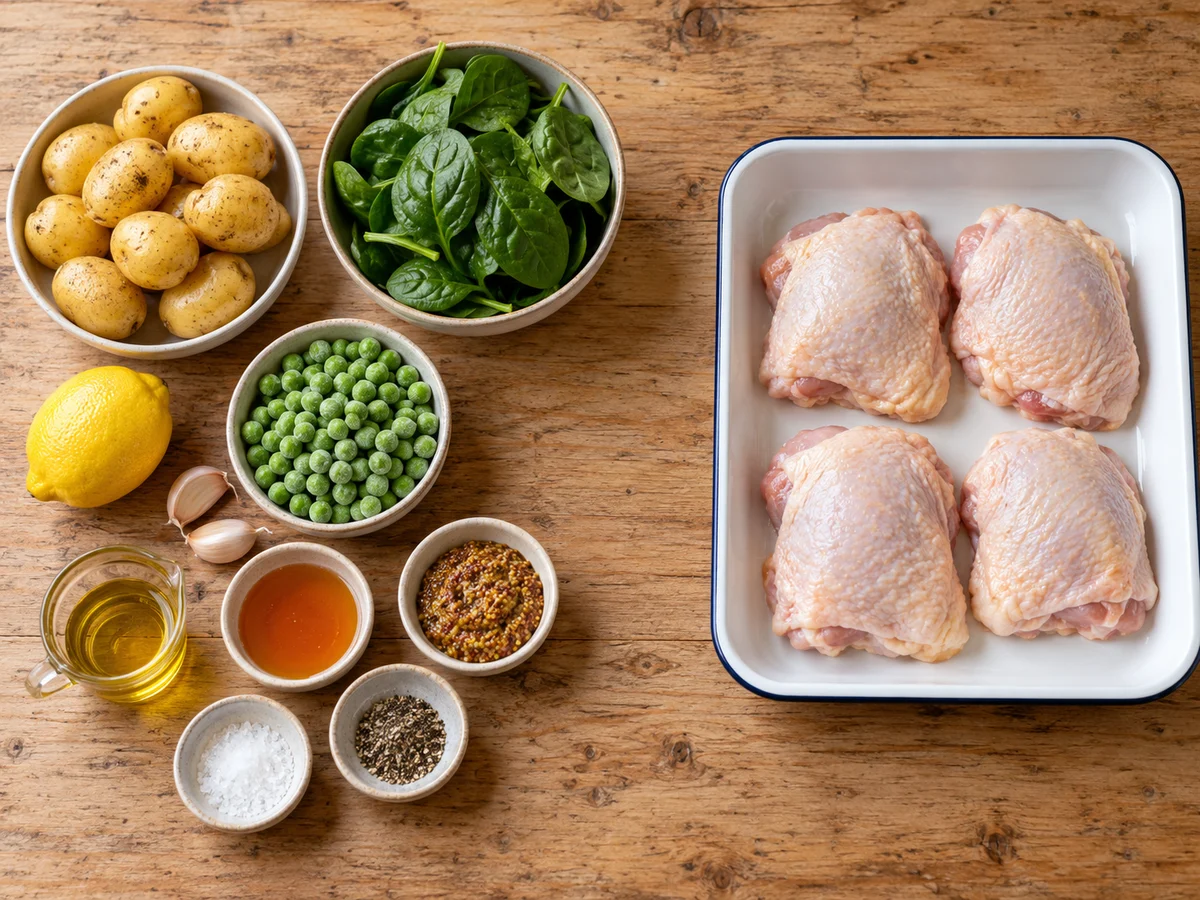
Ingredients for honey mustard chicken
Adapted from Good Food’s honey and mustard chicken thighs with spring vegetables. Serves two; allow about 10 minutes to prepare and approximately 40 minutes to cook.
- 4 skin-on chicken thighs
- 1 tablespoon honey
- 1 tablespoon wholegrain mustard
- 2 garlic cloves
- juice and finely grated zest of 1 lemon
- 300 g new potatoes
- 1 tablespoon olive oil
- 100 g fresh spinach
- 100 g frozen peas
- salt and pepper to taste
Preparation and roasting
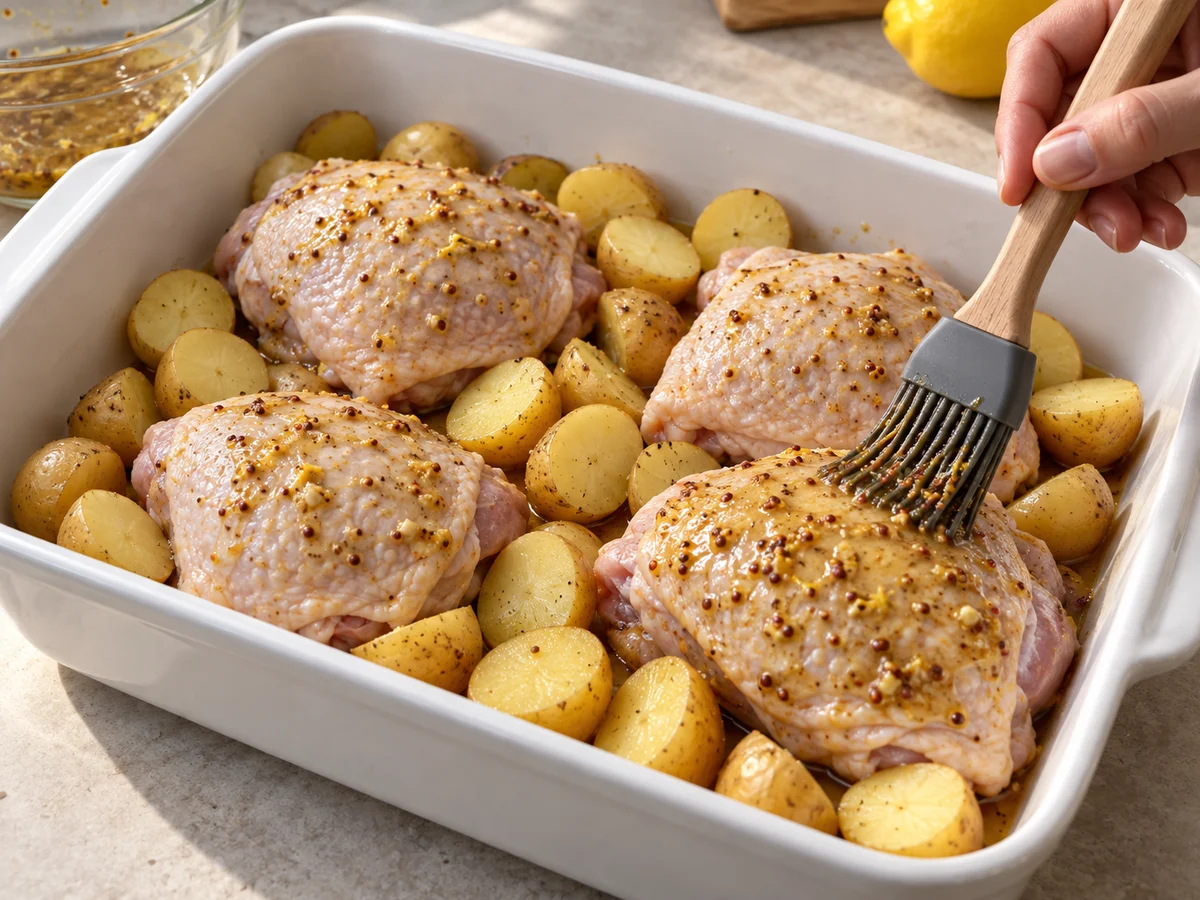
- Heat the oven to 200°C conventional or 180°C fan. Mix the honey, mustard, crushed garlic, lemon juice, and zest. Coat the chicken and season.
- Place the thighs skin-side up, with the potatoes between them; halve larger potatoes. Drizzle the potatoes with oil and season with salt. Roast for about 35 minutes.
- Add the spinach and peas and cook for another 2–3 minutes, until the spinach wilts and the peas are hot. Follow the instructions on the peas’ packaging too; cook them separately if they require longer.
- Check the temperature inside the chicken before serving. If it has not reached a safe temperature, continue cooking and measure again.
How to check that the chicken is cooked
Chicken must reach at least 74°C (165°F) internally, according to the FoodSafety.gov poultry temperature chart. Insert the probe into the thickest part of the meat, avoiding bone. Check several pieces, especially if they differ in size.
Golden skin and a dark glaze do not prove that chicken is safely cooked. Honey on the surface can brown while the centre is still cooking. Do not shorten the cooking time simply because the dish looks ready.
If the glaze starts darkening too quickly but the chicken needs longer, loosely cover the surface with foil and continue roasting. A brief blast of a hot grill is not a substitute for cooking the meat through: the surface and centre heat at different rates.
Check the potatoes separately with a fork. Safely cooked chicken does not automatically mean every potato is tender. If needed, transfer the finished chicken to a clean plate and give the potatoes more time.
Choosing honey and mustard
Choose honey whose flavour you enjoy. A mild honey leaves more room for the lemon and mustard, while a stronger honey changes the character of the glaze. Our comparison of acacia and wildflower honey can help you decide.
The honey needs to mix evenly. If it is very thick or crystallised, soften it enough to make a smooth glaze. Read why honey crystallises for an explanation of this change in texture.
This version uses wholegrain mustard. Smooth or hot mustards have a different strength and texture, so a substitution can noticeably change the flavour. Taste and adjust the glaze before it touches raw chicken.
Extra honey is not always an improvement: the glaze can become too sweet and brown more readily. Follow the quantities the first time, then change one thing at a time. This makes it easier to remember which combination you prefer.
Preparation mistakes to avoid
Do not overcrowd the tin. Leave enough space to check the chicken and potatoes and remove them without breaking them apart. For a larger batch, use a larger tin or two separate tins, checking that the meat in each is cooked.
Keep raw ingredients separate from ready-to-eat food and avoid using the same unwashed utensils for both. Wash your hands, board, knife, and work surface after handling raw chicken. Do not rinse raw chicken under running water: USDA explains that washing can spread bacteria around the kitchen.
Do not put a spoon or brush that has touched raw chicken back into a clean sauce intended for serving. If you want extra glaze with the finished dish, reserve some in a separate clean container beforehand.
Do not swap the thighs for chicken breast and simply keep the same cooking time. The cut and thickness change how the meat cooks. For another cut, use an appropriate recipe and check its temperature with a thermometer.
Serving and portion size
Serve the chicken with the potatoes and vegetables from the tin. Adjust the amount of sauce to your taste without automatically adding more honey. The suggested number of servings is a guide; the size of the thighs also affects the portion.
Honey adds sugar and energy even in a savoury meal. This recipe is therefore not sugar-free. Our guide to honey instead of sugar explains the differences between the sweeteners.
For a different preparation, try our chicken wings in honey sauce. That recipe uses a different cut and sauce, so do not casually combine its method with this one.
Storing and reheating leftovers
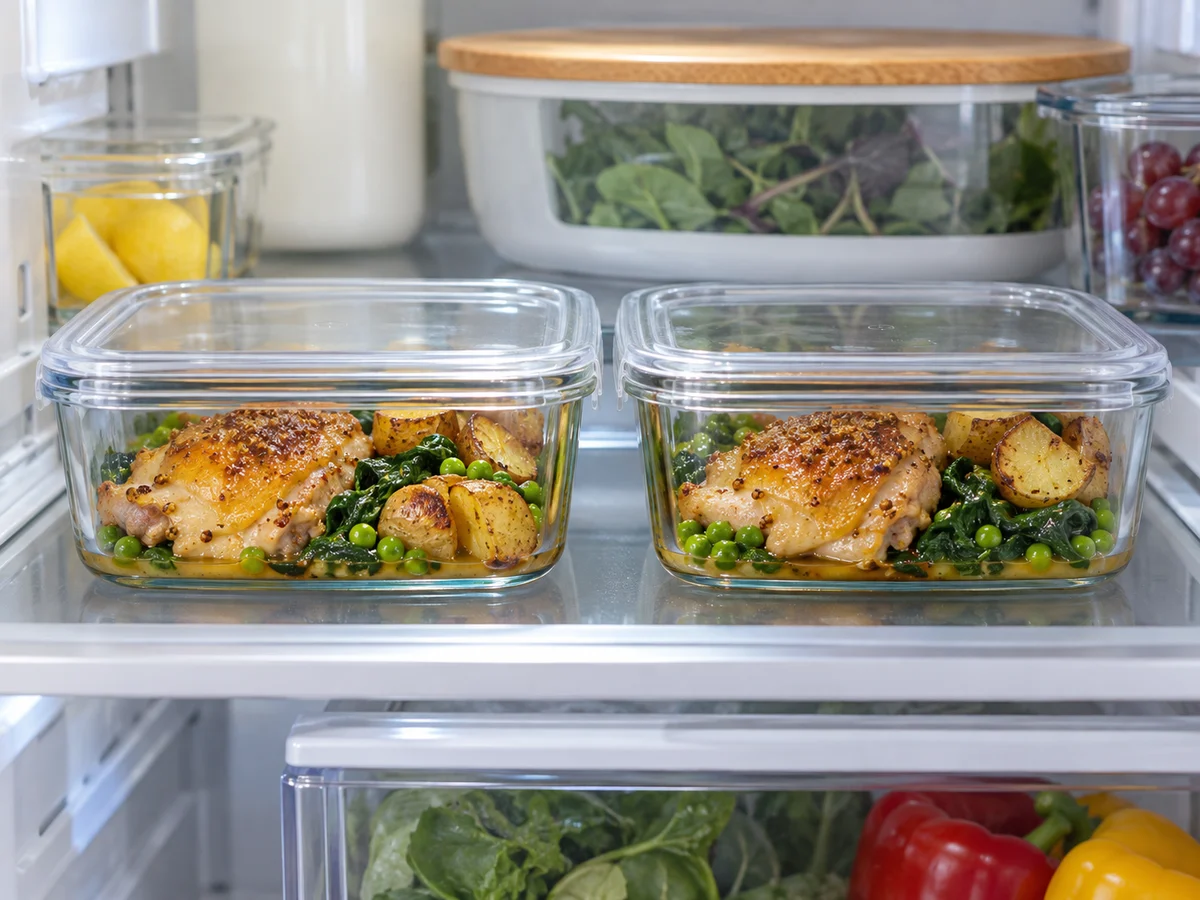
Divide leftovers into smaller, shallow containers and refrigerate them within two hours. If the surrounding temperature is above about 32°C (90°F), the limit is one hour. Do not leave a full dish on the kitchen counter for hours while waiting for it to cool completely.
Keep the fridge at 4°C (40°F) or below. Use properly refrigerated chicken and vegetables within 3–4 days, or freeze them earlier if you will not eat them. Reheat a portion to at least 74°C (165°F) internally, checking cooler areas too.
These rules follow the FoodSafety.gov guide to storing and reheating prepared food. If the meal has spent too long outside safe conditions, do not save it simply because it smells normal.
Frequently asked questions
Does the chicken need a long marinade?
This method does not require several hours of marinating. Make the glaze shortly before roasting. If cooking is delayed after you have handled the raw chicken, keep it refrigerated and separate from ready-to-eat food.
Can frozen chicken go straight into this recipe?
The stated timing is not intended for frozen pieces. For this method, thaw the chicken safely in the fridge first. Do not leave it at room temperature for hours. USDA’s chicken guidance explains safe thawing methods.
What about allergies and young children?
Mustard is an allergen; check the label for other ingredients too. Food containing honey is not suitable for babies under 12 months, including honey added to food, according to CDC infant feeding guidance.
Conclusion
Honey mustard chicken is a practical option when you want meat and vegetables from the same roasting tin. Follow the quantities, judge cooking time by actual doneness, and check the temperature. Refrigerate leftovers promptly in smaller portions so that the next serving can be prepared safely too.