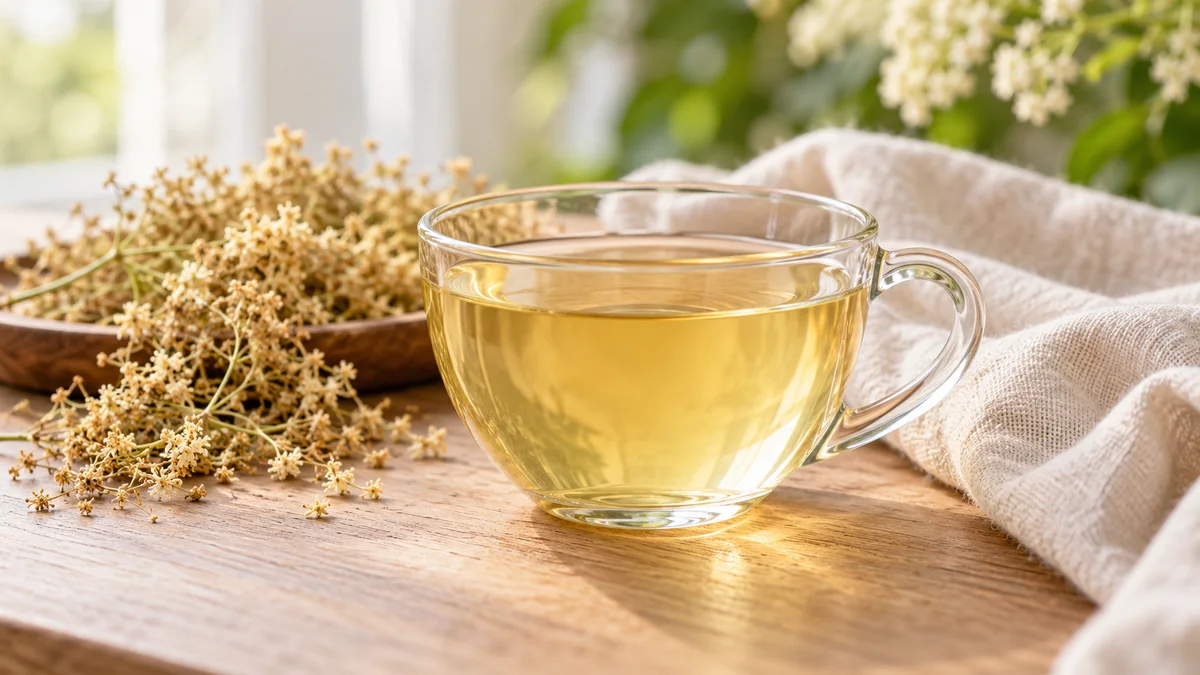
Elderflower tea is usually made from the dried flowers of black elder, rather than its dark berries. It has a distinctive floral aroma, but following the instructions on the pack matters more than how generously you fill a spoon. Flowers, berries, and herbal blends are different products.
This guide covers preparation, choosing and storing dried flowers, and what traditional use means. A pleasant drink should be kept separate from promises of treatment: herbal tea is not a substitute for medical assessment when symptoms are severe or persistent.
Contents
What is used for elderflower tea: flowers or berries?
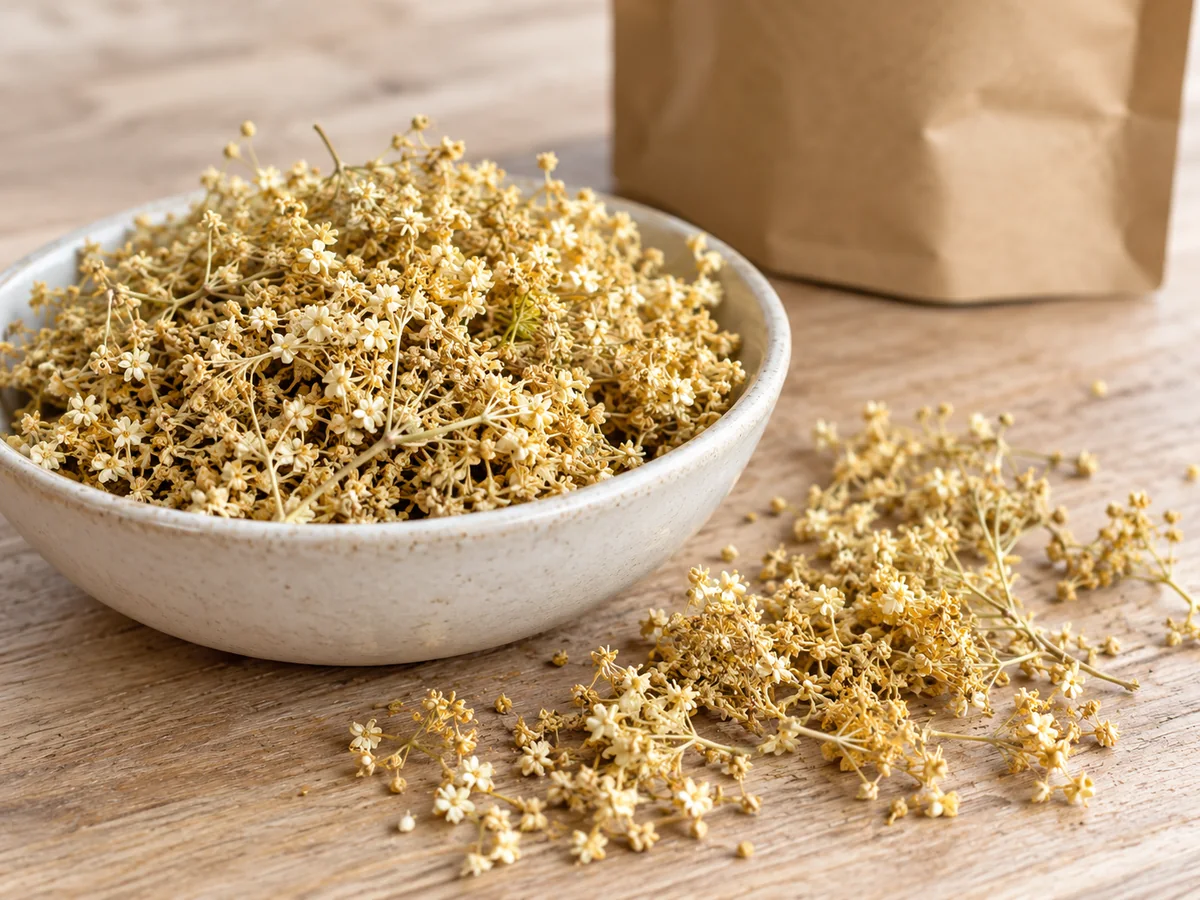
This guide concerns the dried flowers of black elder, Sambucus nigra L., which may be listed on the label as Sambuci flos. “Flos” means flower. If the pack lists elderberries or contains several herbs, check the instructions and precautions for that particular formulation.
Flower tea, elderflower cordial, and berry preparations differ in their raw material, preparation, and composition. Research into berry extracts does not establish that a cup of flower tea has the same effect. The NCCIH overview of elderberry mainly concerns the fruit.
Do not add leaves, bark, or twigs to your cup. NCCIH warns about harmful substances in raw or unripe berries and some other parts of the plant. If you are unsure of the species or quality of material you have gathered, choose labeled flowers intended for tea; an online photograph is not enough for identification.
How to choose dried elderflowers
First check the plant name, the part used, and whether the product is intended for making a drink. Then look for the producer, expiry date, storage conditions, and preparation instructions. “Elder” on the front of a pack is not sufficient if the ingredients on the back differ from what you expect.
Loose flowers let you measure the amount yourself, while tea bags make it easier to follow the product instructions. One bag is not automatically interchangeable with any quantity of loose flowers: check how much herbal material it contains and the volume of water it is designed for.
Keep dried flowers separate from herbs of unknown composition or origin. Do not use material with visible mold, signs of moisture, or an unusual smell. A stronger aroma or a larger quantity of flowers does not mean greater benefit.
How to prepare elderflower tea
Follow your own product label first. The amount of flowers and water, and the steeping time, may differ between loose tea, tea bags, and blends.
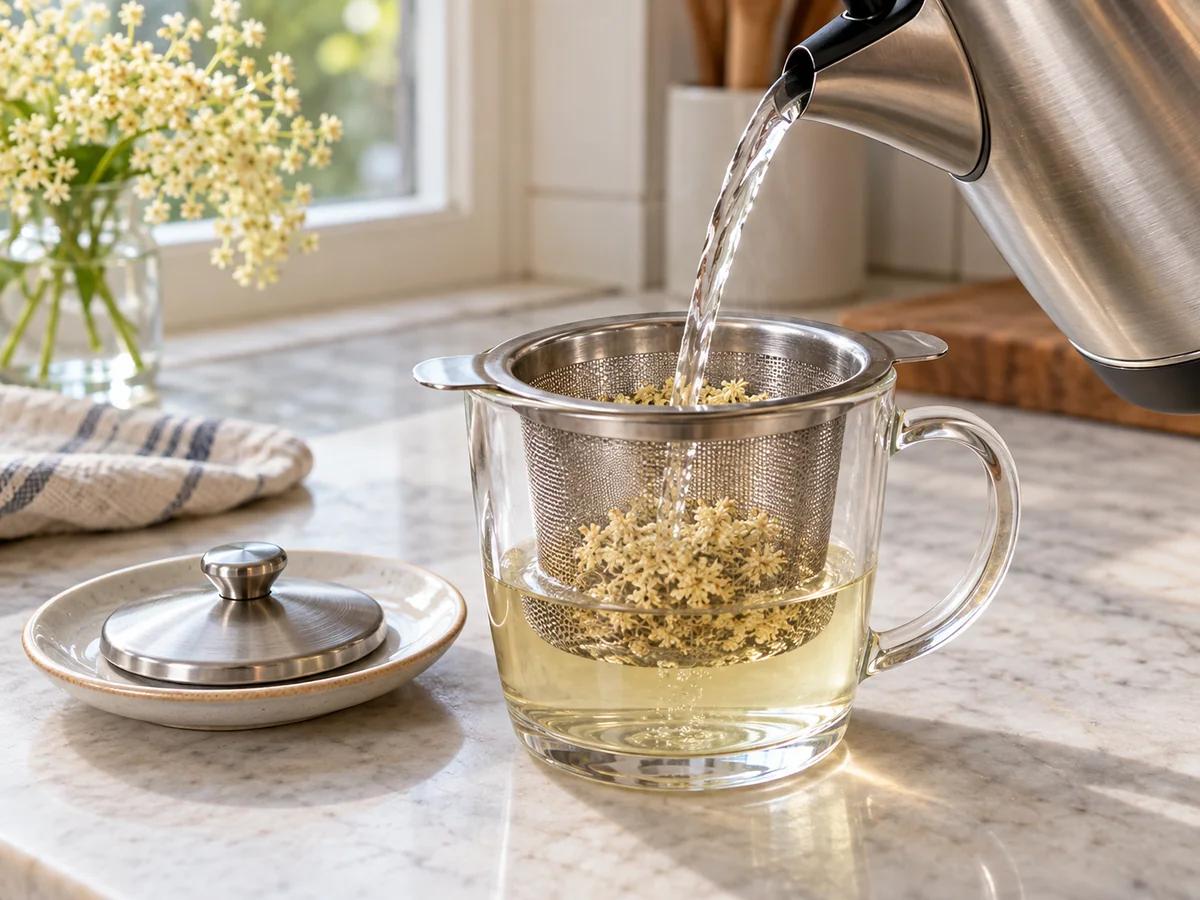
As a specific example, the Institute “Dr Josif Pančić” product page (Serbian) gives instructions for its loose elderflowers: two coffee spoons, 200 ml of boiling water, and ten minutes covered. This applies to that product; it does not mean that two small spoonfuls of every tea weigh the same.
For that type of preparation, the steps are:
- Measure the flowers and water. Use the quantity on the pack and a clean container suitable for boiling water.
- Pour boiling water over the flowers. This method makes an infusion; the flowers are not subsequently boiled in a saucepan.
- Cover the container. Leave it for the specified time, which is ten minutes in the example above.
- Strain. Remove the flowers, or take out the tea bag as instructed, rather than leaving the herbal material in the cup throughout drinking.
- Let the drink become comfortably warm. Taste it, then add a small, measured amount of honey if you wish.
If your loose-flower instructions specify grams, use a scale that can reliably measure small quantities. Spoon volume depends on how finely the material is cut and how the spoon is filled, so do not guess a conversion between grams and spoonfuls.
The EMA monograph describes an infusion of 2–5 g of flowers in 150 ml of boiling water, three times daily, for certain traditional herbal medicines. This is a framework for the preparations and purpose covered by that monograph, not a general recommendation that everyone should drink three cups every day. Follow your product instructions and a pharmacist’s advice about frequency of use.
Traditional uses and the limits of the evidence
EMA describes the traditional use of certain elderflower preparations for relieving early symptoms of the common cold. This assessment rests on a long history of use, with insufficient clinical evidence. It does not confirm that the tea treats influenza, pneumonia, or the underlying cause of a cough.
In the EMA assessment of elderflower, traditional descriptions of promoting sweating or urination were not accepted as separate therapeutic indications. Elderflower tea should therefore not be presented as a “detox” drink, a weight-loss treatment, or a remedy for swelling.
Seek professional advice if symptoms persist for more than a week during use or become worse. Do not wait for tea to work if you have difficulty breathing, severe chest pain, or a marked deterioration. Symptoms determine when medical assessment is needed, rather than your planned number of cups.
Elderflower tea with honey: when and how much to add
Honey is an optional addition for flavor. Try the unsweetened drink first, then add a small, measured amount if you prefer it that way. You do not need to sweeten every cup or add more honey when you make stronger tea.
It is practical to add honey when the drink is no longer uncomfortably hot to sip. There is no need to choose one “magic” temperature. For more detail, read Honey in Tea: When to Add It and What Heat Does to Honey.
Honey provides sugars and energy, so even a small amount counts toward your daily intake. If you track portions, see honey calories and nutrition. Do not give honey to children younger than 12 months, including dissolved in a drink, according to CDC guidance. This rule does not establish the age at which the tea itself is suitable.
If you prefer a mild-tasting sweetener, our guide to acacia honey explains its taste and uses. Choosing honey is a matter of preference; adding it does not turn tea into a treatment.
When extra caution is needed
Before regular use, check who the particular product is intended for. According to the EMA monograph:
- Allergy to elderflower: the preparation must not be used by someone with hypersensitivity to the herbal substance.
- Children younger than 12: the herbal medicines covered are not recommended because there are insufficient data. Do not calculate a child’s quantity by simply dividing the adult amount.
- Pregnancy and breastfeeding: safety has not been established; use for this medicinal purpose is not recommended because of the lack of data.
If you take medicines or have a chronic condition, NCCIH advises speaking with a healthcare professional before using herbal products. Show your pharmacist the exact pack and mention any other preparations you take. The absence of a known interaction is not proof that every combination has been studied.
Check a blend’s full ingredient list in particular. A restriction may come from another herb in the product, even when elderflower is prominent on the front of the pack. Stop using it if you notice a new unwanted reaction after drinking it, and seek advice about what to do next.
How to store dried flowers and prepared tea
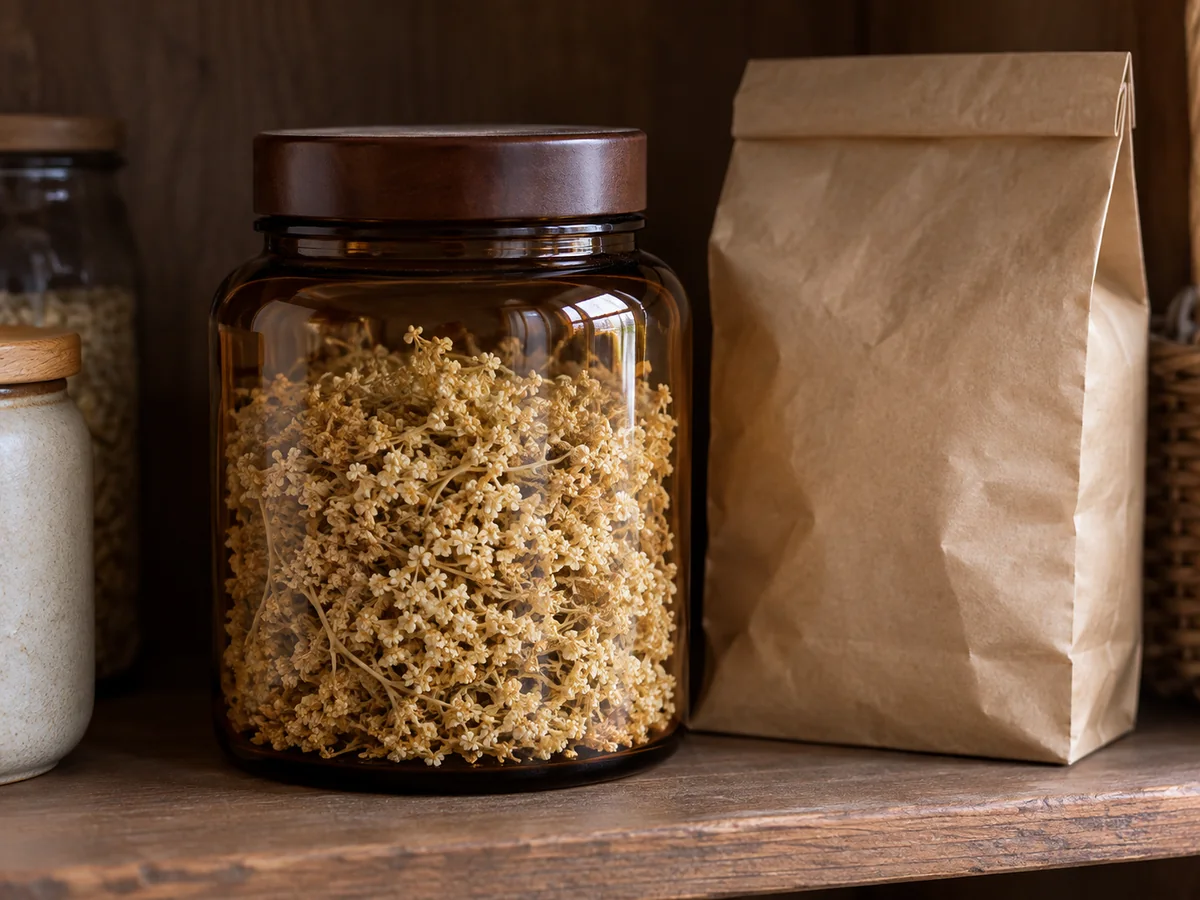
Store dried flowers according to the label, in a dry place protected from light, heat, and steam. A shelf above the stove, or a jar opened over a boiling saucepan, is not a practical choice. Use a clean, dry spoon and close the packaging after measuring.
If you transfer the flowers to another container, keep the original packaging or its information. The plant name, part used, producer, batch, expiry date, and instructions matter more than the tidy appearance of an unmarked jar. Avoid topping up old contents with a new pack if doing so loses track of expiry dates.
The simplest approach is to make the amount you will drink straight away. Infusing dried flowers and making cordial are different processes; prepared tea is not a shelf-stable pantry product. For a sweet flower drink prepared separately, see our existing elderflower cordial article.
Frequently asked questions
Are elderflower tea and elderberry tea the same?
No. The plant part, composition, and preparation differ. This guide concerns dried Sambucus nigra L. flowers, rather than berries or their extracts. Check the label instead of relying on the word “elder” alone.
How long should elderflower tea steep?
Follow the pack. For the loose-flower product used as an example, the Institute “Dr Josif Pančić” specifies ten minutes covered. Do not automatically apply that time to every tea bag or blend.
Can I drink elderflower tea every day?
Do not adopt unlimited daily use simply because a product comes from a plant. The label, your reason for using it, other preparations, and your health all matter. Stronger or more frequent tea is not necessarily a better choice.
Does elderflower tea cure a cold?
EMA describes traditional use for early symptoms, with limited clinical evidence. This is not a promise of a cure. Persistent or more severe symptoms call for professional assessment.
Good preparation starts with choosing the right flowers
Choose labeled flowers for elderflower tea, measure them according to the instructions, cover the infusion, and strain after the specified time. Add honey to taste while respecting its restrictions. To compare it with another flower tea, read our linden flower tea guide; each plant has its own instructions and precautions.