Table of Contents
Elderflower juice is a drink that many of us associate with childhood, a treat that generations have grown up with. Our grandmothers have been making it for ages, as elderflower juice is widely known for its healing properties.
Every spring, we make a large batch of this elderflower juice, enough to last us the whole year. Homemade elderflower juice is much tastier than the store-bought version. This syrup is more tangy and floral, with less of the syrupy sweetness. And it’s made with great enjoyment.
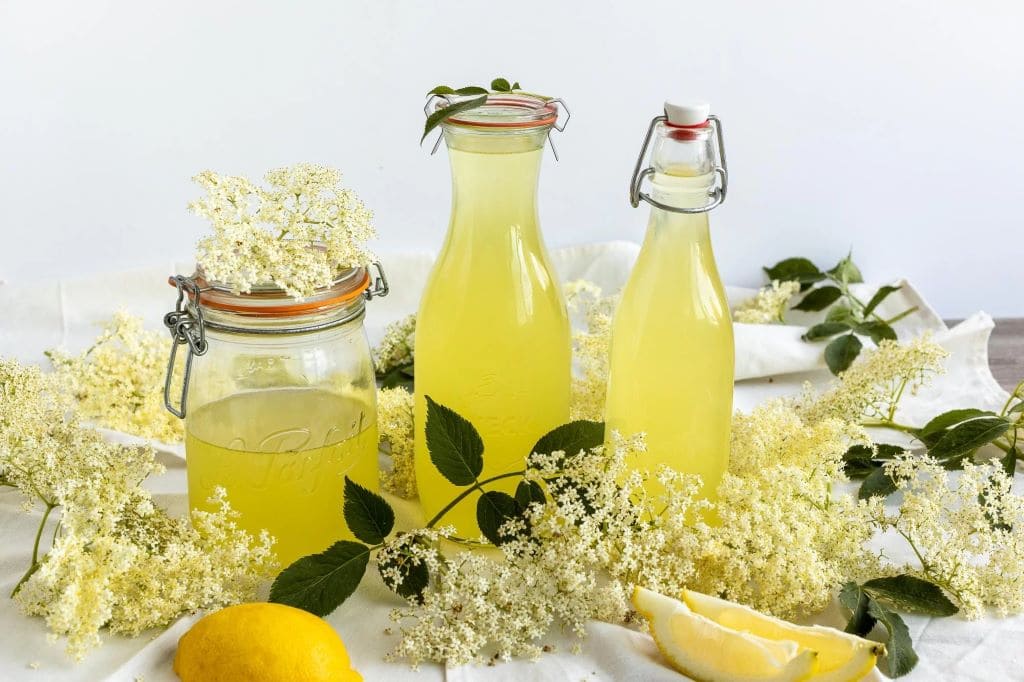
Elderflower (Sambucus nigra) is a perennial European plant with a distinctive smell and flower shape, featuring white blooms. It grows as a shrub or small tree and can reach a height and width of 2.5 to 6 meters. This plant is highly medicinal, with all its parts—roots, flowers, and fruits—containing numerous vitamins and minerals that support health and vitality. It is highly recommended to have in every home.
Tips for Harvesting Elderflower Blossoms
Elderflower blossoms are edible parts of the elder tree or bush, Sambucus nigra. The flowers appear late in spring, and in late summer, the tree produces dark berries. Elderberries are also edible when ripe but must be cooked to remove toxins.
Here are some tips for harvesting elderflower blossoms:
- Make sure you can properly identify elderflowers. If you’re unsure, don’t pick them. Never harvest or use something you’re uncertain about.
- Avoid harvesting from the side of a road, where exhaust fumes might contaminate the flowers.
- Never pick from private land without permission.
- Don’t strip a plant or tree of all its flowers.
Ingredients
- 50 elderflower heads
- 3kg sugar
- 5 liters of water
- 5 lemons
- 4 packets of citric acid (or lemon juice)
How to Make Elderflower Juice
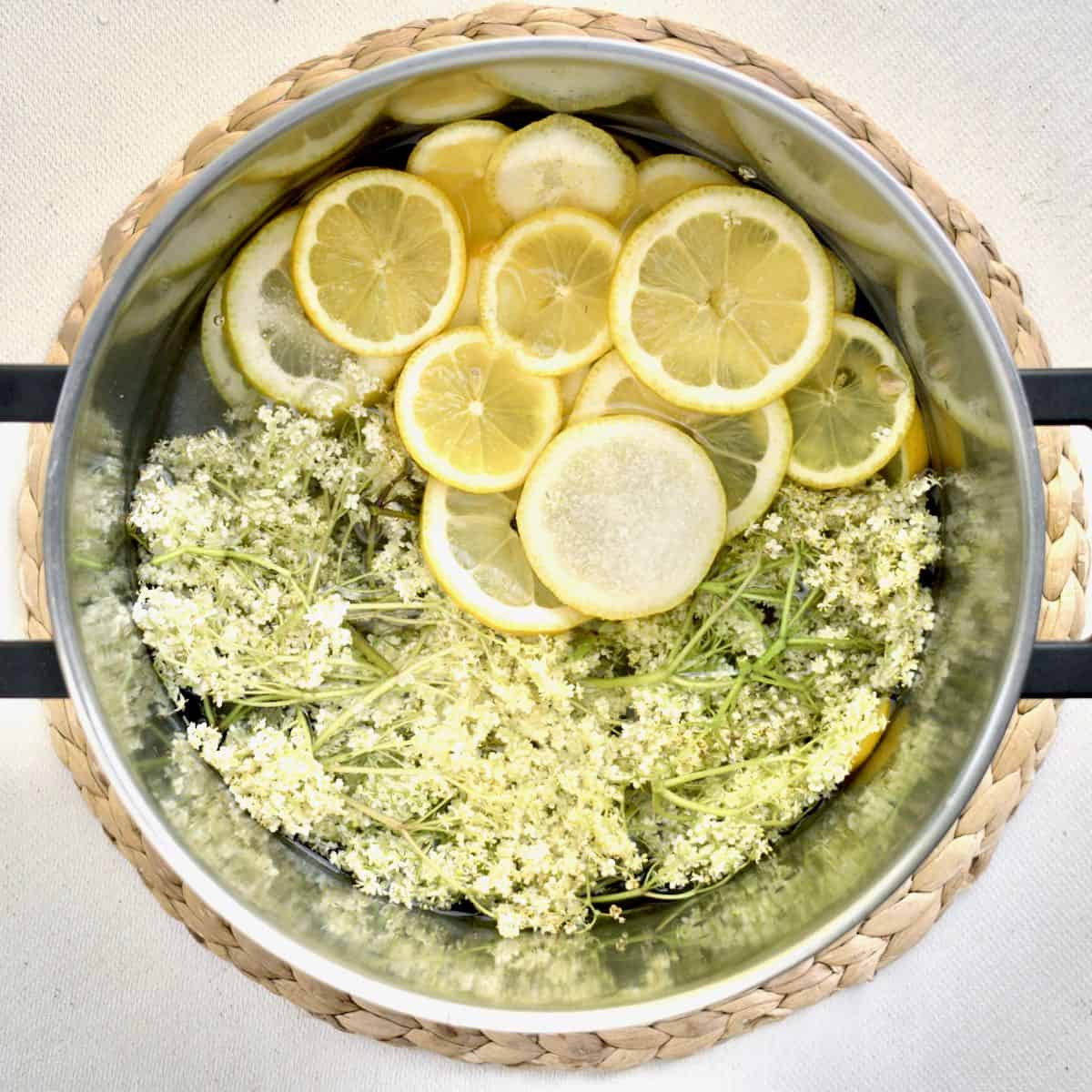
First, wash the freshly picked elderflowers with water, then place them in a container of suitable size. Sprinkle with citric acid and gently bruise them with your hands. This will help the flowers release their juices better when combined with the citric acid.
Fill the container with water, add the juice of 3 squeezed lemons, and slice the remaining 2 lemons into rounds, adding them as well. Cover the container and leave it to steep for 24 hours.
Citric acid is a natural preservative found in lemons and other citrus fruits, or it can be purchased in the form of citric acid powder. It provides the tanginess in the juice and plays a role in extracting the flavor from the elderflowers. It also helps the juice last longer.
It’s possible to make elderflower juice without citric acid, but the taste will be different, and the juice won’t last as long. If you skip the citric acid, store the juice in the refrigerator and use it within a few weeks.
After 24 hours, strain the contents of the container through a sieve lined with clean cheesecloth and add the sugar. Stir occasionally until the sugar completely dissolves.
Elderflower juice should be poured exclusively into glass bottles that must be pasteurized. You can easily pasteurize them by placing the bottles with juice in a pot of water and gently heating them. The water in the pot should not boil, but should lightly simmer for about 5 minutes. After that, remove the bottles from the pot and allow them to cool gradually, storing them in a cool, dark place.
Alternatively, you can sterilize the empty bottles in the oven and, while still hot, pour in the strained juice.
This completes the preparation process.
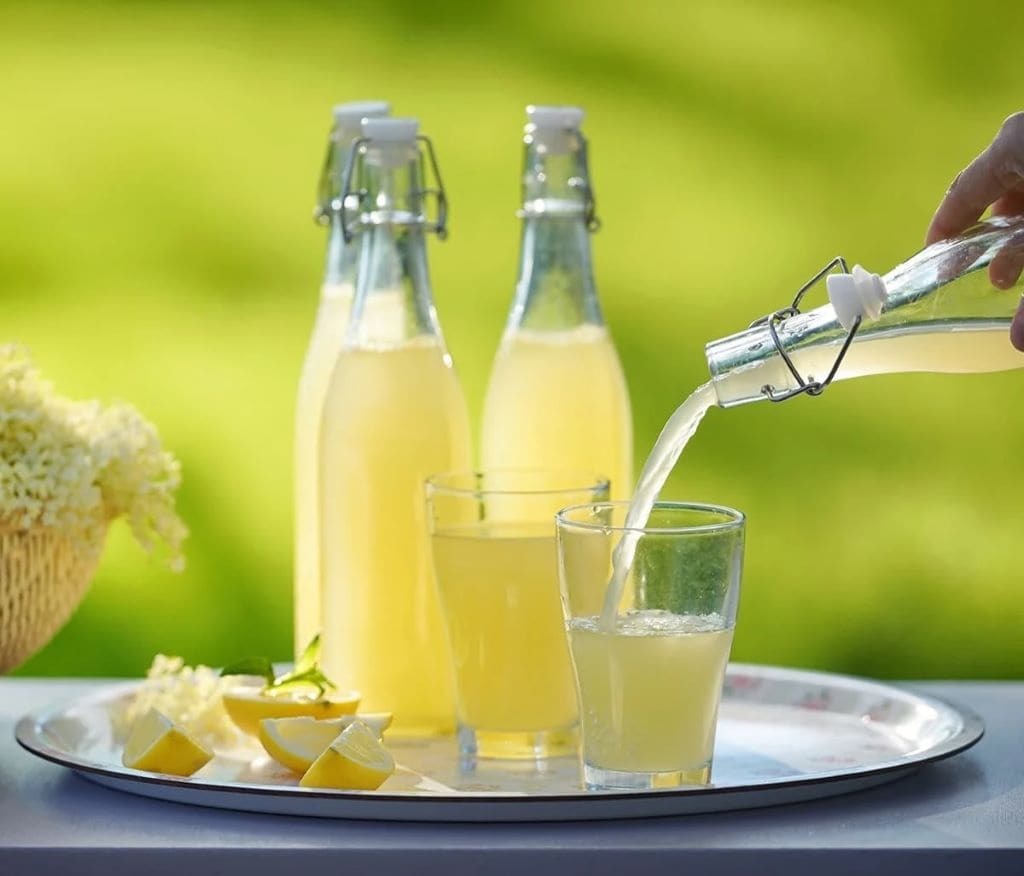
At this point, you have elderflower cordial, which you can dilute with plain or sparkling water to your taste.
Storage and Preservation Tips
Here are some tips to ensure your elderflower juice stays in good condition:
- The final step of pasteurizing the syrup kills any wild yeasts, bacteria, or spores that could cause spoilage.
- Thoroughly clean all your glass bottles, caps, and other equipment in soapy water or in the dishwasher, then fill with boiling water. Let them sit for 5 minutes before draining.
- Alternatively, place the washed bottles and caps in the oven at 140˚C until dry.
- Fill the bottles and put on the caps immediately after pasteurization, while the syrup is still hot. (Wear oven gloves as the bottles and caps will be hot!)
- Filling while the syrup is still hot ensures that the lid seals properly as the liquid cools, creating a vacuum.
- Store unopened bottles of syrup in a cool, dark place. Once opened, keep it in the fridge.
Enjoy your homemade elderflower juice with cold sparkling water as a refreshing summer drink!