Dandelion tea can be made from leaf or root, and these two materials do not automatically require the same preparation. Before measuring any tea, check what the pack actually says: the plant name, the part used and the producer’s instructions matter more than a general recipe found online.
This guide explains the difference between leaf and root, gives two specific preparation examples and highlights situations in which tea is unsuitable for self-directed use. Traditional use of dandelion does not mean proven treatment of liver, gallbladder or urinary tract disease.
Contents
Leaf or root: what is in dandelion tea?
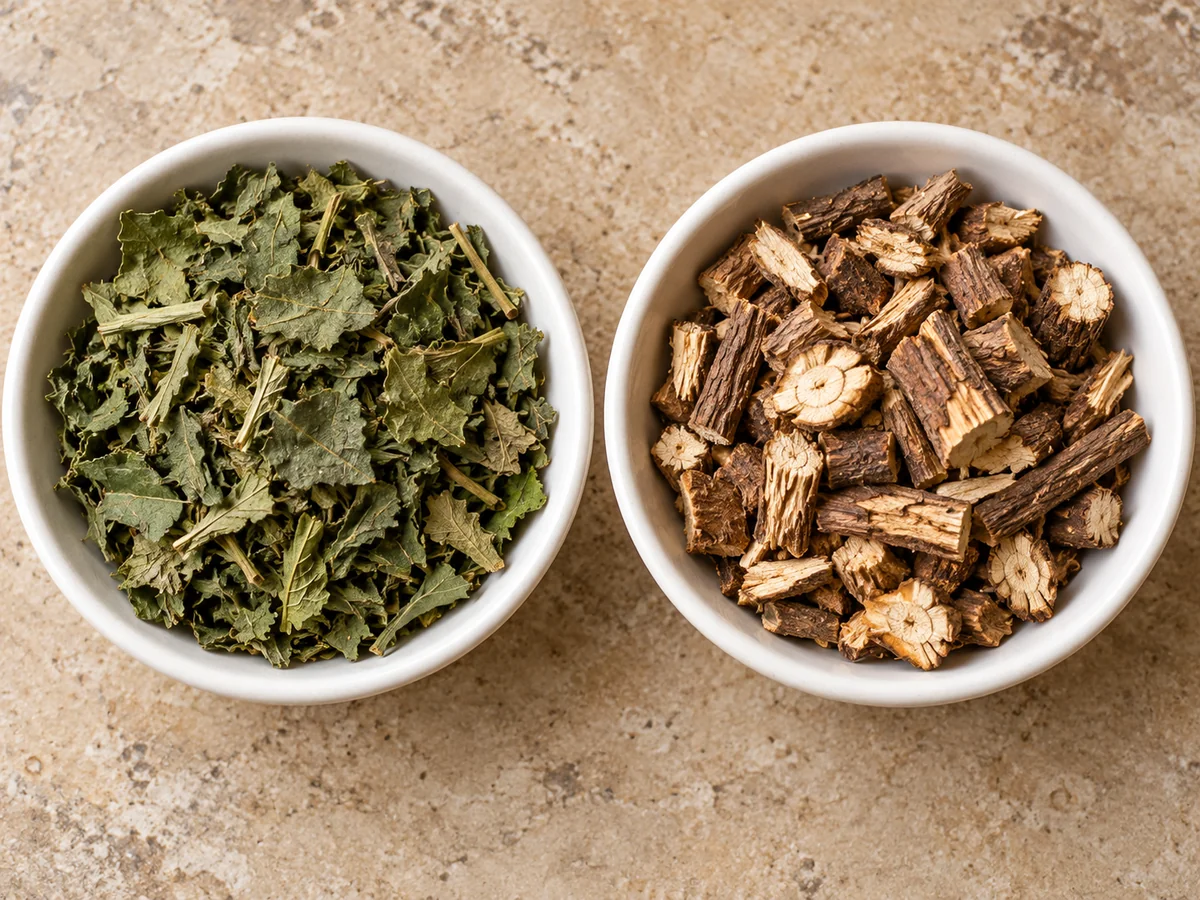
On a label, dandelion is commonly identified as Taraxacum officinale. Folium means leaf, while radix means root. A product labelled root with aerial parts, or radix cum herba, is different from root alone. Also check whether you are buying a single-herb tea or a blend.
This makes a practical difference: a producer may instruct you to pour boiling water over dried leaves, while chopped root may need heating in water and brief boiling. Do not transfer the quantity, steeping time or method from one pack to another simply because both are called dandelion.
Roasted root sold as a coffee-like drink is not automatically interchangeable with unroasted material intended for tea. Flavour, processing and instructions vary by product. Flowers, fresh salad leaves and concentrated extracts should not be presented as equivalent servings of the same preparation either.
For a comparison involving another plant part, see our guide to elderflower tea and preparing dried flowers. Its method should not be applied to dandelion root.
How to choose a product and read the label
Choose a product whose ingredients and preparation method you can identify clearly. Before buying or first using it, check:
- the plant name and the part used;
- whether the material is dried, roasted or part of a blend;
- the quantity intended for one cup or serving;
- the heating method and steeping time;
- warnings, expiry date and storage instructions.
A tea bag is not a universal substitute for a tablespoon or teaspoon of loose tea. It contains the quantity the producer has selected for that product. If the instructions specify grams, use a scale rather than guessing a number of spoonfuls.
If the website and the pack give different instructions, do not combine parts of the two methods. Follow the current label for the product you bought, and ask the producer or a pharmacist about anything unclear. This is particularly useful with blends containing several herbs.
A plant photograph or an illustration in this article is not enough to identify wild material reliably. If you cannot confirm the species, plant part and origin, choose labelled material intended for tea.
How to prepare dandelion tea
The instructions for your particular product take priority. The following examples show the difference between two plant materials sold by the same producer. They are not a single recipe for every dandelion tea, or advice that everyone should drink it daily.
Example preparation with dandelion leaf
The product page for dandelion leaf tea from the Institute “Dr Josif Pančić” gives these instructions:
- Measure one tablespoon of dried leaf.
- Pour 200 ml of boiling water over it.
- Cover and leave for 15 minutes.
- Strain before drinking.
These quantities apply to that particular loose-leaf product. Check the pack for other materials or tea bags. Do not replace a tablespoon with a teaspoon and expect the same quantity.
Example preparation with dandelion root
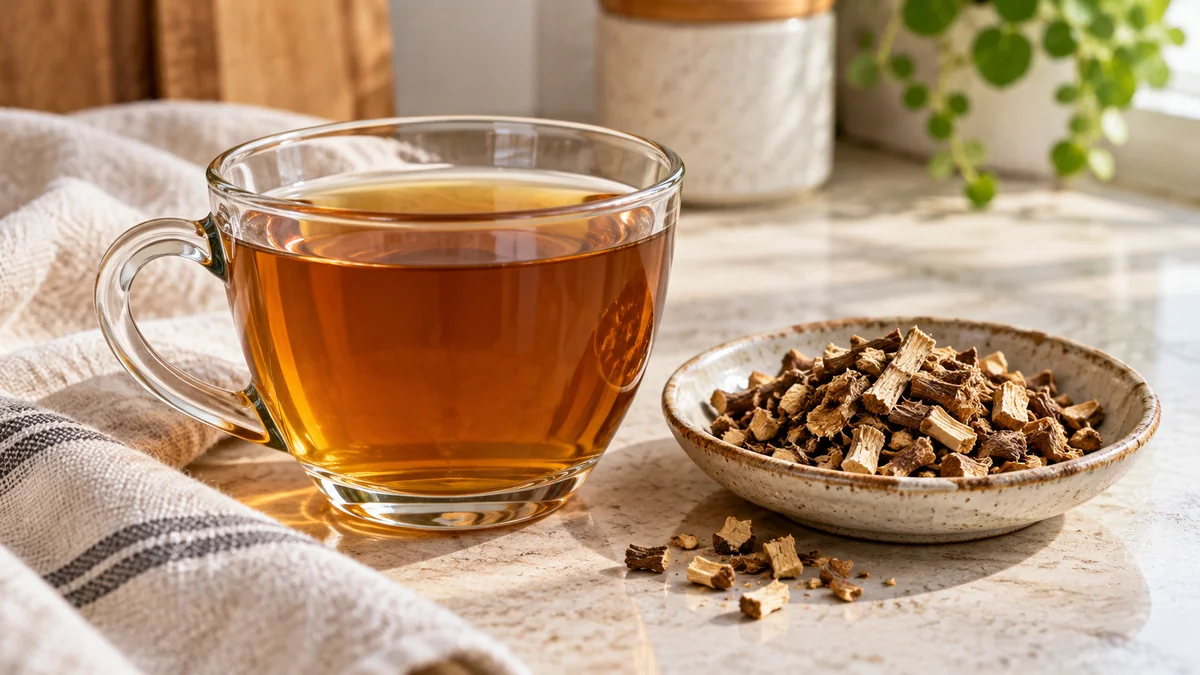
The same producer’s dandelion root tea has different instructions:
- Measure one teaspoon of chopped root.
- Add 200 ml of cold water.
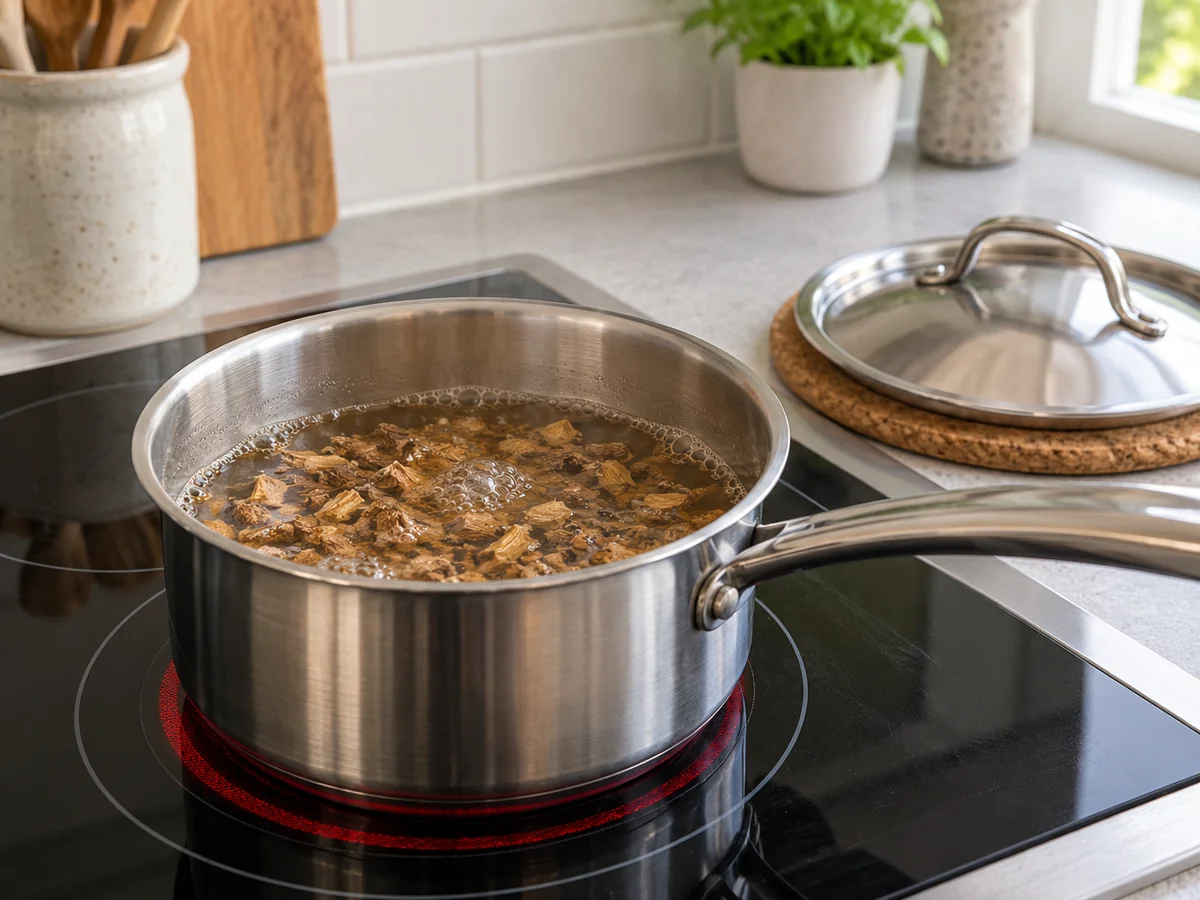
- Cover, bring to the boil and boil briefly.
- Leave for 10 minutes, then strain.
The page says to boil briefly without specifying an exact number of minutes. We therefore do not invent a boiling time here. If your pack gives a more precise time, follow that instruction.
The producer also states a frequency of use on both pages. This is not general advice for every reader: first check who the product is intended for and whether any of the restrictions below apply to you. Ask a pharmacist before introducing regular use.
Traditional uses and the limits of the evidence
The EMA monograph for dandelion root describes certain traditional herbal medicines for mild digestive complaints, temporary loss of appetite and increasing urine flow as an adjunct in minor urinary complaints. The leaf monograph concerns traditional adjunctive use to increase urine flow. These are specific uses of the preparations covered, based on long-standing use.
This status does not establish that a homemade drink treats disease. The NCCIH overview of dandelion says there is no compelling scientific evidence supporting its use for any health condition. Laboratory research on an extract does not establish the same effect from a cup of tea in a person.
Dandelion tea should therefore not be promoted as a liver cleanse, a way to dissolve gallstones, a cancer treatment or a replacement for prescribed medicines. Losing water through increased urination is not evidence of losing body fat. Terms such as “detox” and “weight-loss tea” do not provide enough information to assess benefit or safety.
If you are interested in herbal drinks as part of a daily routine, see our peppermint tea guide too. Each herb has its own restrictions; replacing one with another does not resolve a health problem.
When dandelion tea should be avoided
Precautions depend on the plant part and ingredients. “Natural” is not enough to make a product suitable for everyone.
Bile ducts and liver: EMA does not recommend root preparations in cases of bile duct obstruction, cholangitis, liver disease, gallstones or other biliary diseases. For leaf preparations, those conditions are listed as contraindications, as is active peptic ulcer disease. Do not use tea to stimulate bile flow or treat stones on your own.
Leaf and chronic conditions: the leaf monograph advises avoiding use in renal or heart failure and diabetes because of a possible risk of raised potassium levels. If you have been advised to restrict fluid intake, do not introduce root preparations to increase urination either.
Allergies, children and pregnancy: both monographs refer to hypersensitivity to dandelion or plants in the Asteraceae family. They do not recommend use under 12 years of age or during pregnancy and breastfeeding because of insufficient data. This is not guidance to give a child a reduced adult quantity.
If you take medicines, show a pharmacist the exact product. NCCIH describes possible interactions, based on theoretical considerations, with diabetes medicines, anticoagulant or antiplatelet medicines, and diuretics. This does not confirm that each interaction occurs, but the absence of reported interactions in a monograph does not guarantee that every combination has been studied.
Fever, pain or burning when urinating, cramps or blood in the urine call for professional assessment. EMA also advises consultation if symptoms persist for more than two weeks during use. Do not wait for that period if symptoms are severe or getting worse.
Dandelion tea with honey: an addition for taste
You can add honey for flavour if the product and your health circumstances allow this drink. Try the strained tea without sweetening first, then add a small amount to taste. You do not need to sweeten every cup or keep increasing the honey to mask bitterness.
Wait until the tea is comfortable to drink. Read more about adding honey and the effects of heat in honey in tea: when to add it. Honey does not remove the restrictions of the herbal product or turn the drink into a treatment.
Sweetening adds sugar and energy. If you monitor your intake, measure the amount and see our guide to calories and nutrition in honey. Adding honey cannot make the tea suitable for someone whose illness or medicines make dandelion use inappropriate.
If you prefer a mild honey flavour, our acacia honey guide explains its taste and uses. The choice of honey here is a matter of flavour, without a health promise.
How to store leaf, root and prepared tea
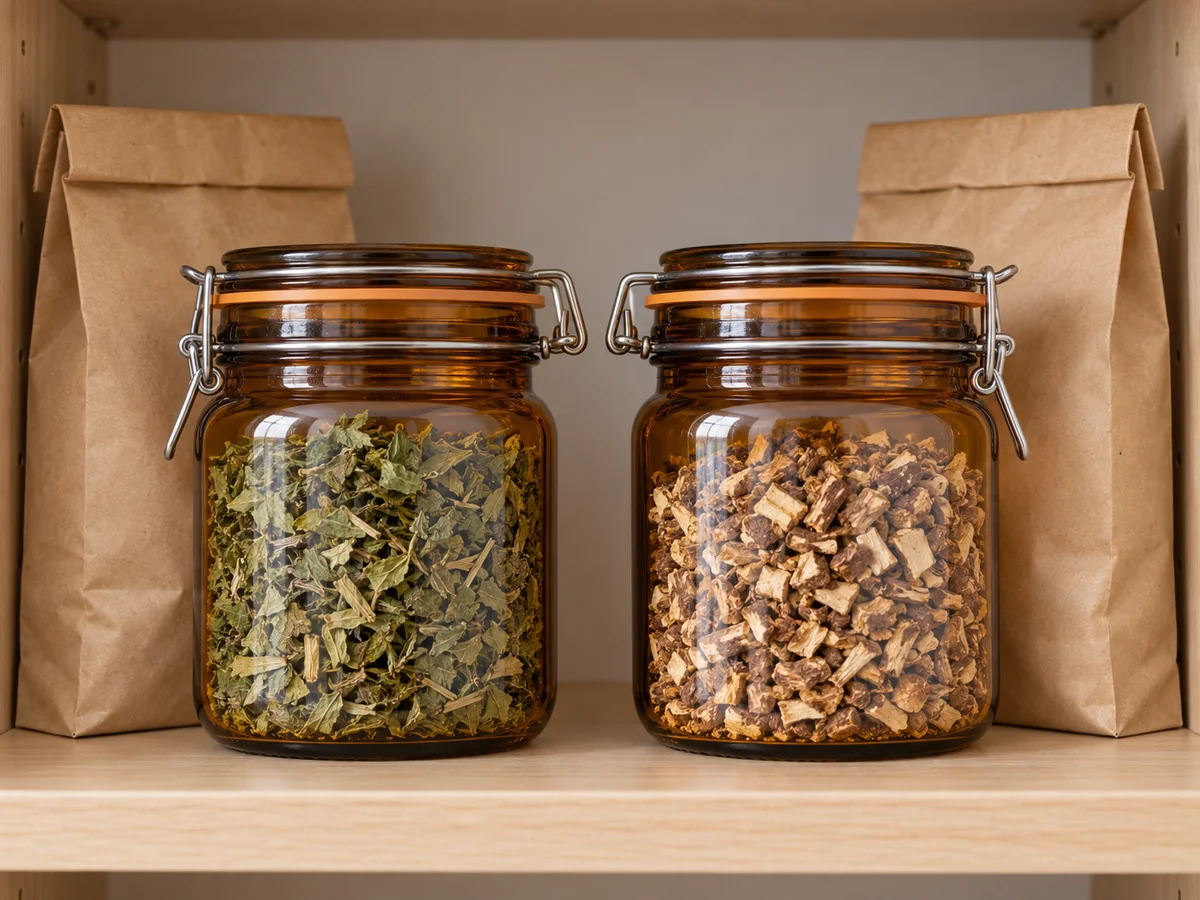
Store the material according to its label, in closed packaging in a dry place protected from heat, steam and light. Keep leaf and root separate and clearly identified so that you do not pick the wrong material when preparing a drink.
If you transfer tea to another container, retain the original pack or its details: ingredients, producer, batch, expiry date and instructions. Do not top up an old quantity with a new pack without recording the details, as this makes it harder to track expiry and origin.
Use clean, dry utensils. Do not use material with visible mould, signs of moisture or an unusual smell. A neat jar cannot correct poor storage or material of unknown origin.
The simplest approach is to make the quantity you expect to drink soon. Do not treat homemade tea as a long-lasting drink to keep for several days. Follow any specific storage instructions the producer gives for prepared tea; this guide does not establish a universal shelf life.
Frequently asked questions
Is dandelion tea made from the flowers?
This guide concerns labelled dried leaf and root. A flower product or blend has different ingredients; do not copy the quantities and methods given here for those products.
How long should dandelion root be boiled?
It depends on the product. In the example above, the producer calls for brief boiling followed by ten minutes of standing. It does not give an exact boiling time, so it should not be guessed. Check the current label.
Can dandelion tea be drunk every day?
There is no single rule for every product and person. Ingredients, the reason for use, duration, medicines and health conditions all matter. Do not introduce unlimited daily use simply because it is a plant product.
Does dandelion tea help with gallstones?
Do not use it for this purpose on your own. EMA describes restrictions for biliary diseases. If you have stones or other symptoms, seek medical advice rather than using tea to cleanse the gallbladder.
Preparation starts with checking the pack
For dandelion tea, first establish whether you have leaf, root or a blend. Measure the quantity and follow the method for that exact product. Keep traditional use separate from evidence of treatment, and check health restrictions before regular use.