Peppermint tea is often chosen for its fresh aroma and simple preparation. However, “mint” covers several species, and a drink made from leaves is different from concentrated essential oil. This guide explains how to choose the plant material, prepare the drink, and understand the limits of traditional use, with particular attention to heartburn.
Contents
Which mint is used for tea?
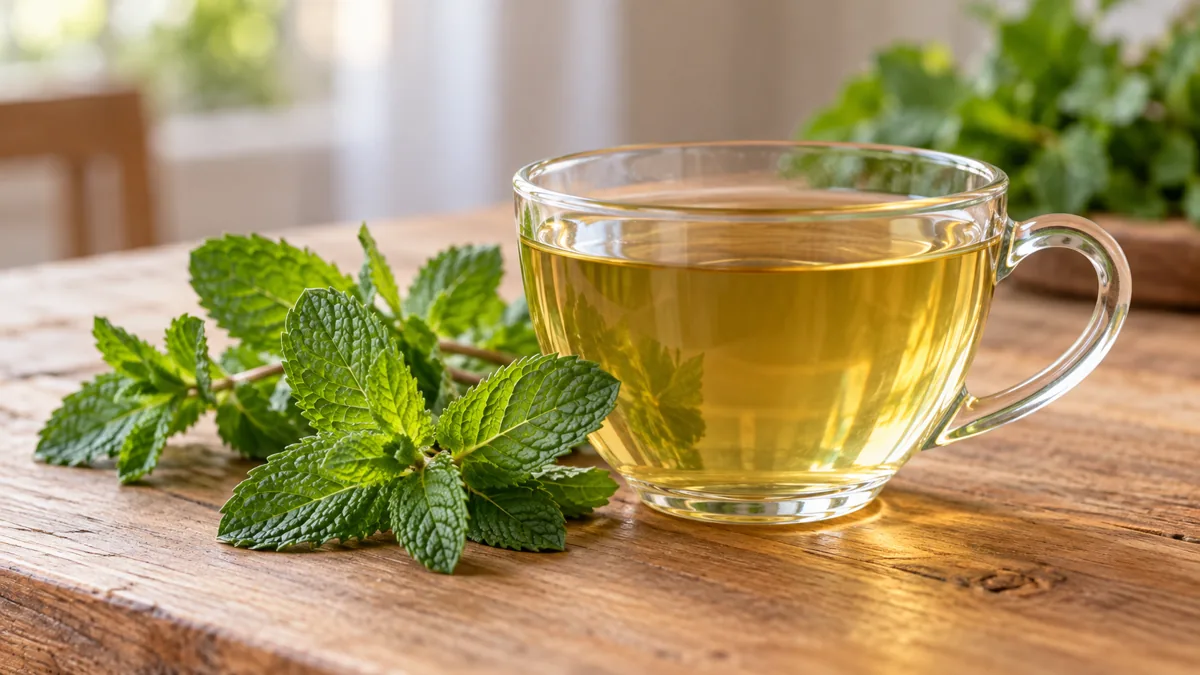
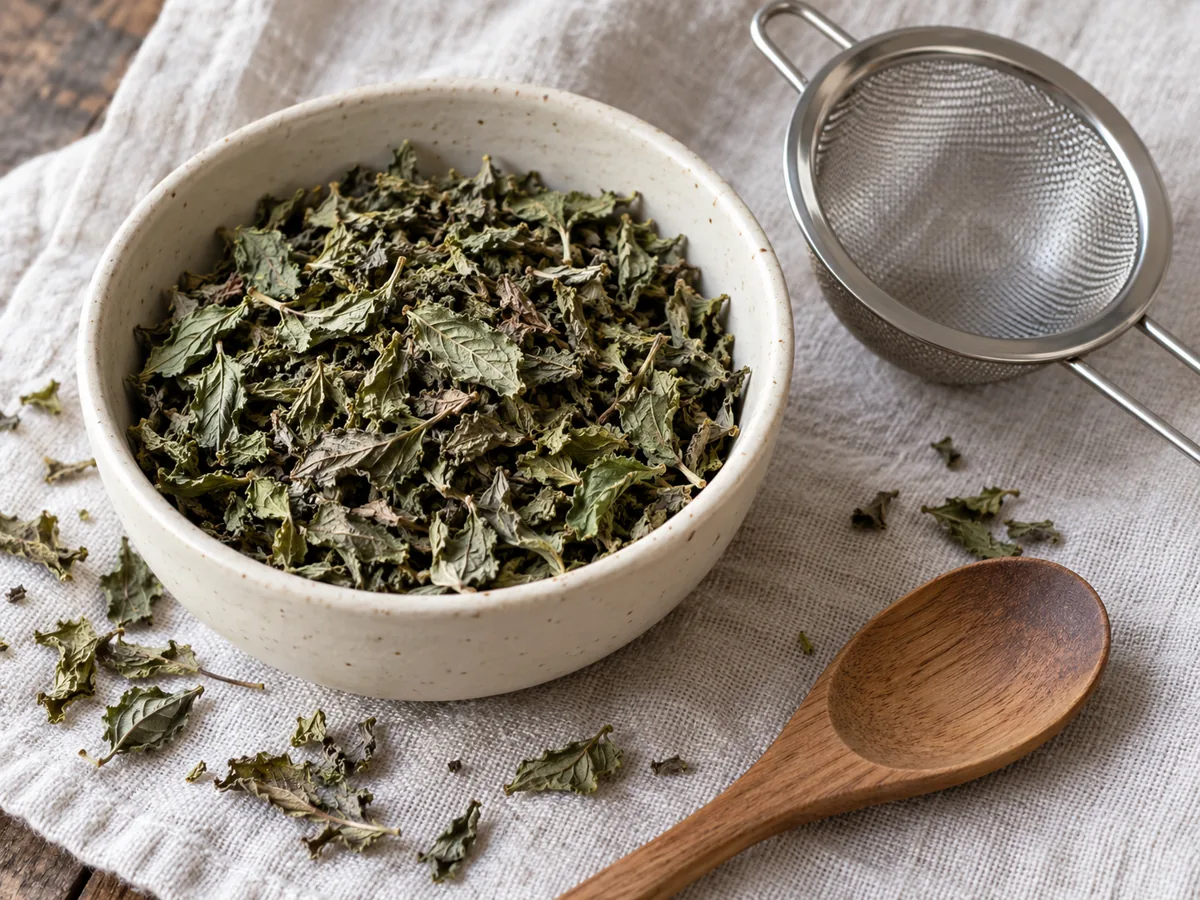
This article focuses on peppermint, Mentha × piperita, whose leaf is covered by the European Medicines Agency (EMA). Check the botanical name and ingredients on the package. A blend labelled only “herbal tea” may contain several plants, so information about one ingredient does not automatically apply to the entire product.
For kitchen use, choose a food-grade tea with a clear label. Loose dried leaves and tea bags can contain different amounts of plant material. A teaspoon is therefore not a precise universal measure, and not every tea bag produces a drink of the same strength.
If you use fresh mint, choose a plant from a reliable source that is intended for food use, wash the leaves, and inspect them. This article is not a guide to identifying wild plants: do not use an unidentified plant just because it smells similar to mint.
How do you prepare peppermint tea?
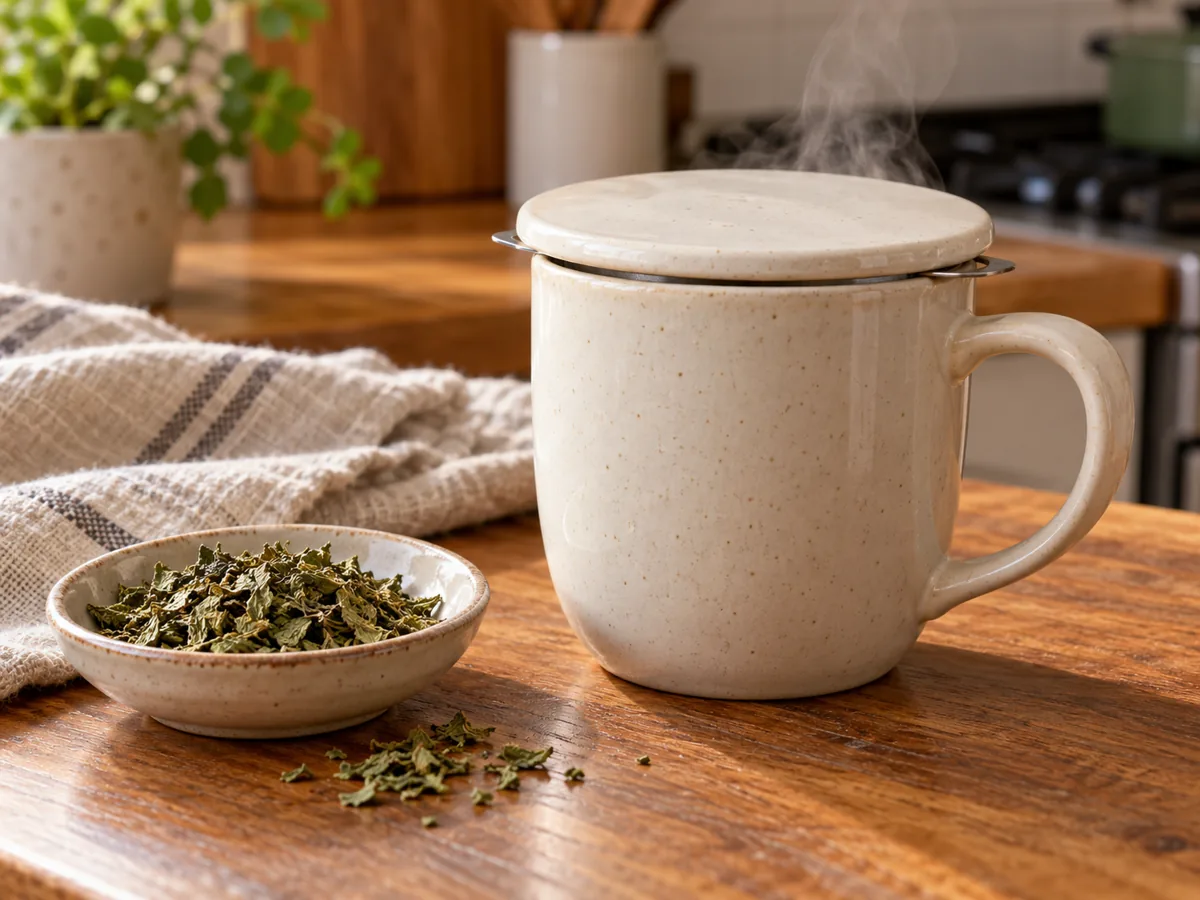
Read the instructions on your particular package first. They specify the amount of tea and water and the steeping time. For an ordinary food-grade drink, follow this sequence:
- Put the recommended amount of leaves or one tea bag in a clean cup.
- Add hot water according to the manufacturer’s instructions.
- Cover and steep for the time stated on the package; if it says 5–10 minutes, keep within that range.
- Strain the leaves or remove the tea bag.
- Wait until the drink is at a comfortable temperature before drinking.
To reproduce a taste you enjoy, use the same cup and measure next time. If the drink is too strong, check the amount and steeping time rather than making every cup differently. A stronger flavour does not prove a greater health benefit.
This is kitchen preparation, not a therapeutic dose. If the product is a herbal medicine, follow its leaflet and your pharmacist’s advice.
What is peppermint traditionally used for?
EMA describes the traditional use of peppermint leaf preparations for mild digestive complaints, including indigestion and flatulence. This assessment rests on longstanding use, with insufficient clinical evidence. It does not mean that every cup of tea has been shown to treat the cause of symptoms.
Do not expect the drink to provide a cure. If particular foods often cause discomfort, recording when it happens and speaking to a healthcare professional is more useful than continually making stronger tea. EMA advises seeking professional advice if symptoms worsen or last longer than two weeks.
Why is leaf tea different from essential oil?
Tea is made by steeping leaves in water; essential oil is a concentrated product. Research on oil capsules should not be presented as evidence for an ordinary cup of tea. NCCIH discusses these products and their risks separately.
Do not add aromatherapy oil to your cup or use it instead of leaves. Each product’s intended use, method of administration, and instructions matter. A bottle with a mint scent is not automatically an ingredient for a drink.
When should you be careful?
Heartburn and reflux: peppermint leaf preparations may worsen acid reflux and heartburn. Peppermint is therefore not a universal answer to “stomach trouble”. If it bothers you, stop using it and seek advice.
Gallstones and other bile duct conditions: EMA highlights the need for caution; seek advice before regular use.
Pregnancy, breastfeeding, and medicines: NCCIH distinguishes food amounts from medicinal amounts; there is not enough information about medicinal use during pregnancy and breastfeeding. If you take medicines, ask a doctor or pharmacist before using herbal products.
Children: EMA refers to children over four years of age for the herbal medicines it covers. This is not a recommendation to give tea to every child: follow the specific product’s instructions and your paediatrician’s advice.
NCCIH states that peppermint tea appears to be safe, but the long-term safety of consuming large amounts of peppermint leaf is not known. We do not set a universal daily number of cups. The drink should not delay assessment of new, persistent, or worsening symptoms.
Can you add honey?
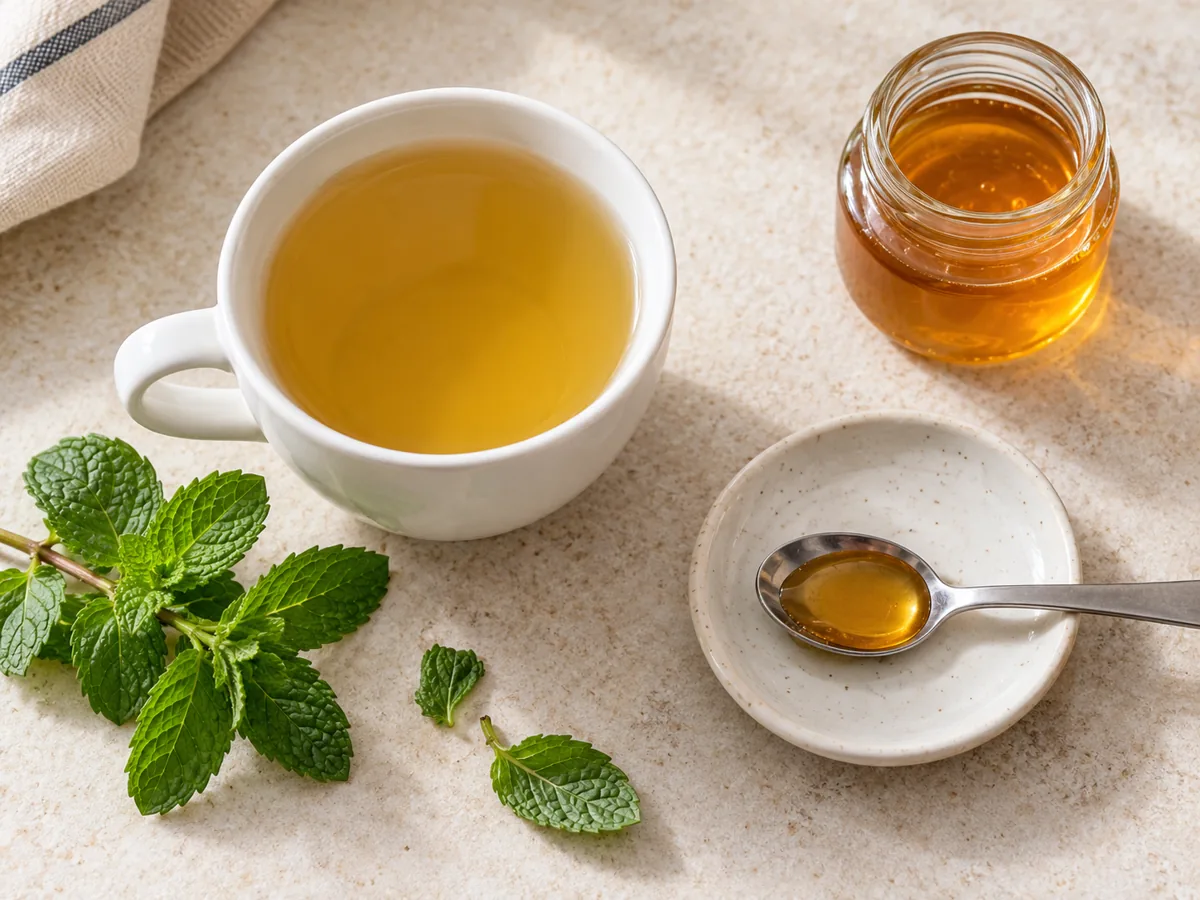
If you prefer a sweeter taste, let the tea cool a little first and add a measured amount of honey to taste. You can find a practical explanation in Honey in Tea. Honey remains a source of sugar and calories; see calories in honey to compare portions.
According to the CDC, honey must not be given to children under 12 months, including in a drink. Sweetening does not turn tea into a treatment.
For another herbal drink, you can also read our Chamomile Tea guide. Precautions depend on the plant; information about peppermint should not automatically be applied to chamomile.
Frequently asked questions
Is peppermint tea suitable for every digestive complaint?
No. Traditional use is not a diagnosis, and peppermint may worsen heartburn. Seek professional advice for persistent problems.
Should you add essential oil to tea?
Do not use aromatherapy oil as a kitchen substitute for leaves. These are different preparations with different instructions.
Does a longer steeping time make better tea?
Longer steeping changes the flavour; it does not prove a better therapeutic effect. Follow the label and adjust your kitchen preparation to your taste within its instructions.
Conclusion
Prepare peppermint tea from known plant material according to the package. Distinguish traditional use from proven treatment, and leaves from concentrated oil. Extra care is needed with heartburn, bile duct problems, and when choosing products for children, pregnancy, or breastfeeding.