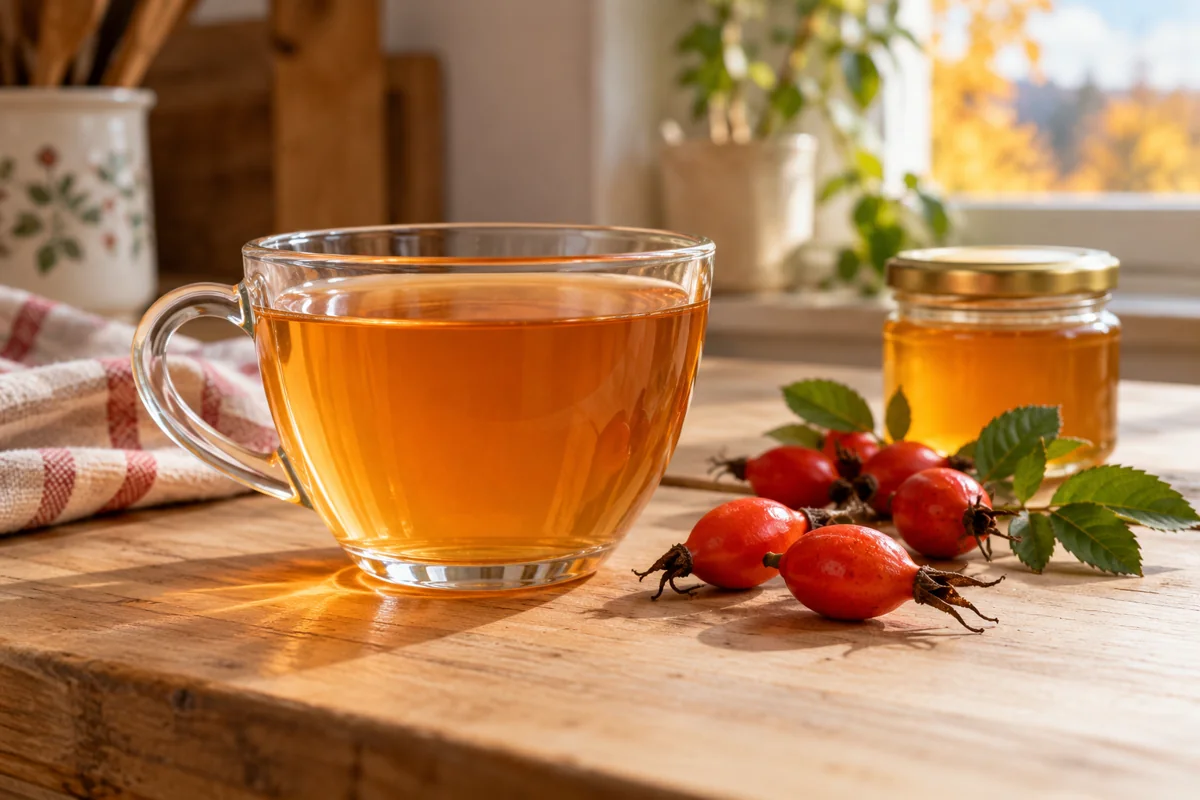
Rosehip tea is made by pouring freshly boiling water over dried rose hips and straining the drink carefully. For a shop-bought product, follow the amount and steeping time on the label: whole hips, chopped pieces and tea bags may need different preparation.
Rose hips can be rich in vitamin C, but that does not tell you how much is in your cup. Enjoy the tea as a fruity drink, with realistic expectations rather than as a substitute for a varied diet or medical treatment.
Contents
What are rose hips, and what does the tea taste like?
Rose hips are the fruit of a rose plant. In Serbia, the term often refers to the dog rose, Rosa canina, although other rose species also produce hips used for food and drinks.
This tea uses the fruit, rather than rose petals. Knowing that distinction helps when you compare products or look for brewing instructions.
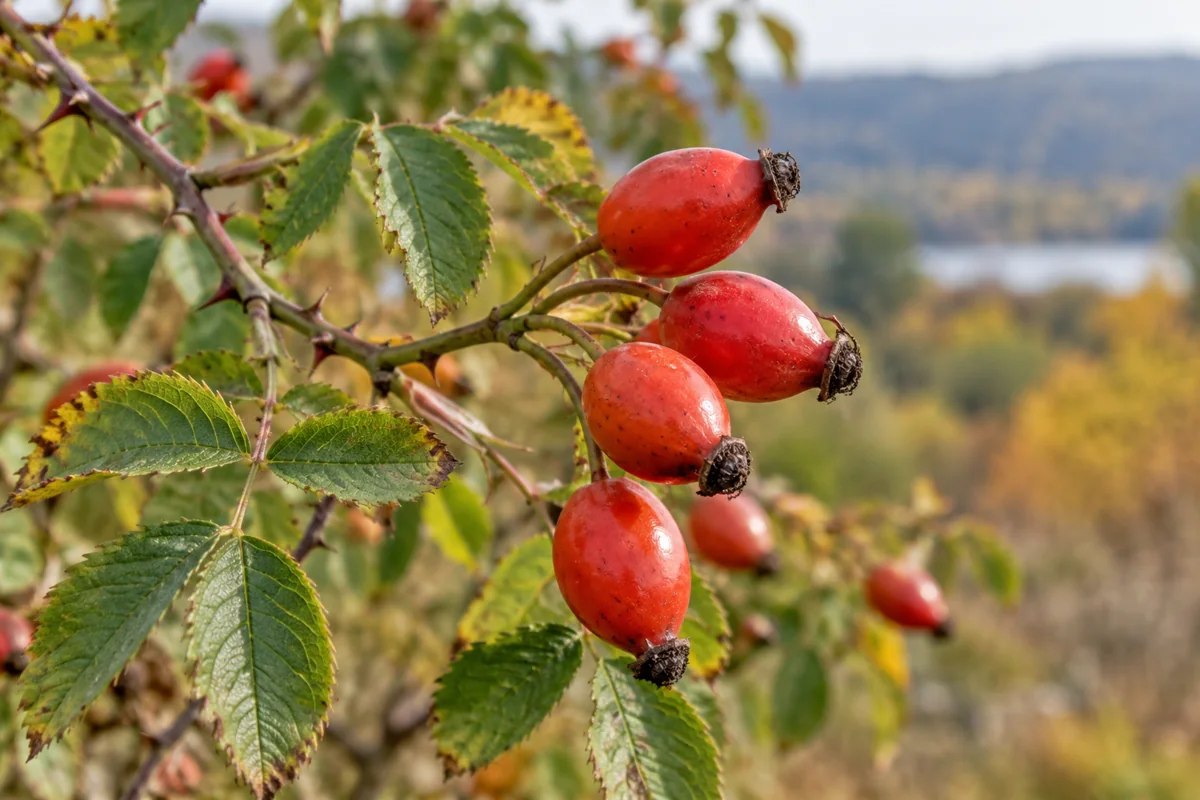
Pure rosehip tea usually has a mildly tart, fruity taste. Its colour and strength depend on the ingredients and preparation, so a deep red colour is not a measure of quality or vitamin C content.
Pure rose hips or a blend with hibiscus?
Read the ingredients before buying. A product labelled with rose hips may also contain hibiscus, apple, flavourings or other plants that change the drink’s taste and properties.
That is why a cup you enjoyed elsewhere may taste sharper than the one you make at home. Choose by the label and your preferences, rather than by the colour in a photograph.
How do you brew rosehip tea from dried hips?
A straightforward starting point is cleaned, chopped, food-grade dried rose hips sold for tea. The instructions on the particular package take priority over a general method.
Ingredients and equipment for one cup
- About 1 level teaspoon of cleaned, chopped dried rose hips, unless the manufacturer specifies a different amount.
- 200–250 ml of freshly boiling water, as a practical serving size.
- A heatproof cup or teapot with a lid.
- A fine strainer; for home-prepared hips, suitable clean fine cloth or a beverage-safe paper filter if needed.
- Optional: a little honey, added after the tea has cooled.
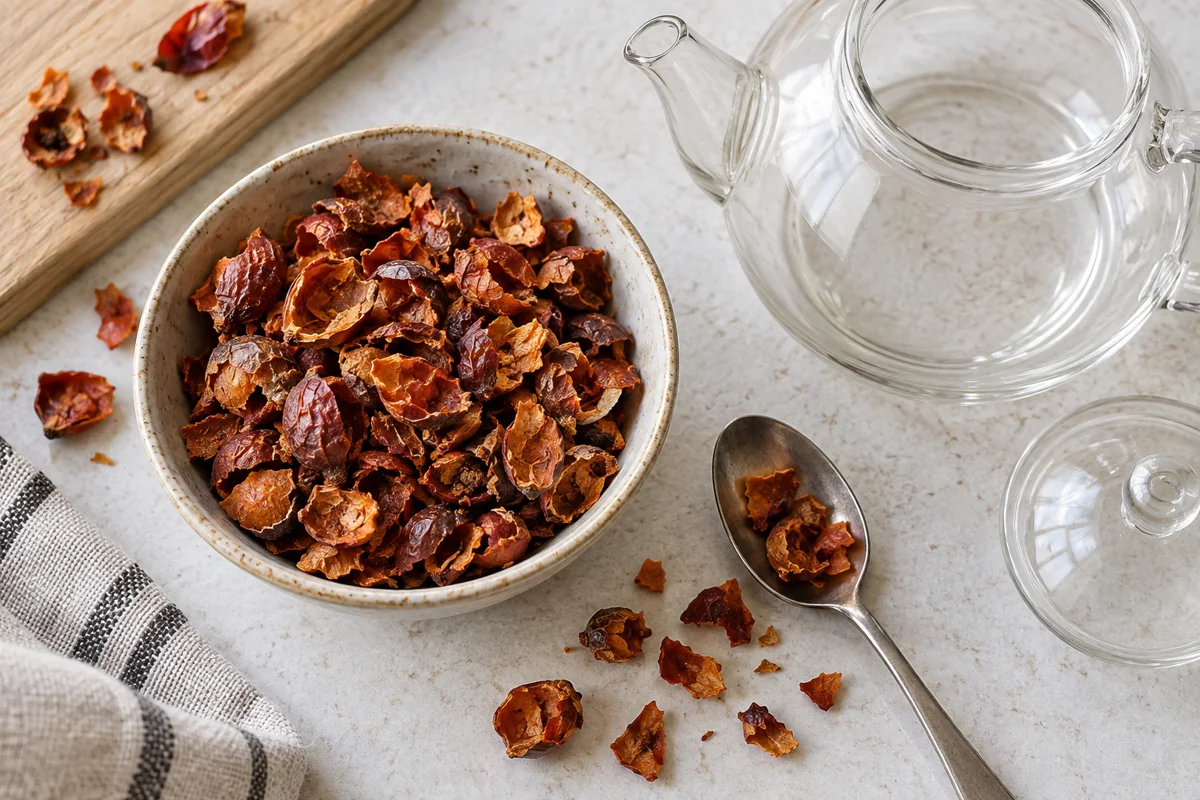
These quantities are a starting point for flavour, not a medicinal dose. The University of Alaska Fairbanks guide to wild roses describes about a teaspoon of dried, crushed hips, boiling water and 5–10 minutes of steeping; the cup volume above is a practical editorial suggestion.
Step-by-step preparation
| Step | What to do | Keep in mind |
|---|---|---|
| 1 | Put the rose hips in a clean cup or teapot. | Use material intended for food or drinks. |
| 2 | Pour over freshly boiling water. | Lukewarm water is not the recommended starting method for ordinary dried fruit tea. |
| 3 | Cover and steep according to the label. | For cleaned, chopped hips without different instructions, 5–10 minutes is a general guide. |
| 4 | Strain carefully. | Coarse particles and fine hairs should not remain in the cup. |
| 5 | Let the tea cool before drinking. | Add honey to taste if you like; it is optional. |
If the tea tastes weak, first check the proportion of hips to water and the recommended steeping time. Do not assume every product needs prolonged simmering: larger pieces and whole hips may come with different instructions.
For hygienic preparation of dried herbal and fruit teas, Germany’s Federal Institute for Risk Assessment recommends boiling water and at least five minutes of steeping. Laboratory extraction methods do not replace this advice for preparation at home.
Why does careful straining matter?
Inside rose hips are seeds and fine hairs. If you prepare your own hips, remove these during cleaning and strain the drink finely, rather than drinking the sediment with the tea.
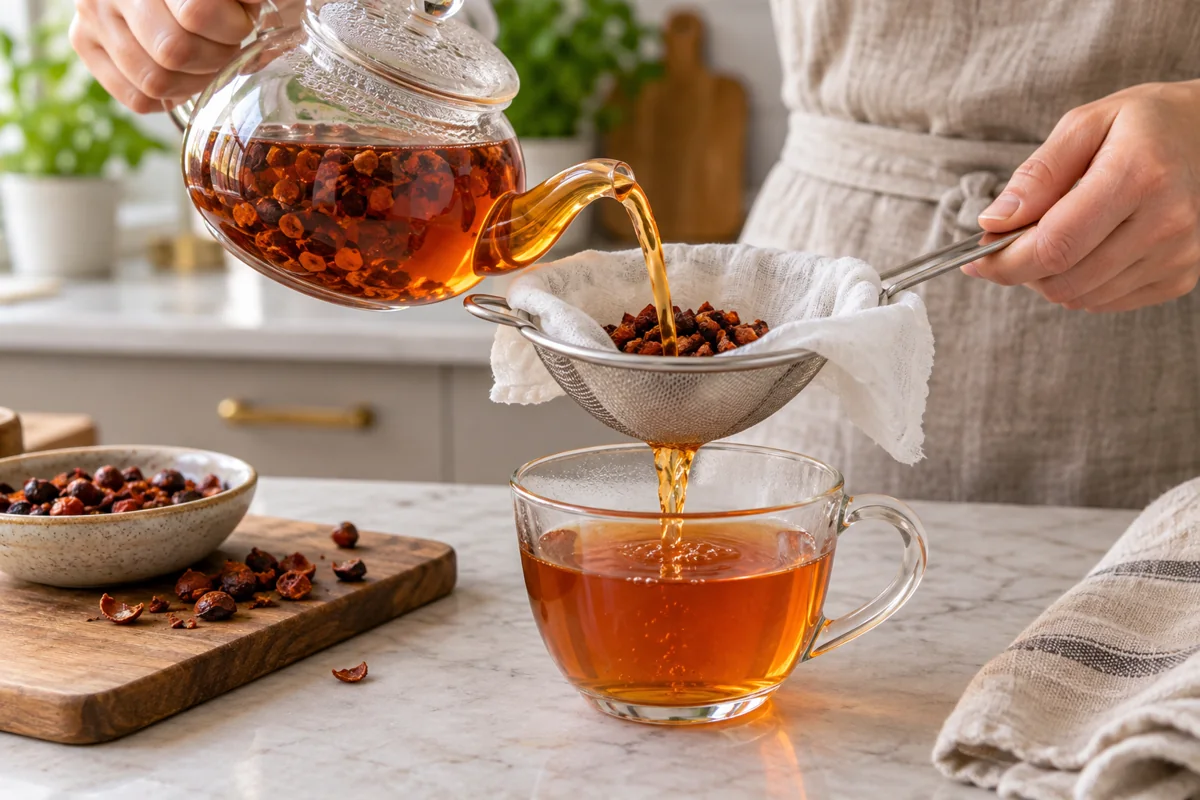
Do not rely on a coarse strainer alone if small particles pass through it. If you can see debris in the cup, strain the tea again through a suitable fine filter.
If you pick your own rose hips
Only collect a plant you can identify confidently, from a location free from spraying and pollution. The photograph in this article illustrates the subject; it is not enough to identify a plant for harvesting.
Buying prepared, food-grade material is simpler for a beginner. Cleaning and drying your own hips takes more care than removing fruit from a branch.
How much vitamin C is in rosehip tea?
There is no single reliable figure for a homemade cup. The rose species, processing, storage and brewing method affect how much vitamin C remains in the dried material and passes into the water.
A nutrition table for fresh rose hips therefore cannot be applied directly to the finished drink. A stated vitamin amount for a particular tea needs appropriate product testing and information from the manufacturer.
Does boiling water destroy all the vitamin C?
Vitamin C is sensitive to heat, but saying that hot water immediately removes all of it oversimplifies the process. Brewing involves both the transfer of compounds into water and their breakdown.
Research on particular samples does not establish one ideal temperature for every cup at home. Follow a safe hot preparation method and the product label, without repeatedly reheating the tea in an attempt to make it more beneficial.
What does that mean for immunity?
Vitamin C contributes to normal immune function. That does not prove that a particular cup of tea prevents colds, treats an infection or supplies your daily vitamin C needs.
Studies of rosehip powder or extracts are not automatically evidence for the effects of ordinary tea. The form of the product and what was actually tested matter.
Rosehip tea with honey: when should you add it?
Add honey once the tea has cooled to a comfortable drinking temperature. This makes it easier to judge the sweetness and preserves more of honey’s pleasant aroma.
Start with a small amount and taste before adding more. Honey still contributes sugar, so being natural is not a reason to use it without moderation.
Read our guide to adding honey to tea for more practical advice.
According to CDC infant-feeding guidance, honey should not be given to children younger than 12 months, including in tea. Adding it to a hot drink does not make it suitable for an infant.
When should you take extra care?
If you have previously reacted to rose hips or another ingredient in a blend, avoid that product. Stop drinking it if you notice symptoms you associate with the tea.
During pregnancy or breastfeeding, with a chronic condition, or while taking regular medication, check the ingredients with a doctor or pharmacist before using large amounts or treating the tea as a remedy. This guide does not establish a universal medicinal dose or suggest that every blend is equally suitable.
For a young child, discuss suitable drinks with a paediatrician. Tea should not replace appropriate nutrition or treatment for symptoms.
If a tart drink makes your stomach uncomfortable, there is no need to force yourself to finish it. Choose something that agrees with you, and seek advice if the discomfort persists.
How should you store dried rose hips and brewed tea?
Store the dried material as directed on the label, protected from moisture, light and heat. Close the package securely after opening and use clean, dry utensils.
Do not use material with mould, dampness or an unusual smell. Pouring boiling water over a spoiled product is not a way to make it fit to drink.
It is best to brew only what you expect to drink soon. Do not leave tea at room temperature for hours or keep topping up an old batch with fresh water.
Frequently asked questions
Is pure rosehip tea caffeine-free? A drink made only from rose hips does not contain caffeinated tea leaves. With blends, check for black tea, green tea or another source of caffeine.
Does it have to be bright red? No. Ingredients and preparation affect its appearance, and blends containing hibiscus can look quite different from pure rose hips.
Do more rose hips mean greater health benefits? There is no such rule. A stronger flavour does not demonstrate a medicinal benefit; follow the label and choose an amount you tolerate.
Can you cold-soak it instead of using boiling water? Follow the hot method for an ordinary dried product. Use cold preparation only when the specific product is intended for it and provides clear instructions.
A pleasant cup can be simple
Choose clean, food-grade ingredients with a clear label, follow the brewing instructions and strain thoroughly. Honey is a matter of taste, while vitamin C is a reason to understand the difference between the fruit and the drink, without promises one cup cannot guarantee.
For a different flavour, explore our guides to linden tea and chamomile tea. If you prefer a mild honey for sweetening, learn more about acacia honey.