Honey for face care is often suggested as a homemade mask for acne, dry skin or redness. However, honey from a food jar, a cosmetic containing honey and a medical preparation are different products. That distinction matters when reading research or deciding what to put on your skin.
This guide looks at what has been studied, the limits of the evidence and ways to avoid unnecessary irritation. Everyday care and treatment need to be considered separately: persistent acne, pronounced redness and damaged skin call for assessment rather than promises attached to a mask recipe.
Contents
What does using honey on your face actually mean?
First check which product is being discussed. An ingredient name alone does not tell you how a preparation was made, who it is intended for or what benefit to expect.
| Product | What to check | How to interpret claims |
|---|---|---|
| Honey intended as food | Label, origin and storage instructions | Food quality alone does not establish benefits for facial skin |
| A cosmetic containing honey | Full ingredients, purpose, directions and expiry | Consider the finished formula rather than one ingredient |
| A medical preparation containing honey | The specific product and medical purpose | Findings apply to the preparation and skin condition studied |
DermNet describes medical-grade honey for wound care as sterilised, laboratory-tested material available in different preparations. A jar of breakfast honey does not become such a product because it is natural or comes from a particular plant.
Different bee-derived ingredients are not interchangeable either. Honey, propolis and wax have different roles and compositions. For an introduction, see our guide to bee products and their uses.
What does research say about acne and redness?
Saying that honey has been studied on skin is too broad to support a practical conclusion. You need to know what was applied, what it was compared with and which condition was assessed. A result for one problem should not be transferred to another.
Acne: no added benefit established for the preparation tested
A randomised trial published in 2016 tested a preparation containing 90% medical-grade kanuka honey and 10% glycerine, added to a regimen using antibacterial soap. After 12 weeks, the trial did not establish greater effectiveness than the comparison regimen alone.
This does not support a promise that a homemade mask clears acne. At the same time, one trial does not prove that every possible honey-containing formula is ineffective. The study is not a recommendation to use antibacterial soap for everyday facial care.
Rosacea: a different finding for a specific product
In a 2015 rosacea trial, a preparation containing 90% medical-grade kanuka honey and 10% glycerine performed better than the control cream over eight weeks. This finding concerns a particular formulation and a diagnosed condition; it does not show that kitchen honey treats every type of facial redness.
Acne and rosacea are different conditions. If you do not know why your face is red, or changes persist, an assessment can help you choose appropriate care and treatment.
Honey and dry skin: what can you expect?
When a cream contains honey, its effects also depend on the other ingredients and how they are combined. Seeing honey on the label does not tell you that the product will suit your skin better than another moisturiser.
For dry skin, the American Academy of Dermatology recommends fragrance-free moisturising care, including applying moisturiser after washing while skin is still slightly damp. If skin keeps cracking, itching or stinging despite ordinary care, the cause needs to be checked.
Do not judge skin care only by how a mask feels immediately afterwards. How your skin tolerates a routine over time matters more. When comparing products, consider the whole formula and directions without introducing several new preparations at once.
Homemade honey masks: what to avoid
The studies above do not provide a validated application time for ordinary food honey, a schedule for homemade masks or a recipe suitable for everyone. There is therefore no basis here for presenting ten, twenty or more minutes as a scientifically established measure.
Avoid turning a honey mixture into a coarse scrub or adding ingredients simply because they are edible. The AAD warns that scrubbing and frequently switching products can irritate acne-prone skin.
Take particular care with citrus juices. DermNet describes reactions following contact with certain plant juices, including lime, and exposure to sunlight. Inflammation, blisters and lingering pigmentation can result. Adding honey does not establish that such a mixture is safe.
Do not use food honey as a replacement for a wound-care preparation or treatment for infection. Damaged skin, a burn or a worsening skin change requires appropriate assessment.
How to choose cosmetics containing honey
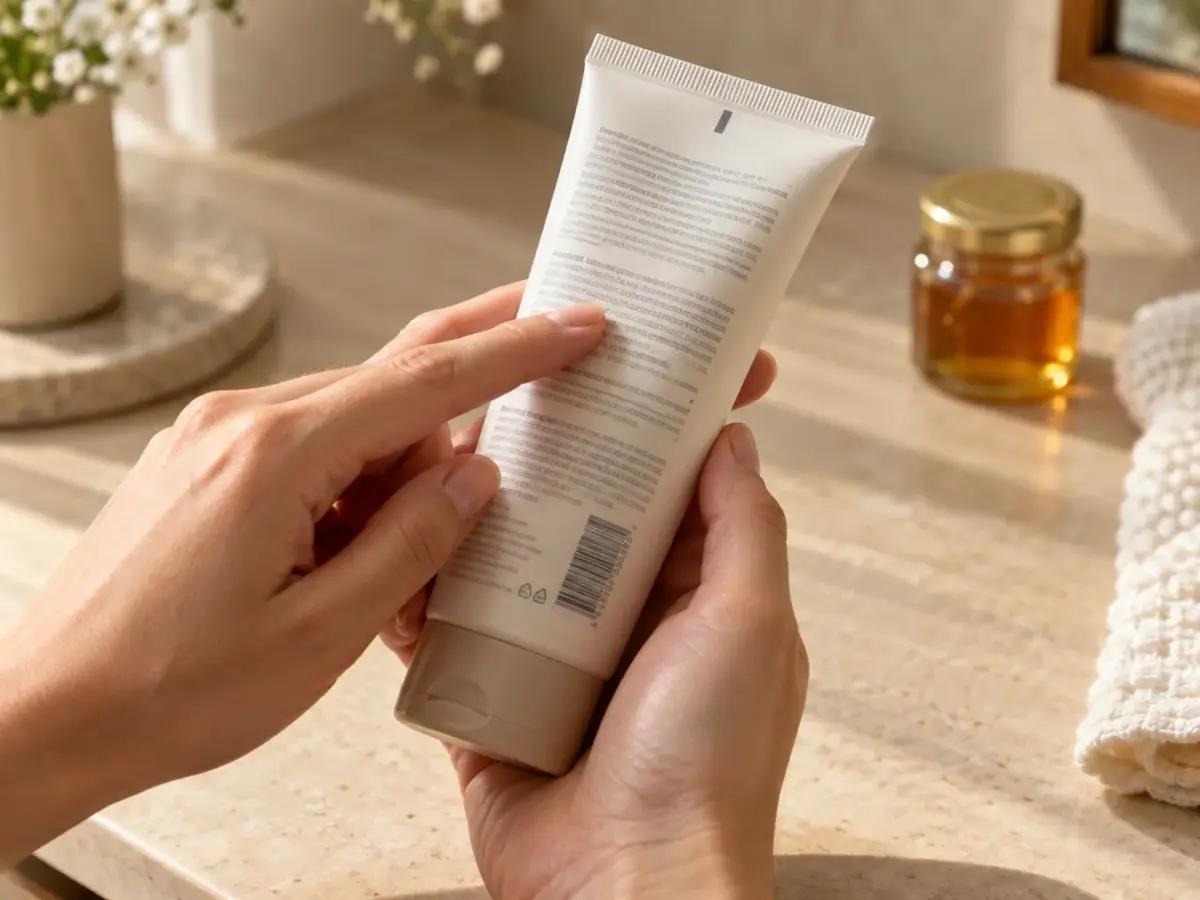
Choose according to the product’s purpose and complete label. Check rinsing instructions, the period after opening and ingredients you have reacted to before. The word “natural” does not give you enough information about how your skin will tolerate a product.
Propolis is a separate ingredient and can cause allergic contact dermatitis. A product containing several bee-derived ingredients is not automatically better tolerated. Beeswax is also different from honey, so experience with one preparation does not describe every other product.
Trying a new skin care product
The AAD advises testing a new skin care product on a small area, such as the underside of your arm, twice daily for seven to ten days. Do not leave a rinse-off product on indefinitely; follow its directions.
This can help reveal an unwanted reaction, but it is different from diagnostic patch testing by a dermatologist. If redness, itching or swelling develops, wash off the product and stop using it. If you have a known allergy, do not deliberately expose yourself again without medical advice. This guidance concerns cosmetics; it is not approval of a homemade mask.
When extra caution is needed
If you have already reacted to honey, propolis or a cosmetic, show a dermatologist the exact ingredients. Knowing the ingredient that causes a problem is more useful for product selection than a general division into natural and synthetic products.
With rosacea, eczema or currently irritated skin, a home experiment should not replace your existing care plan. Seek professional assessment for painful or persistent acne, scarring and changes that are getting worse.
Sudden swelling of the lips, tongue or throat, or difficulty breathing, requires emergency medical help. Do not try to manage that reaction with another mask or by repeating a home test.
A simple everyday skin care routine
A starting routine can be straightforward: gentle cleansing, suitable moisturising care and sun protection. Consider a cosmetic containing honey as a possible product within that routine rather than an essential step for everyone.
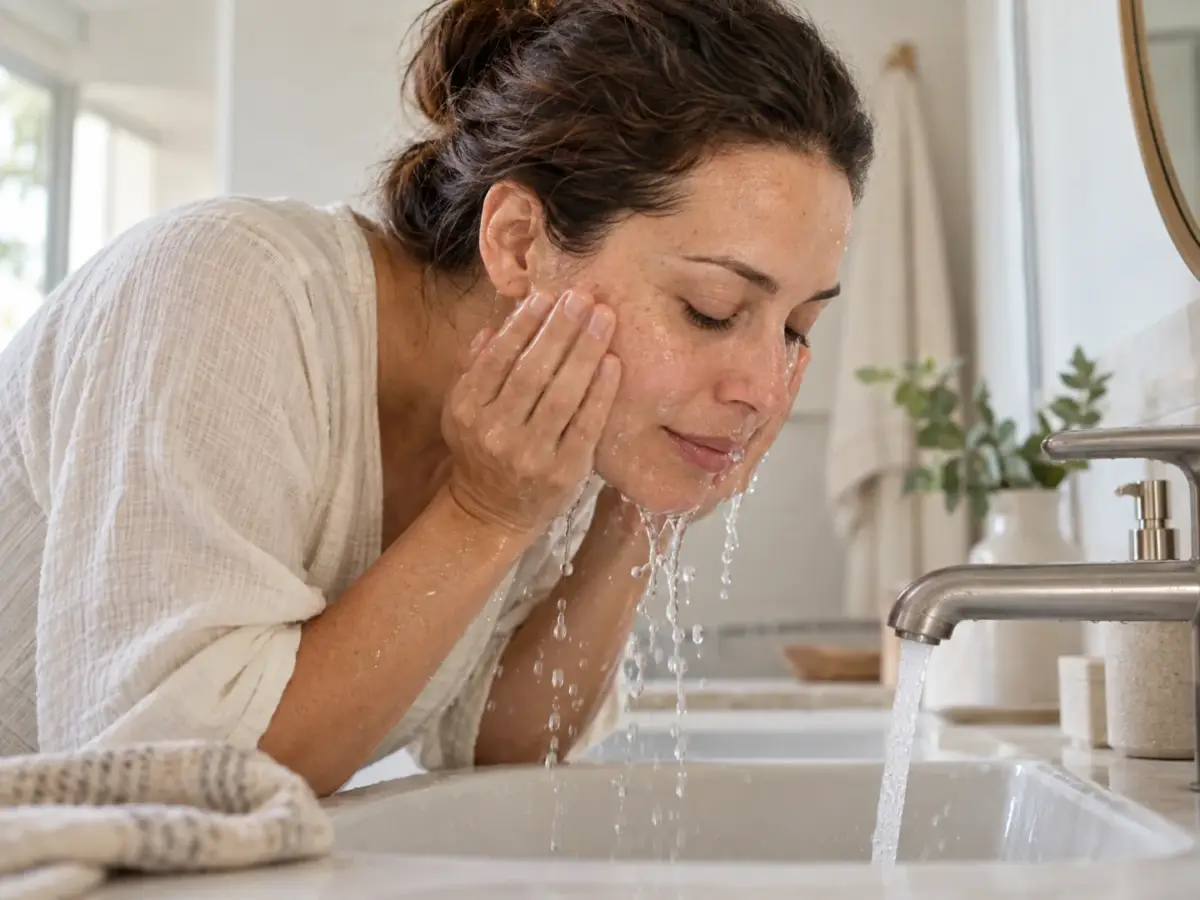
The AAD recommends washing gently with lukewarm water and your fingertips, without harsh scrubbing. Pat skin dry afterwards. Sun protection should be broad-spectrum, with SPF 30 or higher, alongside shade and other protective measures.
When trying a new preparation, note what you changed and how your skin responded. Introducing several masks and creams together makes it harder to identify a product that irritates your skin. Do not keep using an irritating preparation just because its label lists an ingredient you hoped would help.
Frequently asked questions
Does honey for face care clear acne?
That result cannot be promised. The trial discussed above did not establish an added benefit of the specific preparation for acne; a homemade mask is different from the formulation studied. Persistent problems need assessment and an appropriate treatment approach.
Is acacia or manuka honey better for facial skin?
Plant origin and food quality alone do not establish that one honey provides better facial care. Recognising genuine honey concerns choosing food rather than confirming dermatological effectiveness. For cosmetics, consider the finished product and its purpose.
How long should a honey mask stay on?
For a cosmetic mask, follow the manufacturer’s instructions. For ordinary honey from a food jar, the evidence discussed here does not establish a universal procedure or application time. Leaving it on longer does not prove better skin care.
Can food honey be put on a small wound or burn?
Do not use it as a substitute for a medical preparation. Medical-grade honey and its application differ from food honey; discuss care for damaged skin with a healthcare professional.
Choose care for the product and your skin
Using honey for face care is not one uniform method. The useful starting point is to check the purpose, ingredients and evidence for the specific product. A simple routine your skin tolerates, together with timely assessment of problems, gives you a clearer path than switching between untested homemade masks.