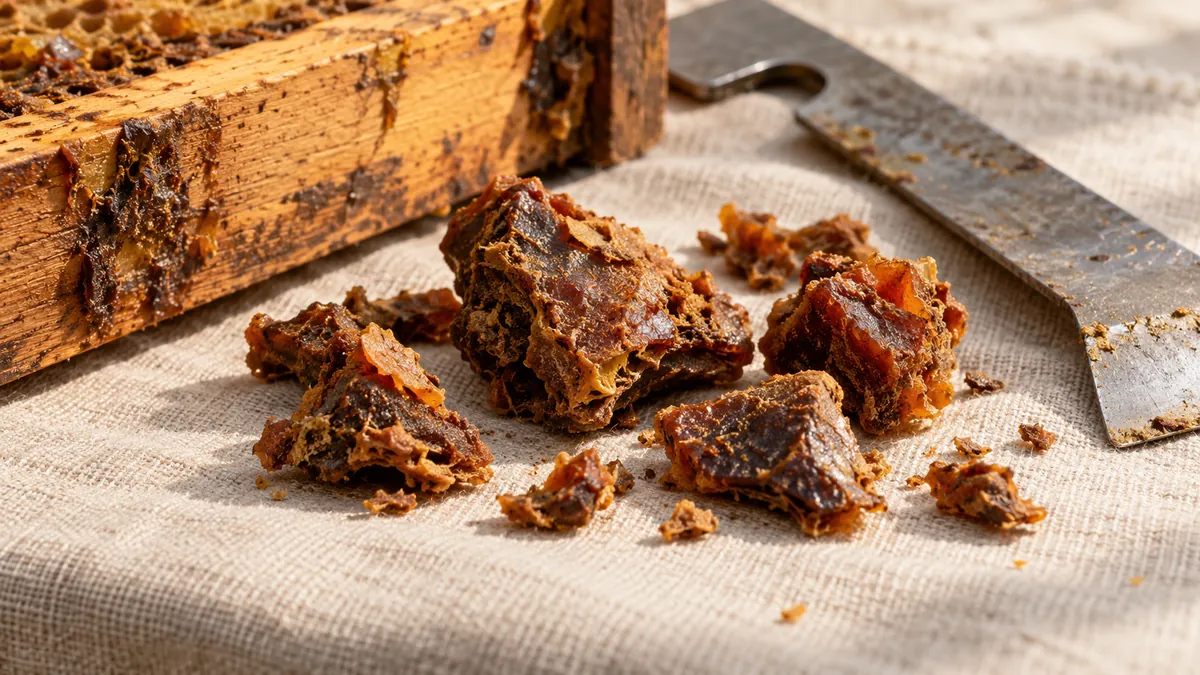
Propolis is a resinous material that bees bring into the hive and mix with wax and their own secretions. Beekeepers often call it “bee glue” because it is sticky and can be seen along the joints of hive frames. It is also sold in various preparations, but what it does in a beehive and what a product might do for a person are separate questions.
Here is how bees make propolis, why one sample can differ from another, and what a product label should tell you. Propolis is not a substitute for diagnosis or medical treatment.
Table of Contents
What is propolis, and how do bees make it?
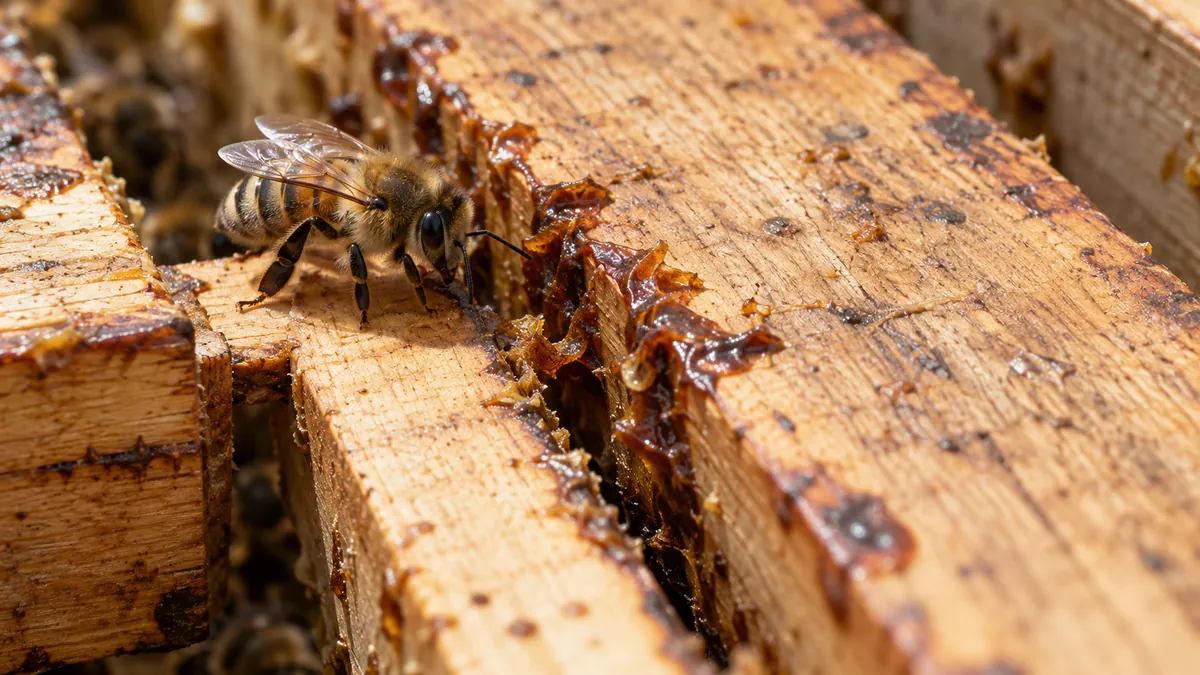
Bees collect resins from plants, especially buds, and carry them back to the hive. There they work the material and mix it with some beeswax. According to the FAO guide to bee products, the composition of propolis depends on the plants available to the bees, the location, and the season. There is no single colour, scent, or fixed chemical composition shared by every sample.
Propolis is a separate bee product. Bees make honey mainly from nectar or honeydew, while they secrete wax and build comb with it. Our guides to how honey is made and how bees make and use beeswax explain those processes.
What do bees use propolis for?
Bees use propolis to seal small gaps, line parts of the hive interior, and adjust the size of an entrance. The sticky material helps them maintain their living space. That does not mean every product containing propolis has the same proven effect in the human body. A laboratory finding, a use inside a hive, and a clinical result in people are different kinds of evidence.
Why does propolis vary in colour and texture?
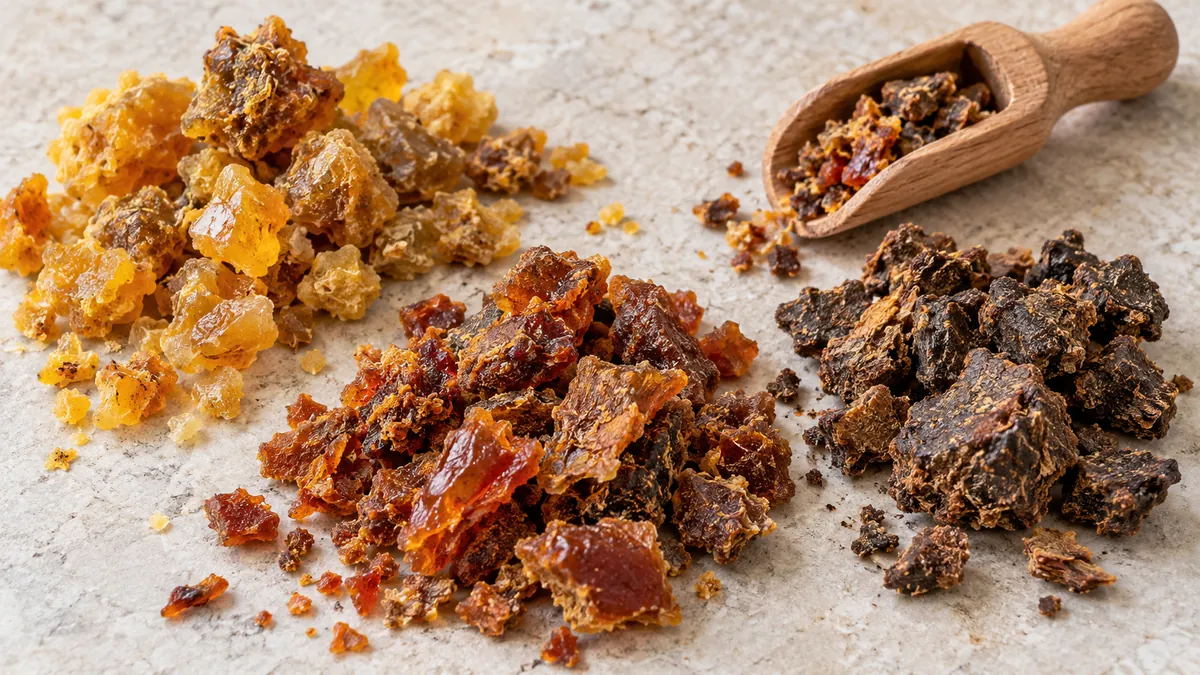
Raw propolis may be yellowish, reddish, or dark brown, depending on the plant resins and other components. It tends to be softer and stickier when warm and harder and more brittle when cold. Appearance alone cannot establish a preparation’s origin, purity, or suitability. FAO describes these variations and how the source material affects composition.
A beekeeper may collect propolis from parts of the hive or from a purpose-made mesh. Obvious debris should be removed before processing, and buyers should be told what the product is and how it was prepared. A photograph or dark colour is not a laboratory test.
What forms are sold, and what should you check on the label?
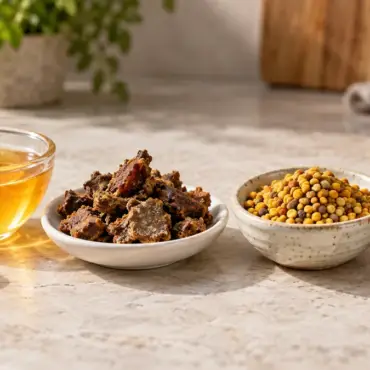
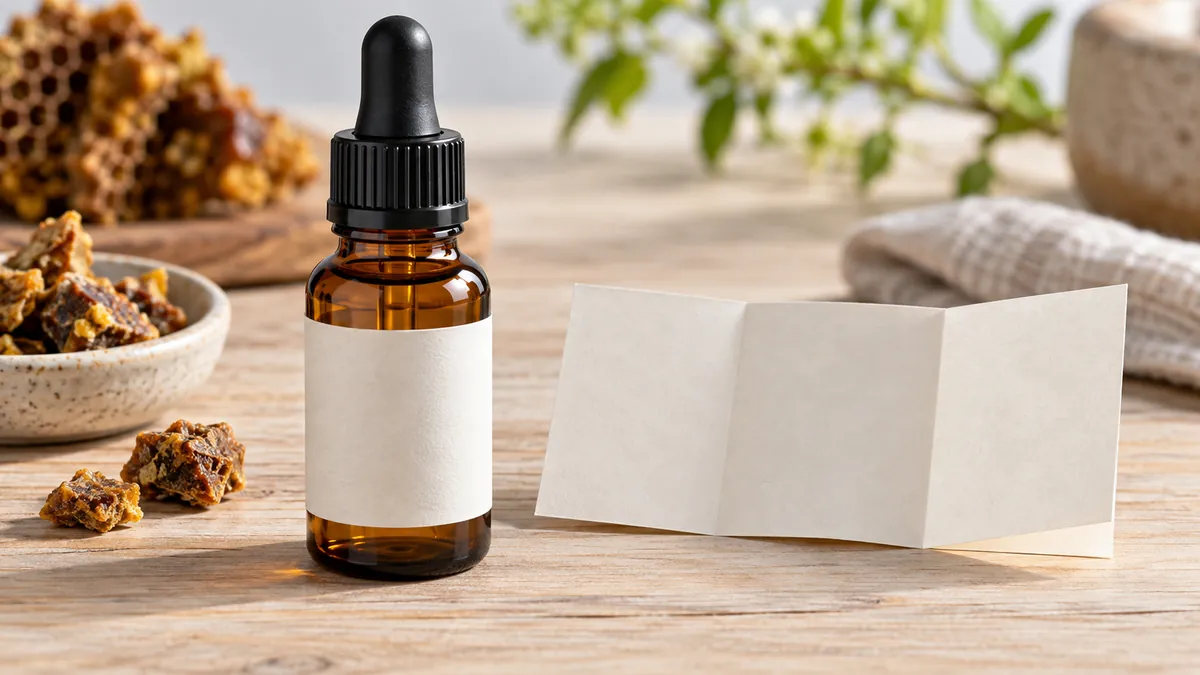
Products include raw propolis, drops or tinctures, sprays, lozenges, and cosmetics containing an extract. Not all drops have the same composition. Check the amount or concentration of extract, other ingredients, whether the solution contains alcohol, directions for use, producer, and expiry date. Follow the label of the particular product rather than a general dose mentioned in an article or on social media.
Alcohol-based and alcohol-free extracts need not contain the same range of dissolved substances. FAO describes several extraction methods. The word “propolis” alone does not tell you that two bottles are interchangeable.
What is known about use in people?
Researchers have studied propolis and its extracts in the laboratory and in smaller clinical studies, including some applications on skin and in the mouth. A result for one formulation or set of study conditions cannot simply be applied to every tincture, spray, or health concern. FAO cautions that many reports are preliminary and that stronger clinical research is needed to support medical claims. We do not present propolis as a treatment for infections or chronic disease, or as a proven way to “boost immunity.”
Who should be cautious?
Propolis can cause an allergic reaction, including contact dermatitis in susceptible people. A recent review of contact allergy to propolis discusses this issue. If you have reacted to propolis or an ingredient in a particular preparation before, avoid it. Stop using a product if you develop a rash, itching, swelling, or another unwanted reaction, and seek medical advice according to the severity of your symptoms.
For children, during pregnancy or breastfeeding, or when taking medicines, discuss the particular product and dose with a doctor or pharmacist. Alcohol-containing drops make reading the label especially important. Do not put raw propolis or a tincture into the eyes, on a serious wound, or on damaged skin without professional advice.
Frequently asked questions
Is propolis the same as honey?
No. Propolis comes mainly from plant resins that bees process, whereas honey is made from nectar or honeydew. A product can contain both, but its label should make that clear.
Is darker propolis better?
Colour alone cannot tell you that. Plant sources affect the shade and composition. Consider the origin, processing, and appropriate information about the specific product instead.
Can propolis drops replace medicine?
No. If you have symptoms or a diagnosed condition, follow medical advice and prescribed treatment. Discuss any additional preparation with a healthcare professional.
Conclusion
Propolis is a variable mixture of plant resins and wax with a clear role in the hive. For a buyer, the most useful details are the ingredients, type of extract, presence of alcohol, and directions for that particular product. Awareness of possible allergic reactions matters more than promises that cannot be carried from a laboratory finding into everyday use.