
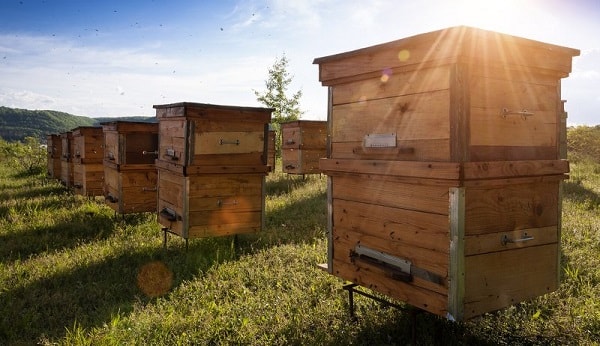
A beehive is a special structure that helps beekeepers in raising bees and collecting honey. Beehives allow bees to build their honeycombs, providing them with a safe environment for living and working, while beekeepers have access to the bees and products such as honey, wax, and pollen. Beekeeping is an ancient practice used not only for honey production but also for plant pollination, which is a key ecological process. There are several types of beehives depending on the needs and goals of the beekeeper.
Types of Beehives
Top-bar beehives
This type of beehive is easy to make and allows bees to develop naturally. In these hives, bees build their honeycombs on horizontal bars, giving them more space to develop. It is mainly used in organic beekeeping.
Langstroth beehives
Langstroth hives are the most popular type of modern beehives worldwide and use frames that can be removed and replaced. This type of hive is designed so that the beekeeper can easily manage the colony without disturbing the bees too much. It also allows better monitoring of honey production. Its components are standardized, making manipulation and expansion easier. This hive allows easy addition of new frames and parts.
Dadan-Blat beehives
Dadan-Blat hives are similar to Langstroth but have larger frames and more space for the bees, which allows for larger colonies and greater honey yields. This type is especially popular in the U.S. and France, as well as in some other European countries.
Importance of Beehives
Bees in the hive have clearly defined roles. Worker bees collect nectar and pollen, while the queen lays eggs, and drones serve to fertilize the queen.
Beehives help protect bees from unfavorable weather conditions and predators.
Managing Beehives
Beekeepers must regularly check the hives to ensure the bees have enough space to expand, food, and are healthy.
Honey harvesting is done carefully to ensure there are enough supplies for the winter.
Beehives are a crucial component of beekeeping as they provide bees with a safe environment for work, while beekeepers are able to collect honey and other bee products. Beehives are, therefore, not only tools for honey production but also a vital part of the ecosystem that supports plant pollination, making beekeeping important for agriculture and nature.

